
Evaluates a plot call repeatedly while one or more running parameters step through their values.
Arguments
- expr
the plot call (or a
{}block of several calls) containing the running parameter(s).- ...
the running parameters as named vectors or lists, e.g.
i = 1:20. Several parameters are stepped through in parallel and recycled to the longest one. Names must be unique, empty parameters are not allowed.- delay
time per frame in seconds, a single finite, non-negative number.
- loops
number of runs, a non-negative whole number.
Infrepeats until interrupted.
Details
The plot call is captured unevaluated, so it can be handed over directly
or by means of the native pipe (plot(...) |> animate(i = 1:10)).
Each frame is drawn within grDevices::dev.hold() /
grDevices::dev.flush() to avoid flickering. The time needed for
drawing is deducted from delay, such that the frame rate stays
constant as long as drawing is faster than delay.
Examples
# \donttest{
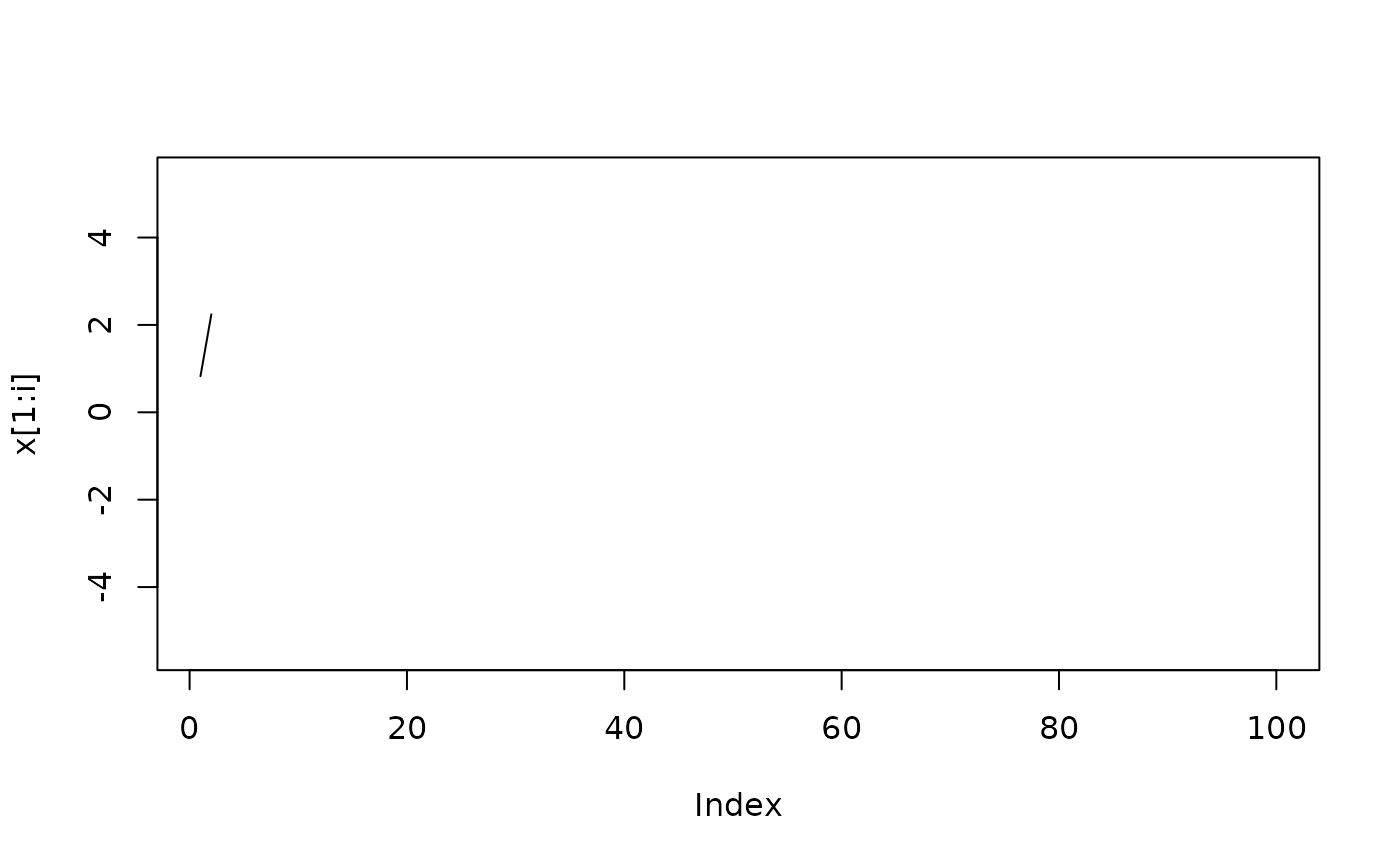
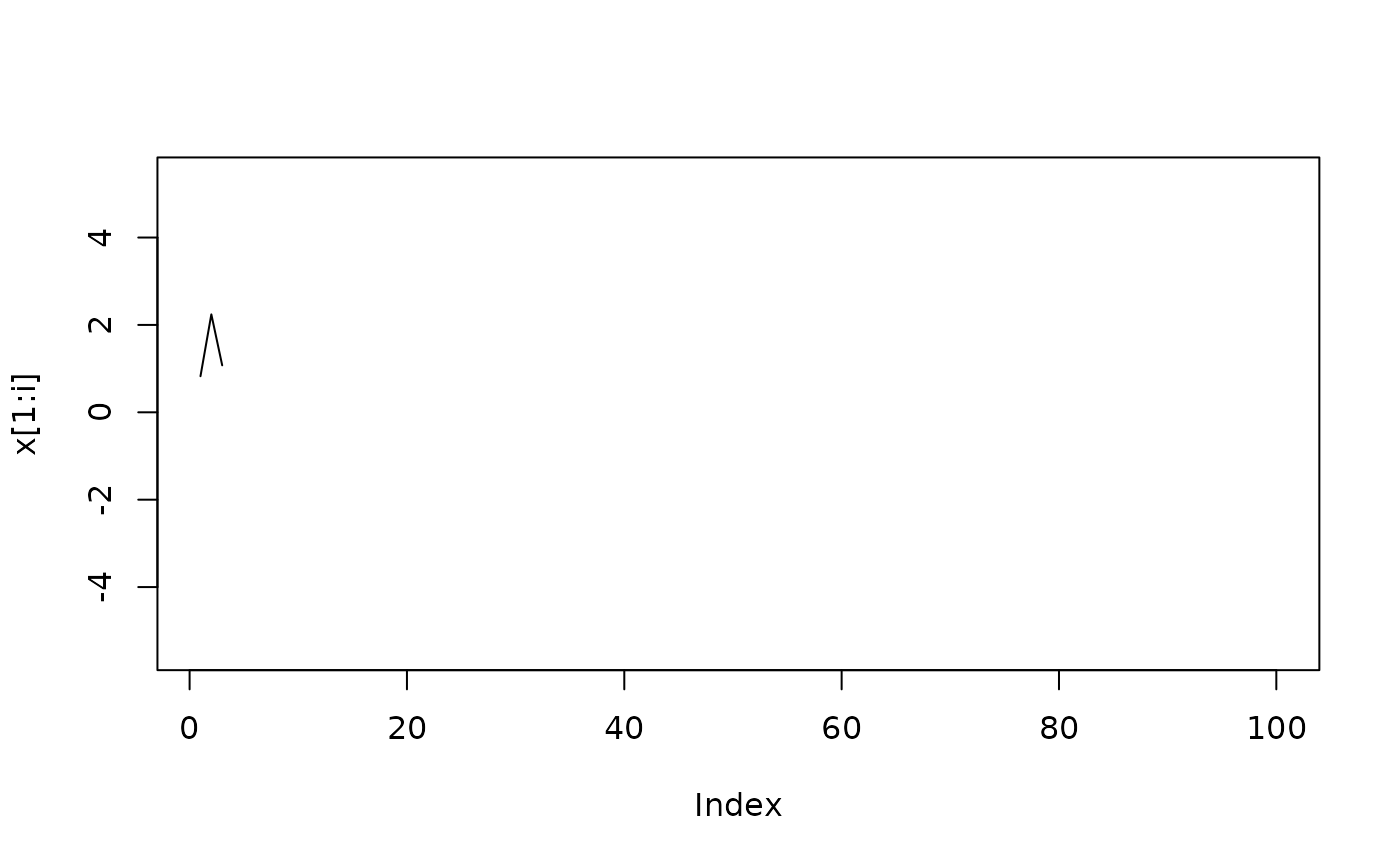
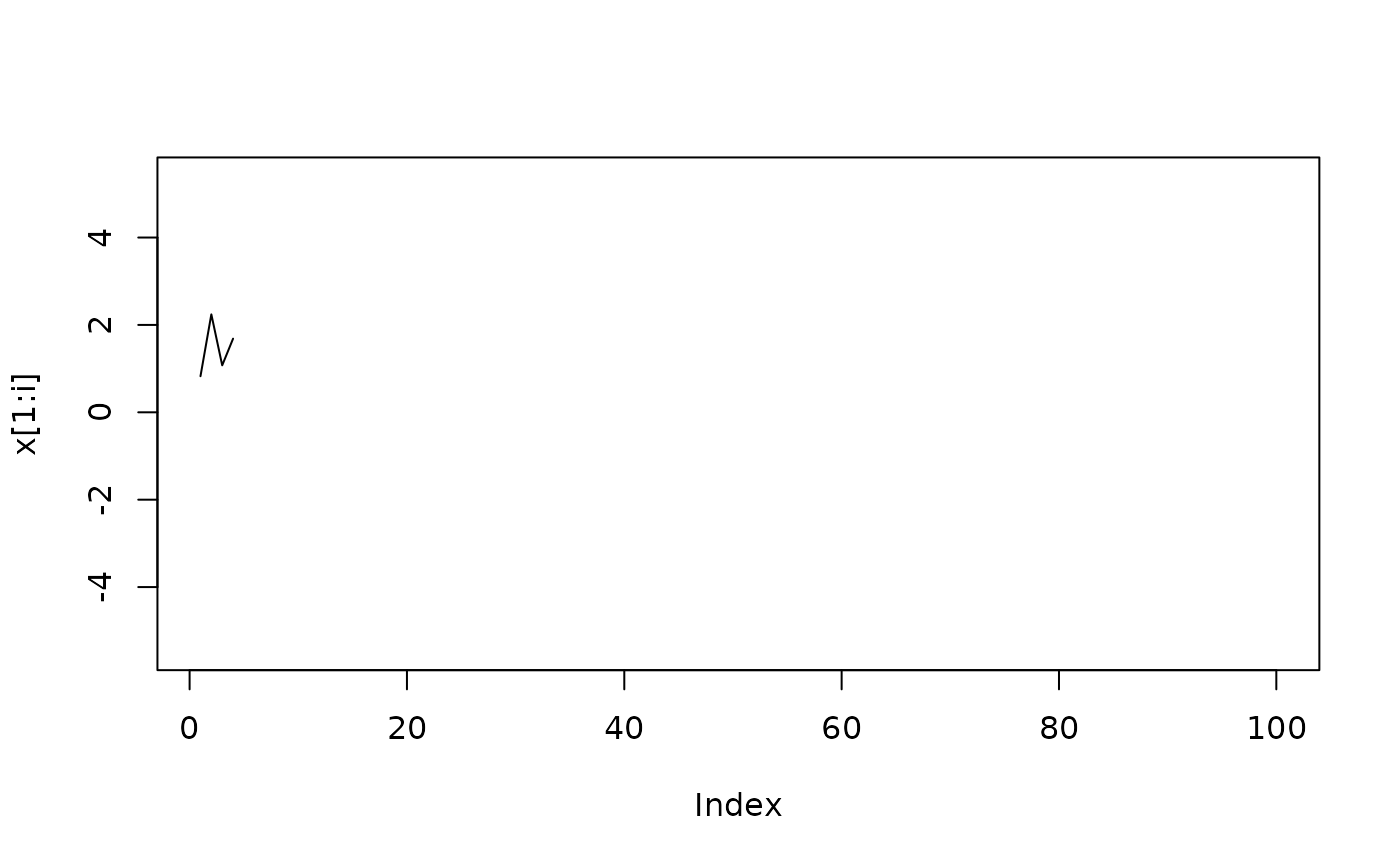
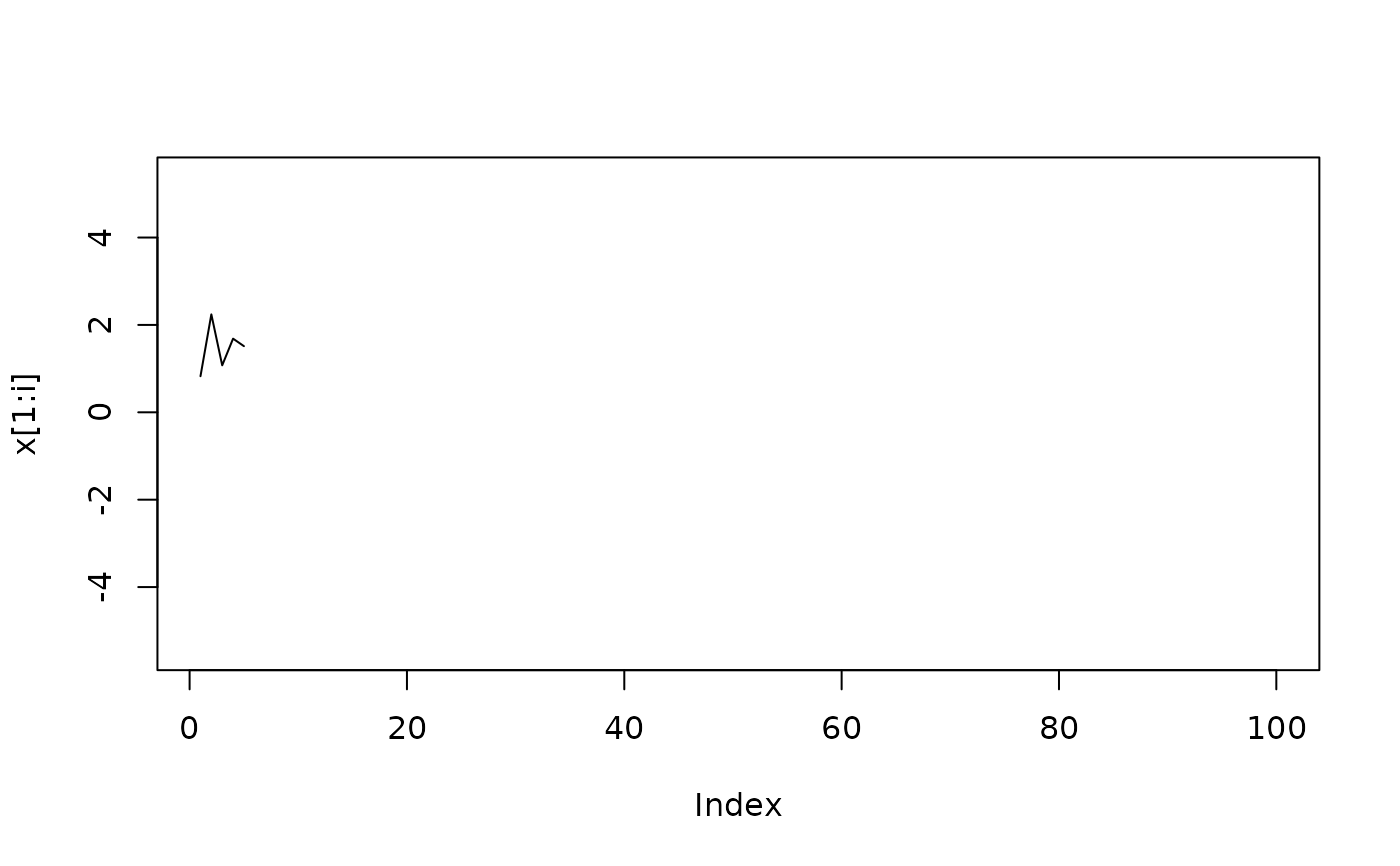
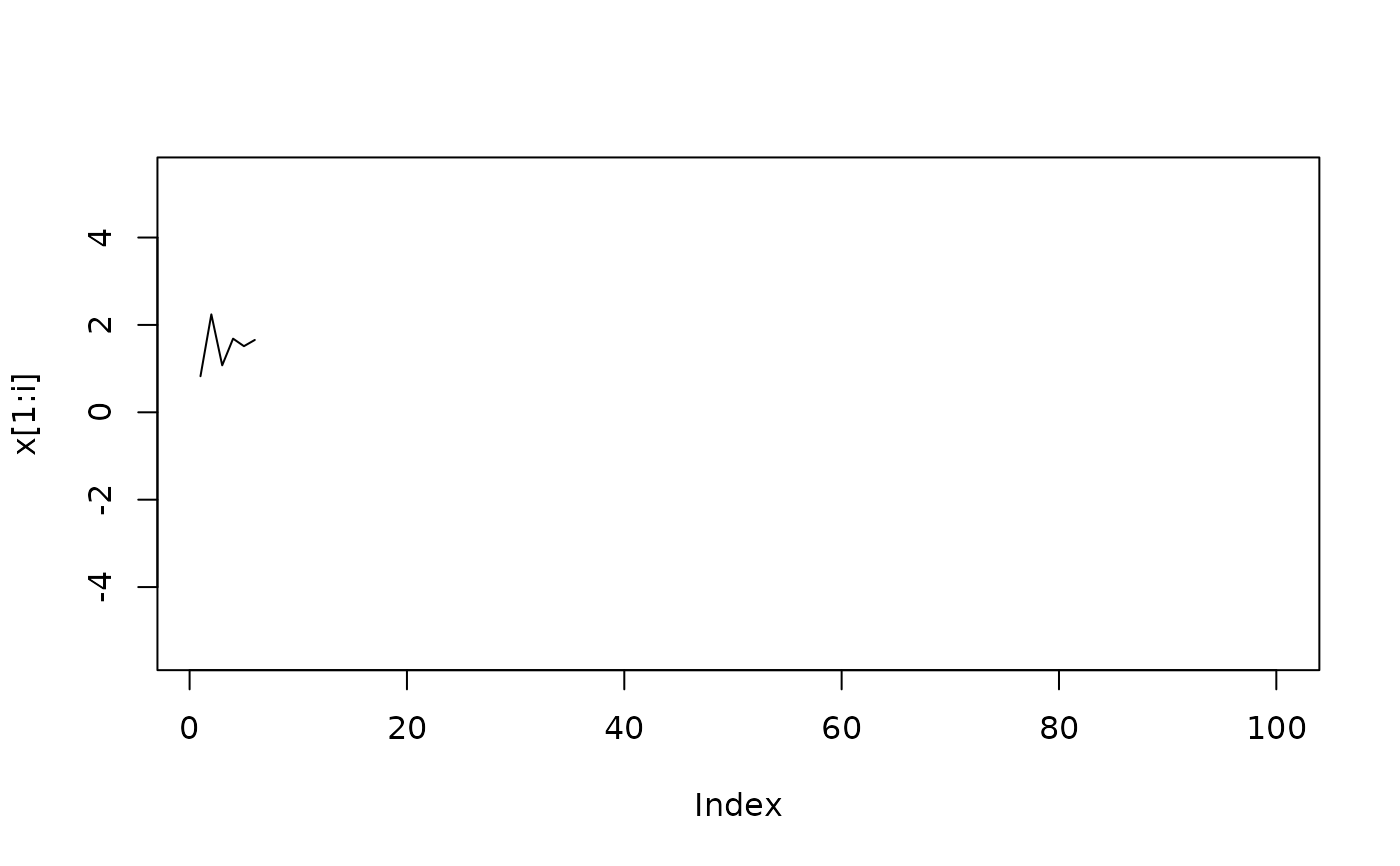
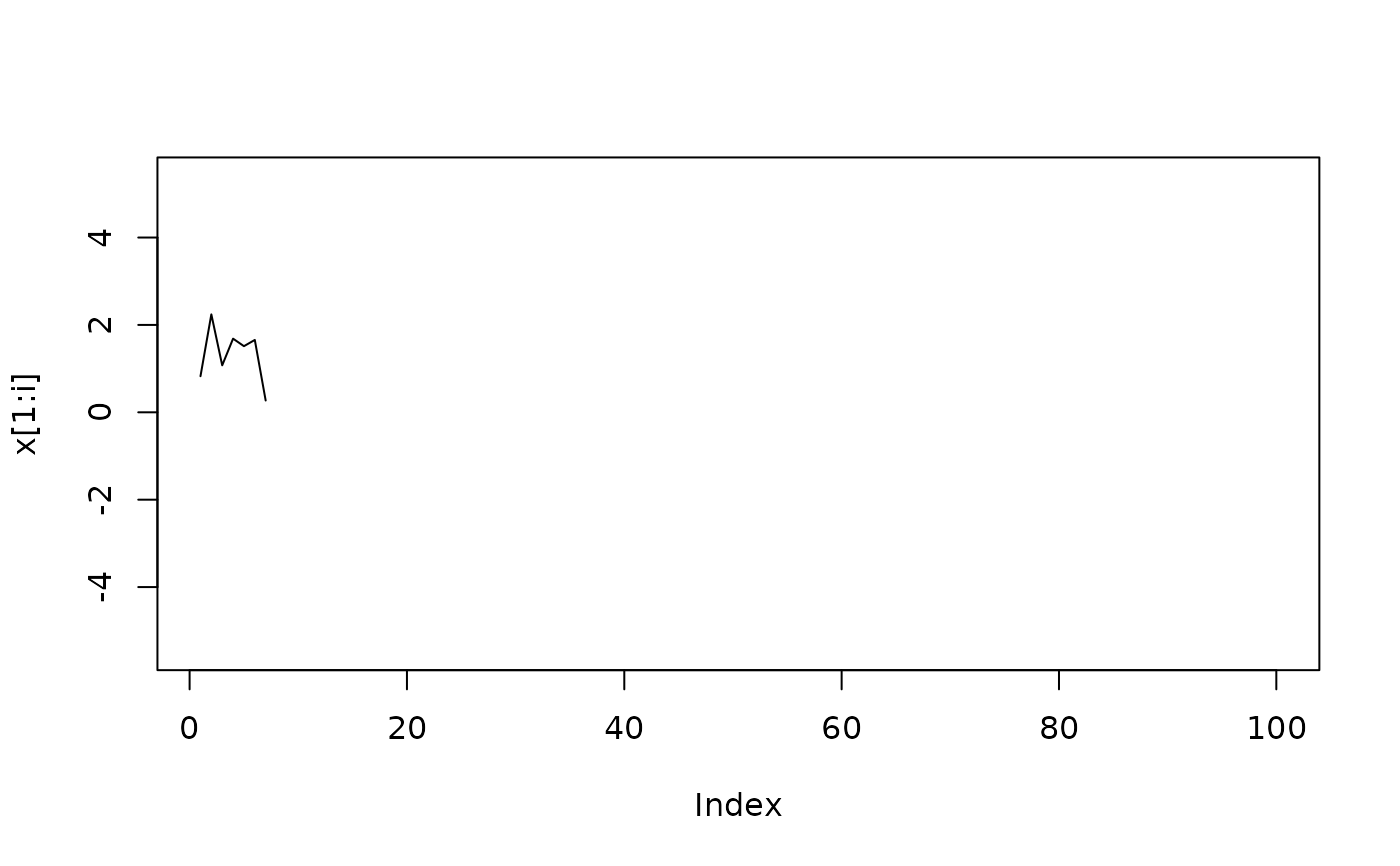
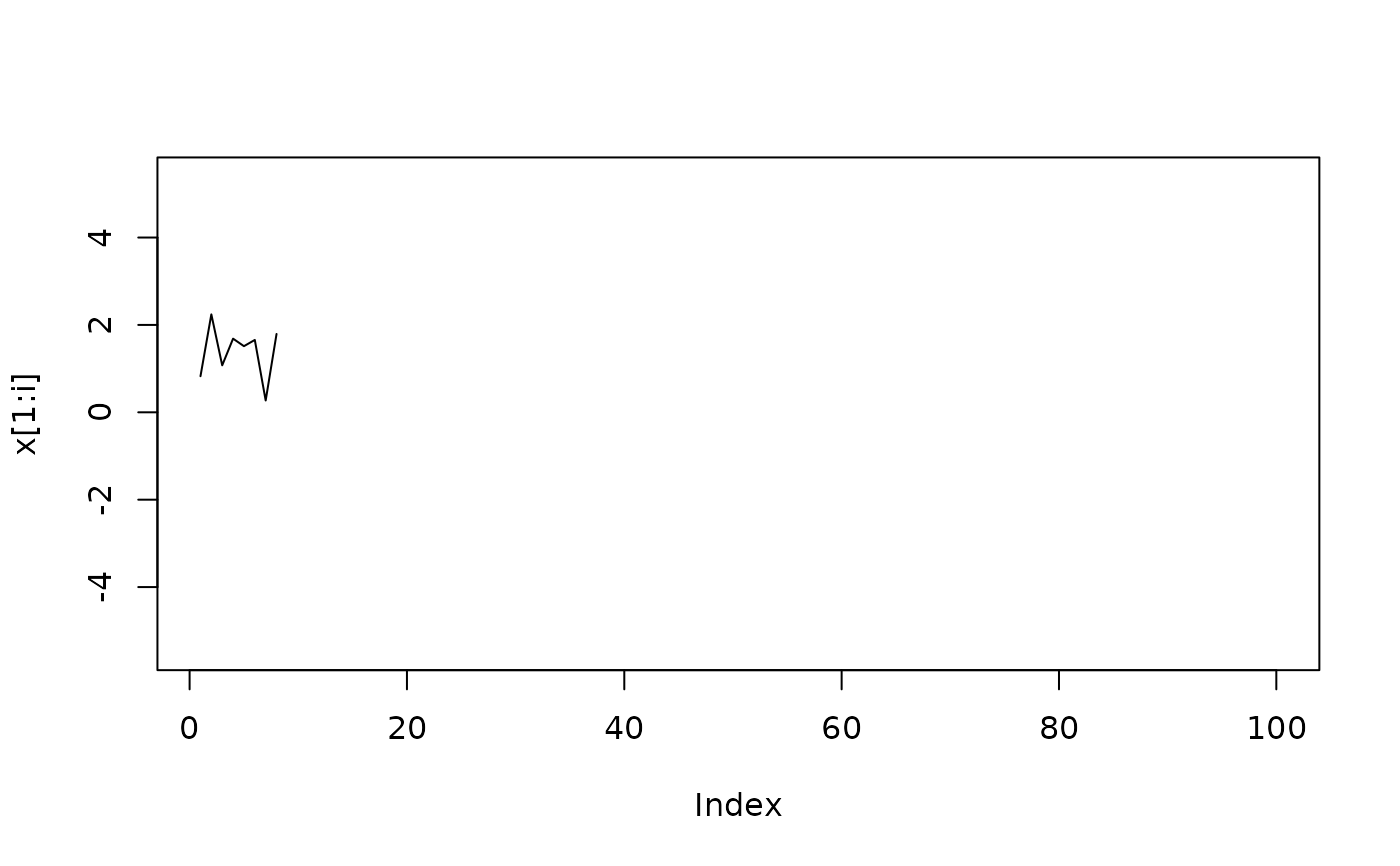
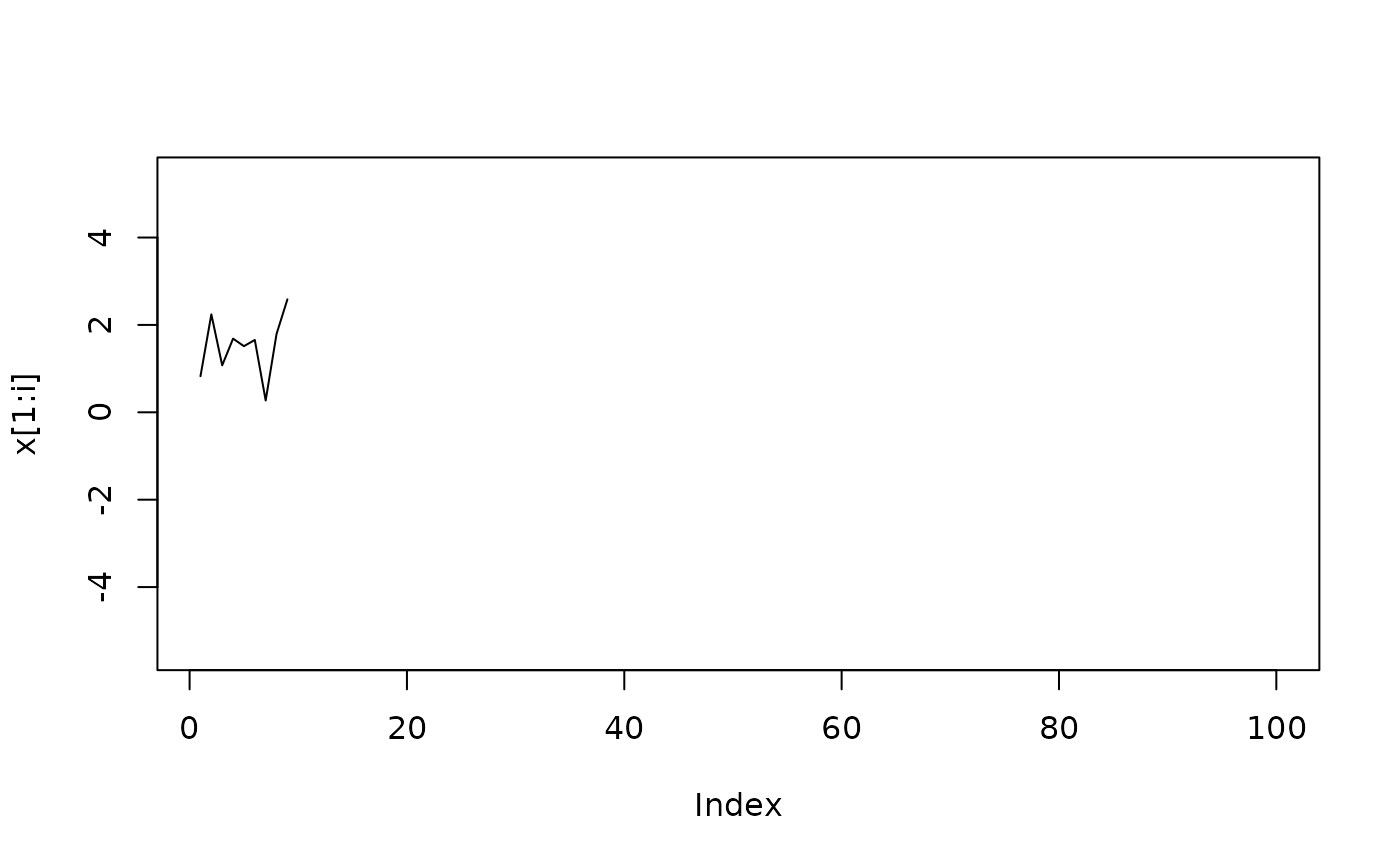
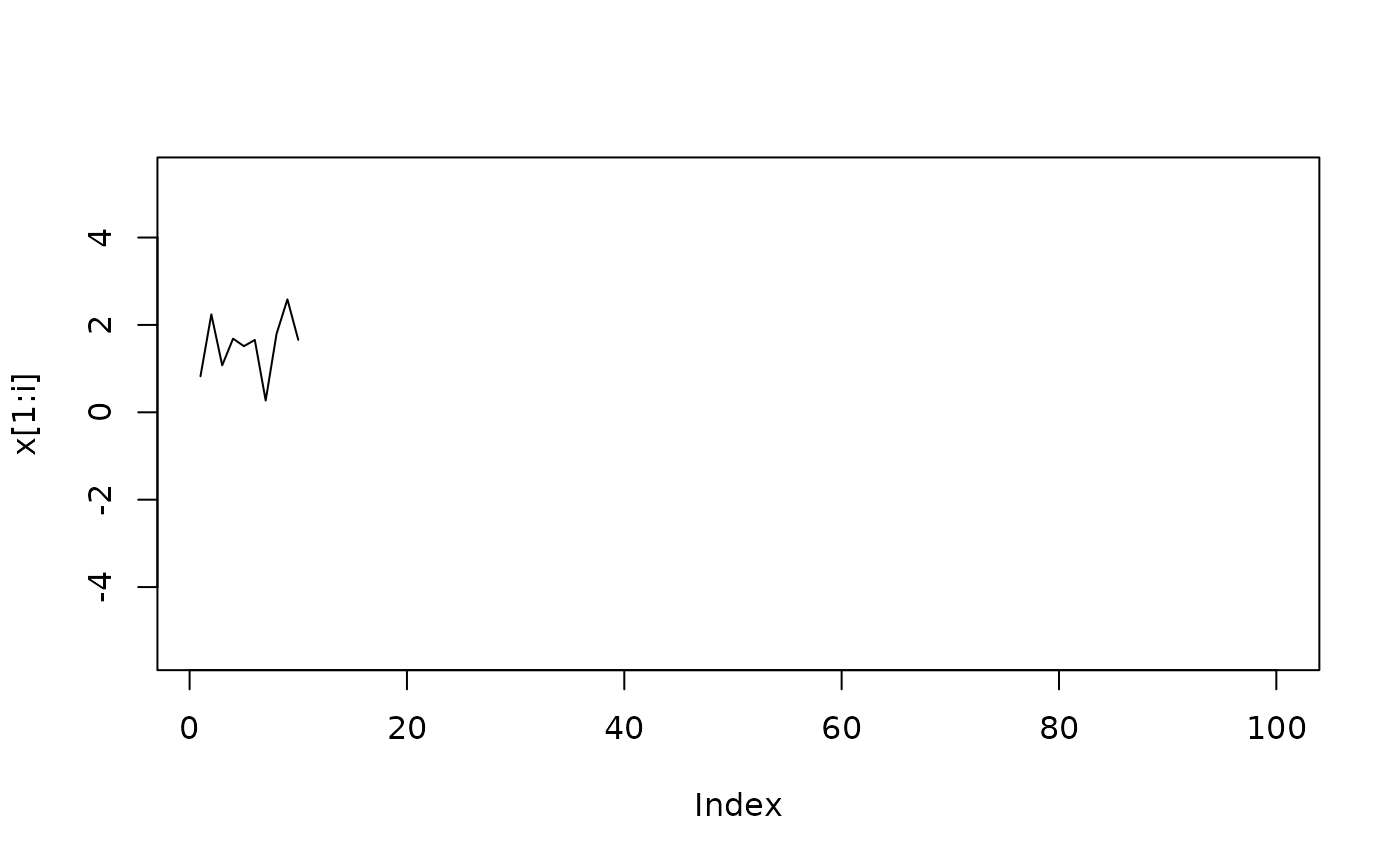
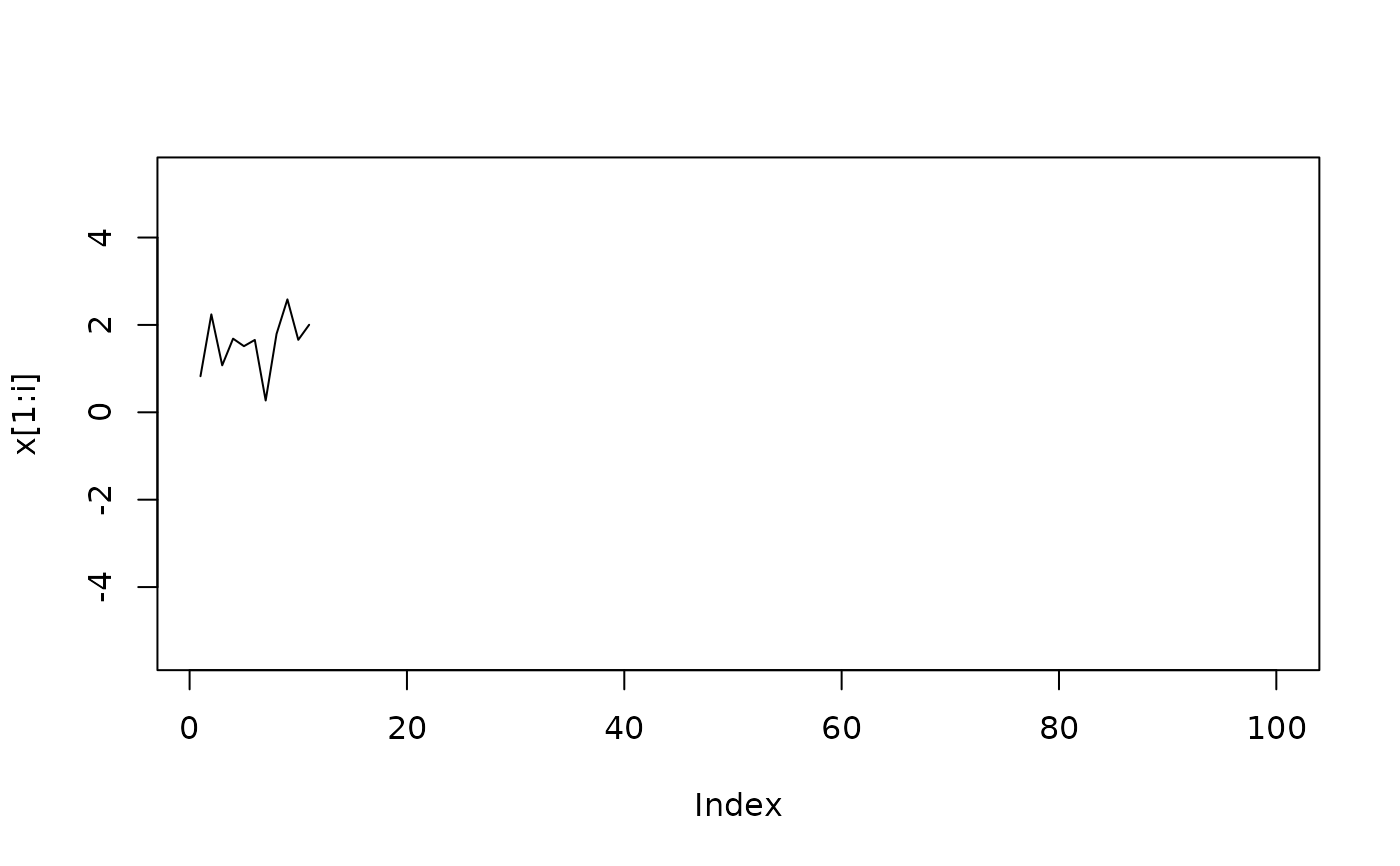
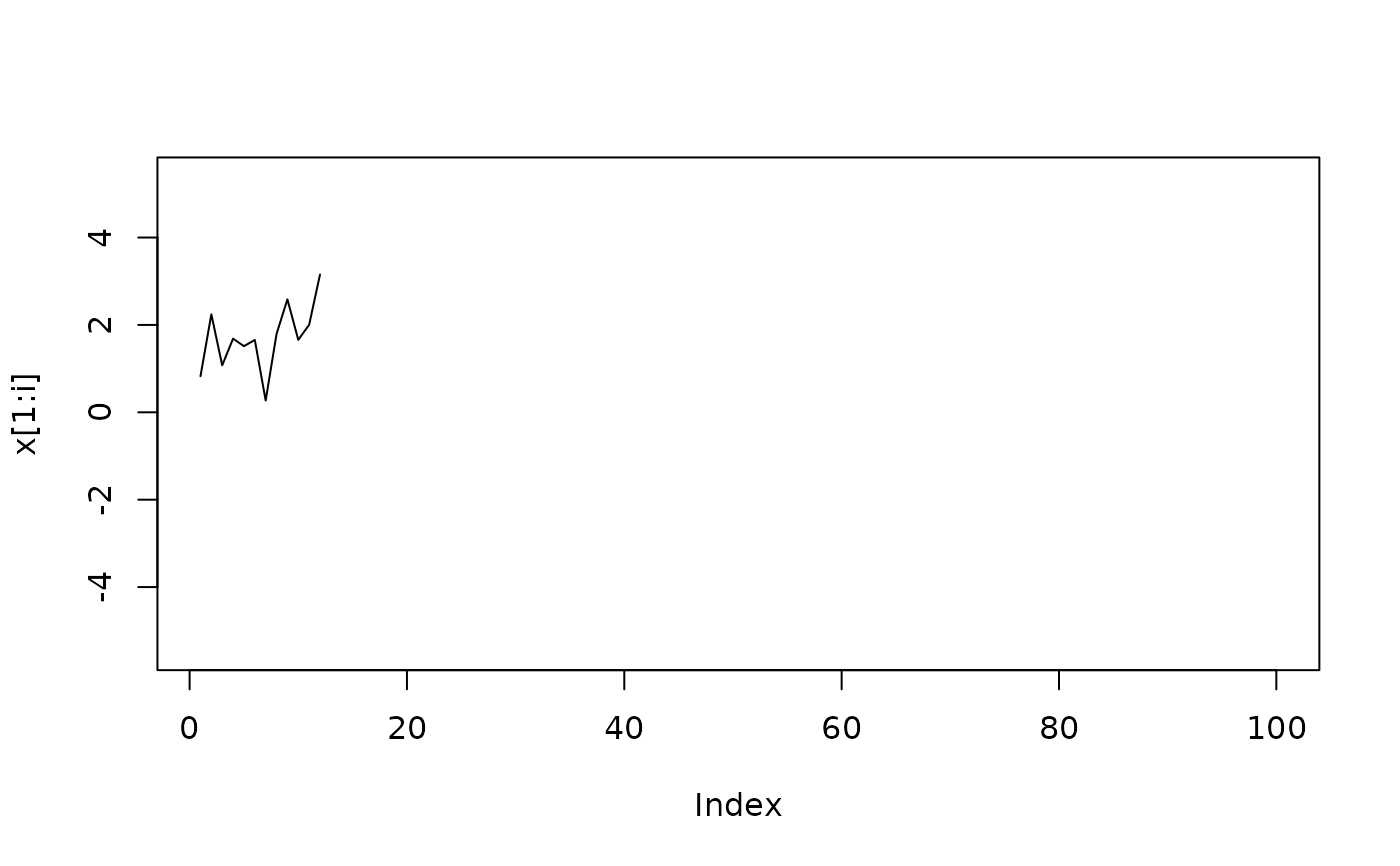
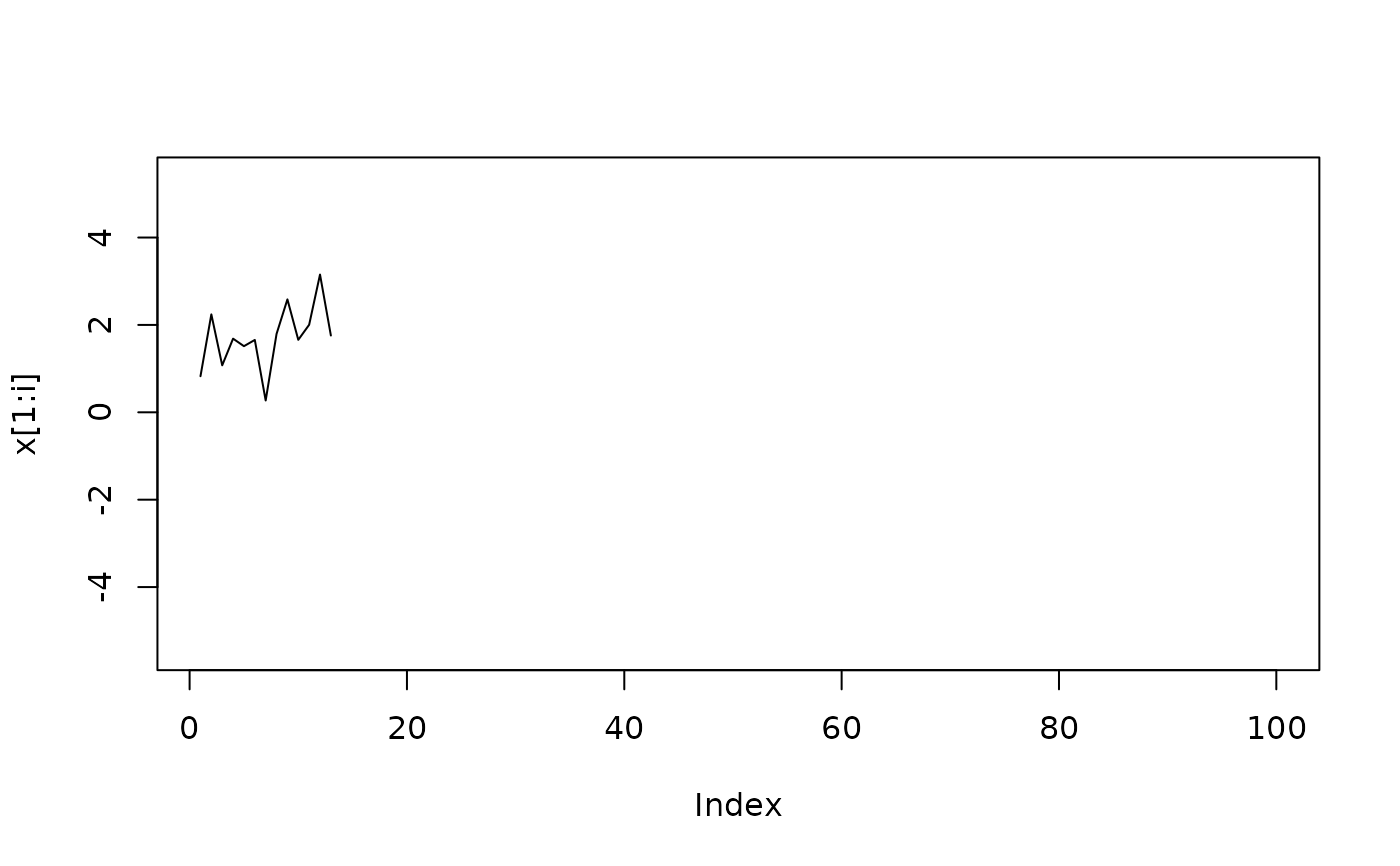
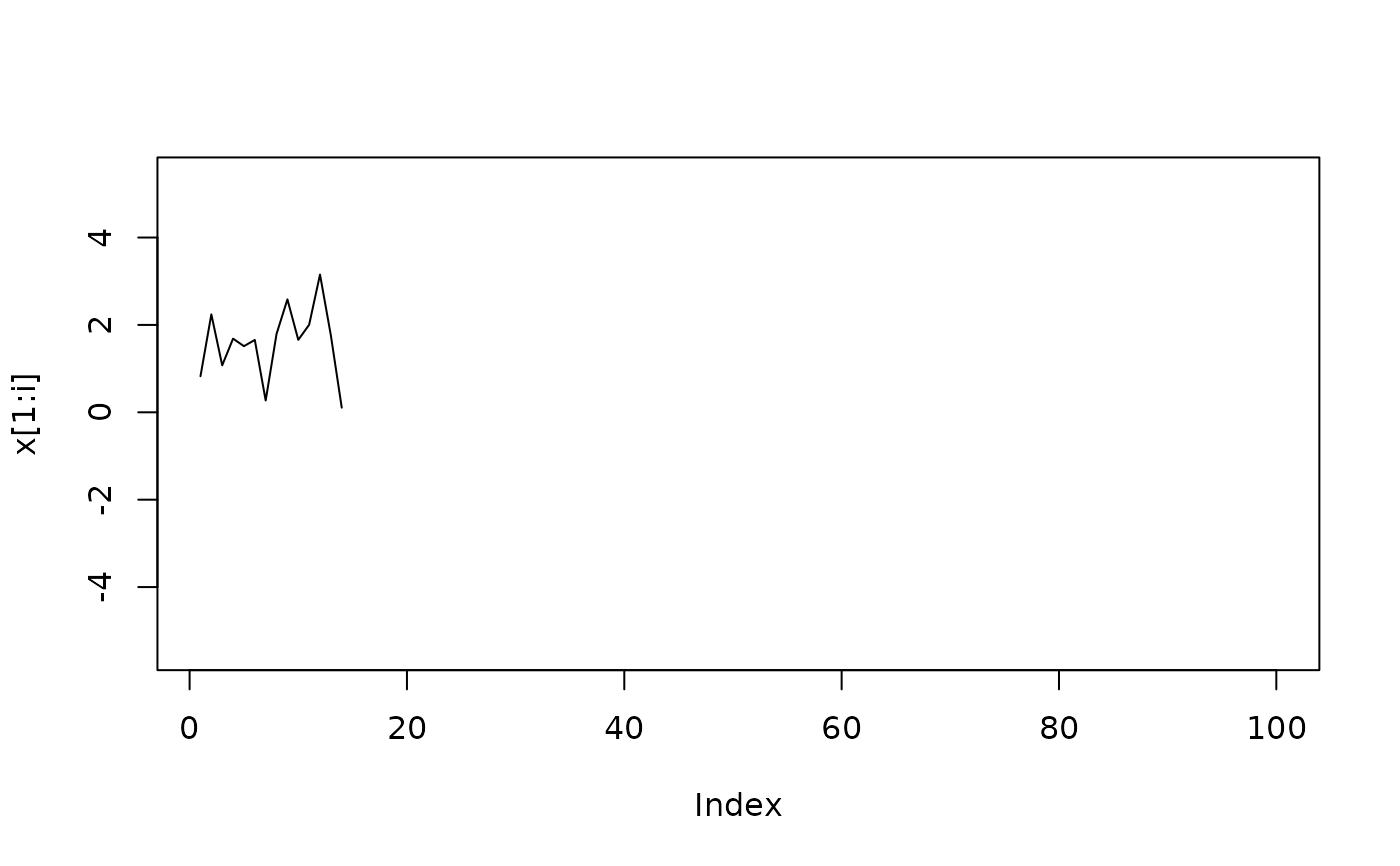
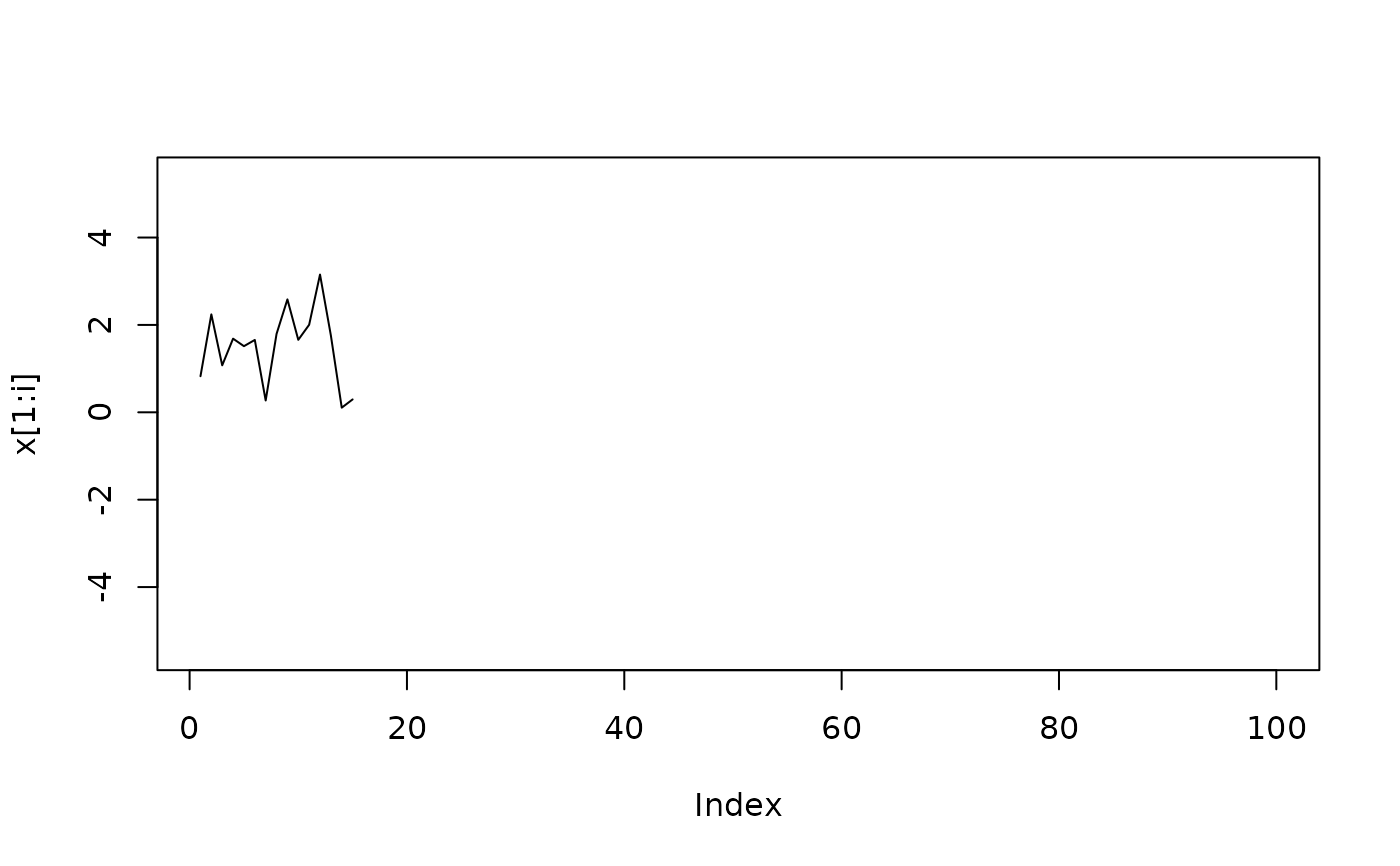
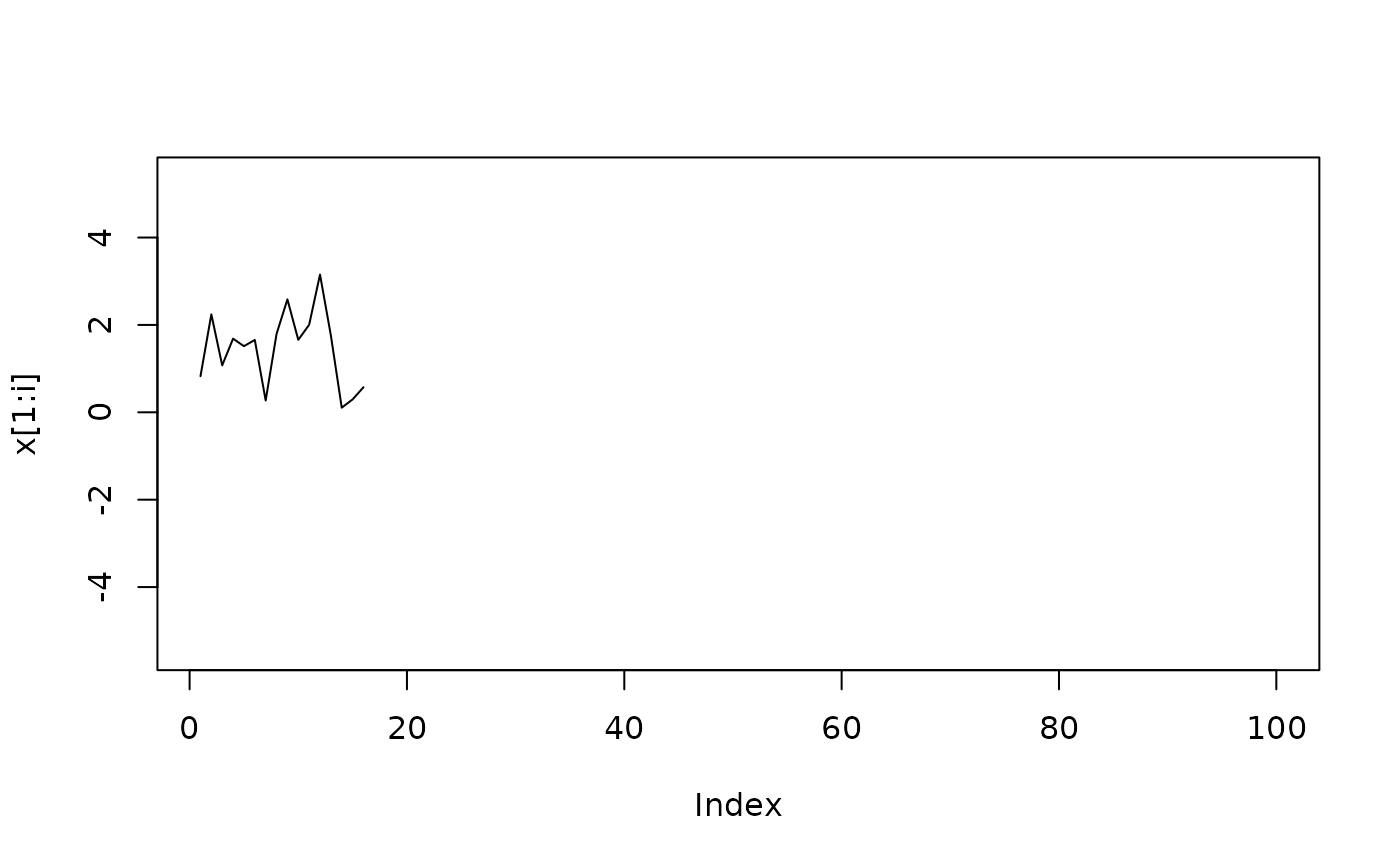
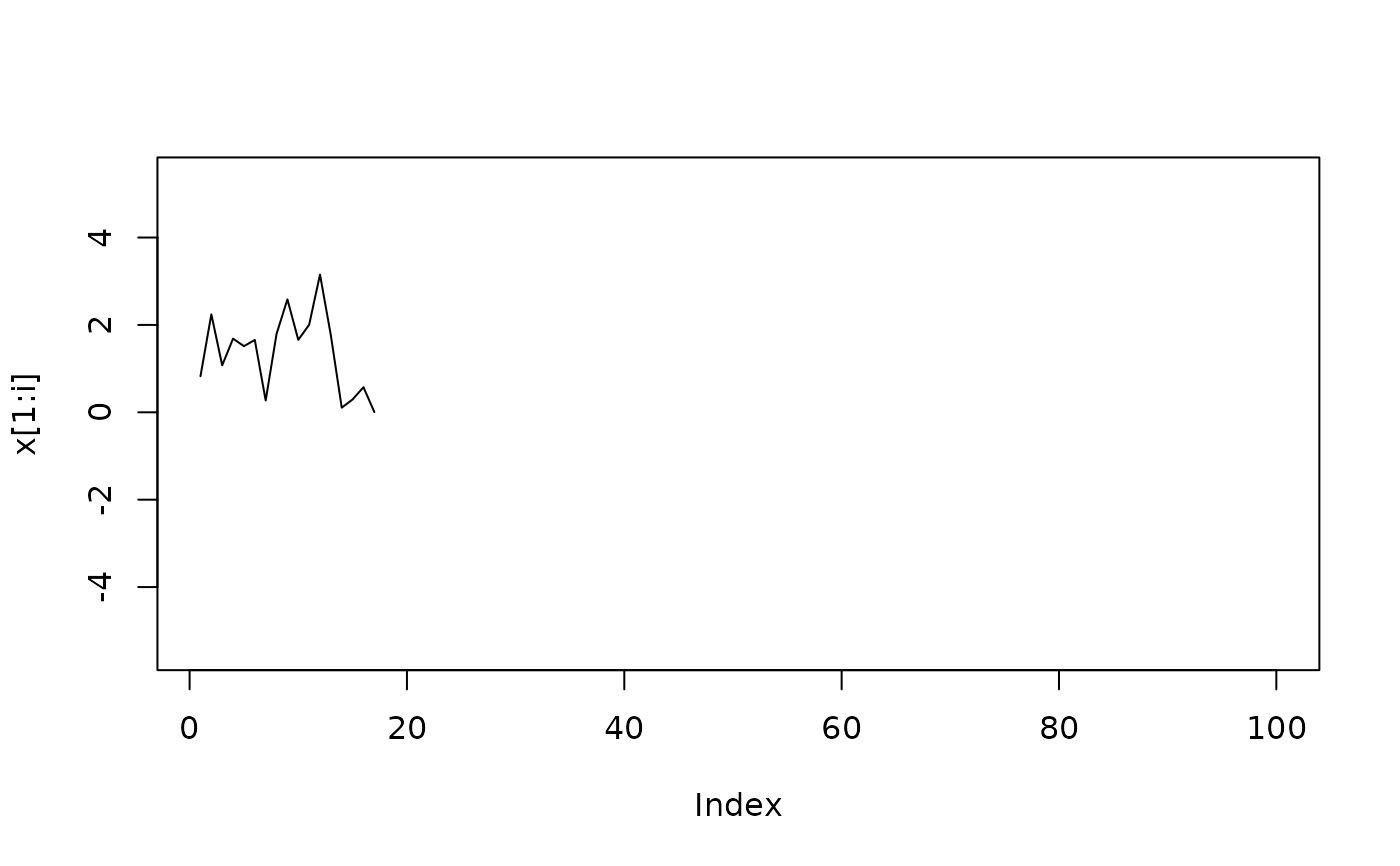
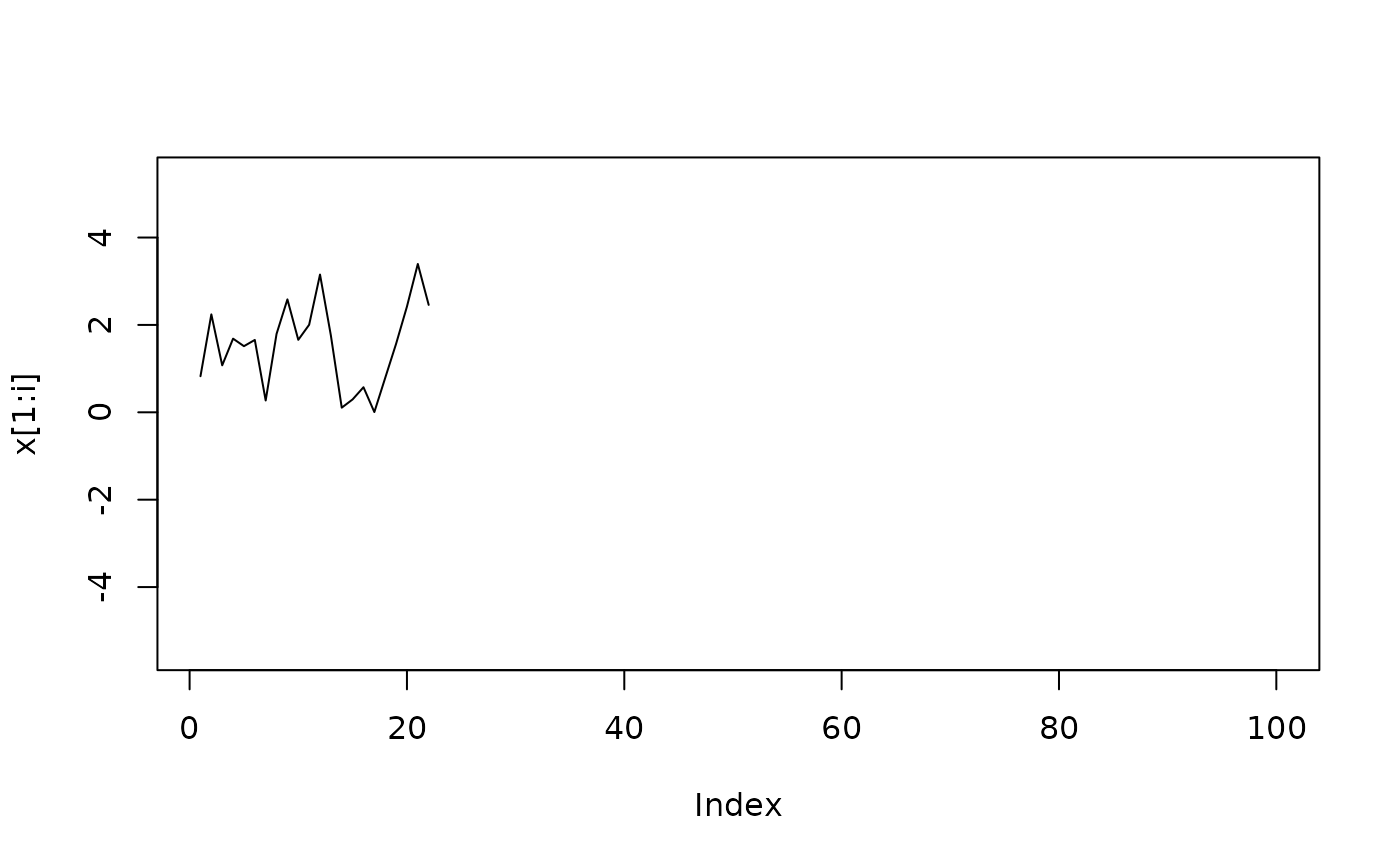
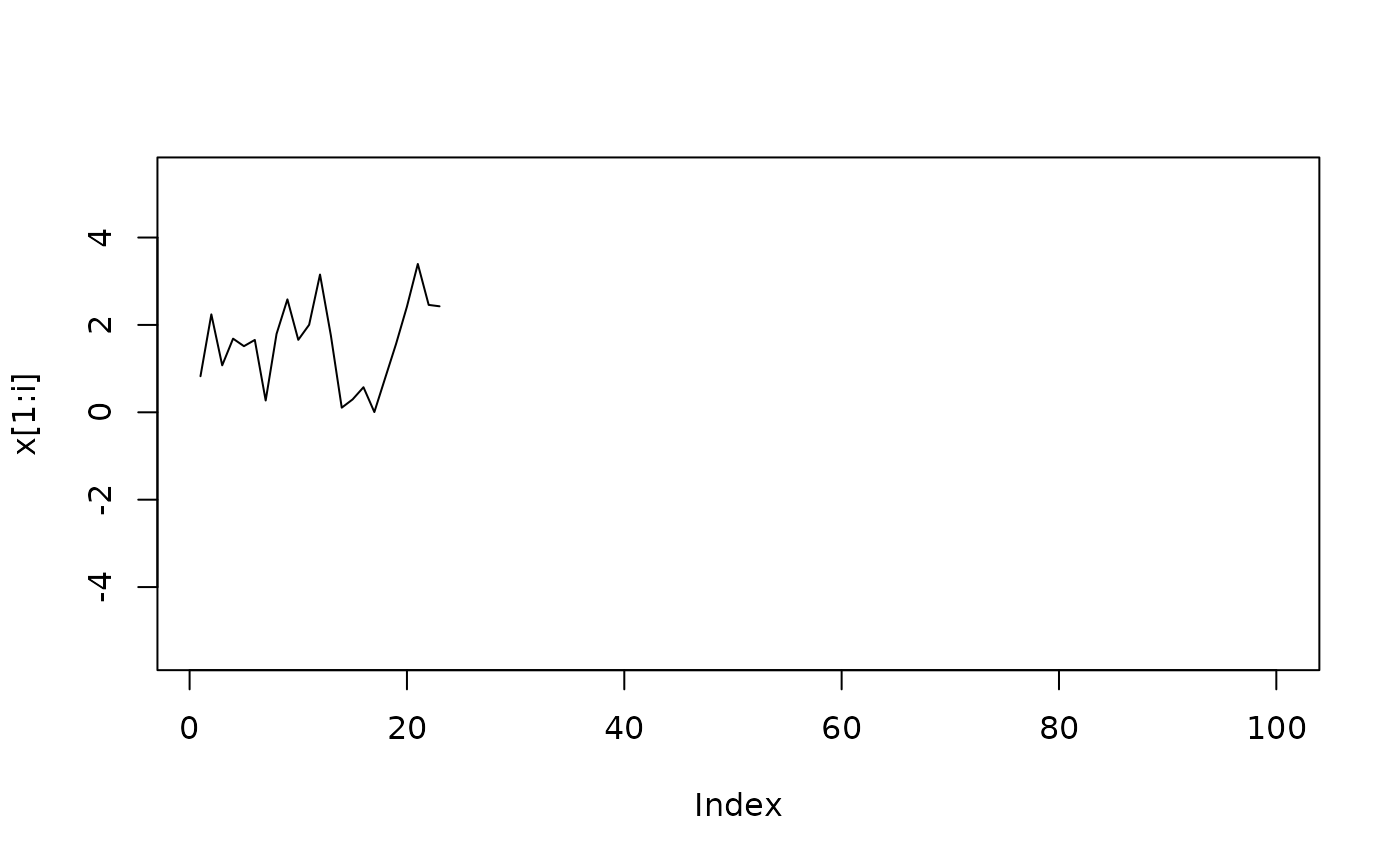
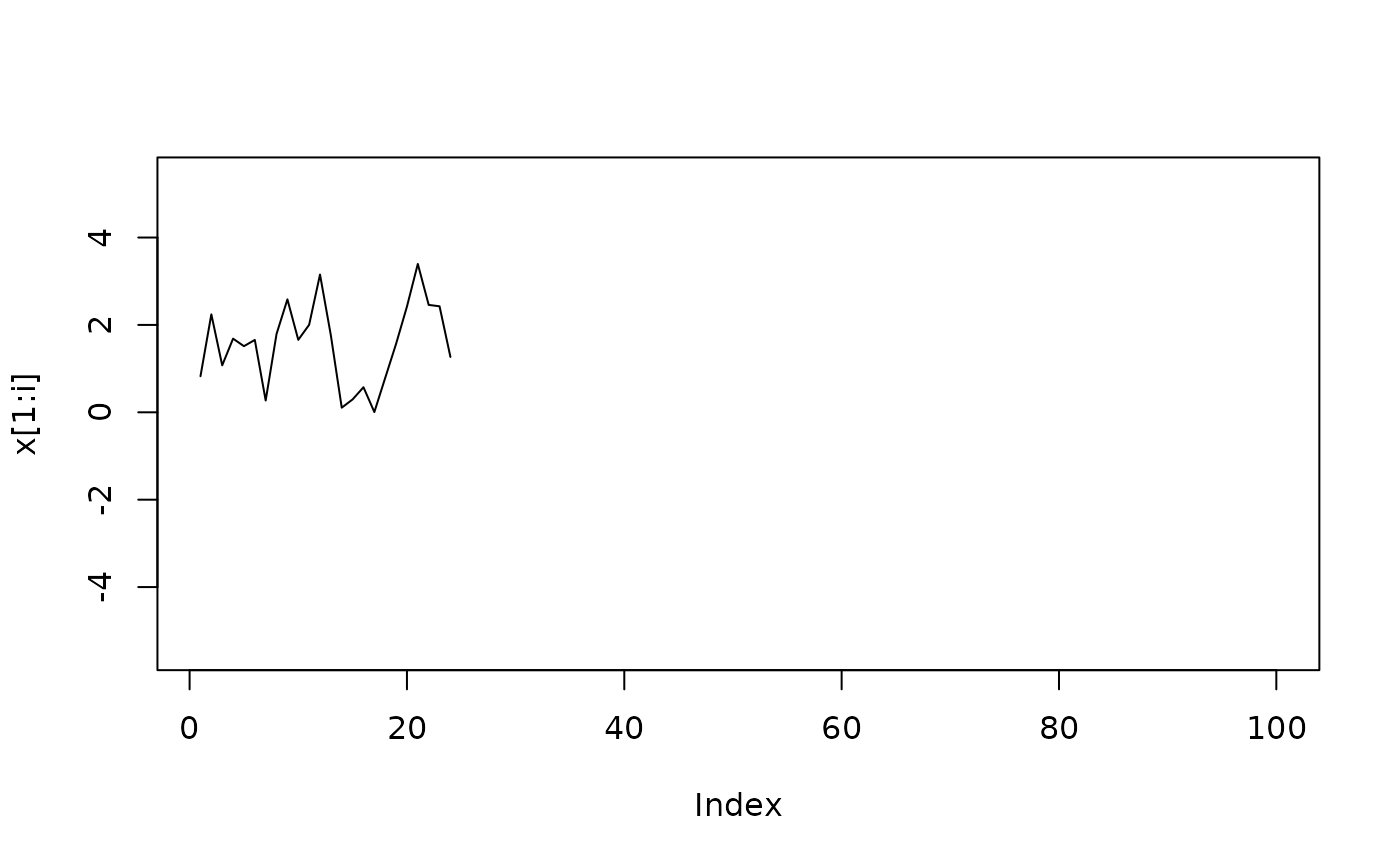
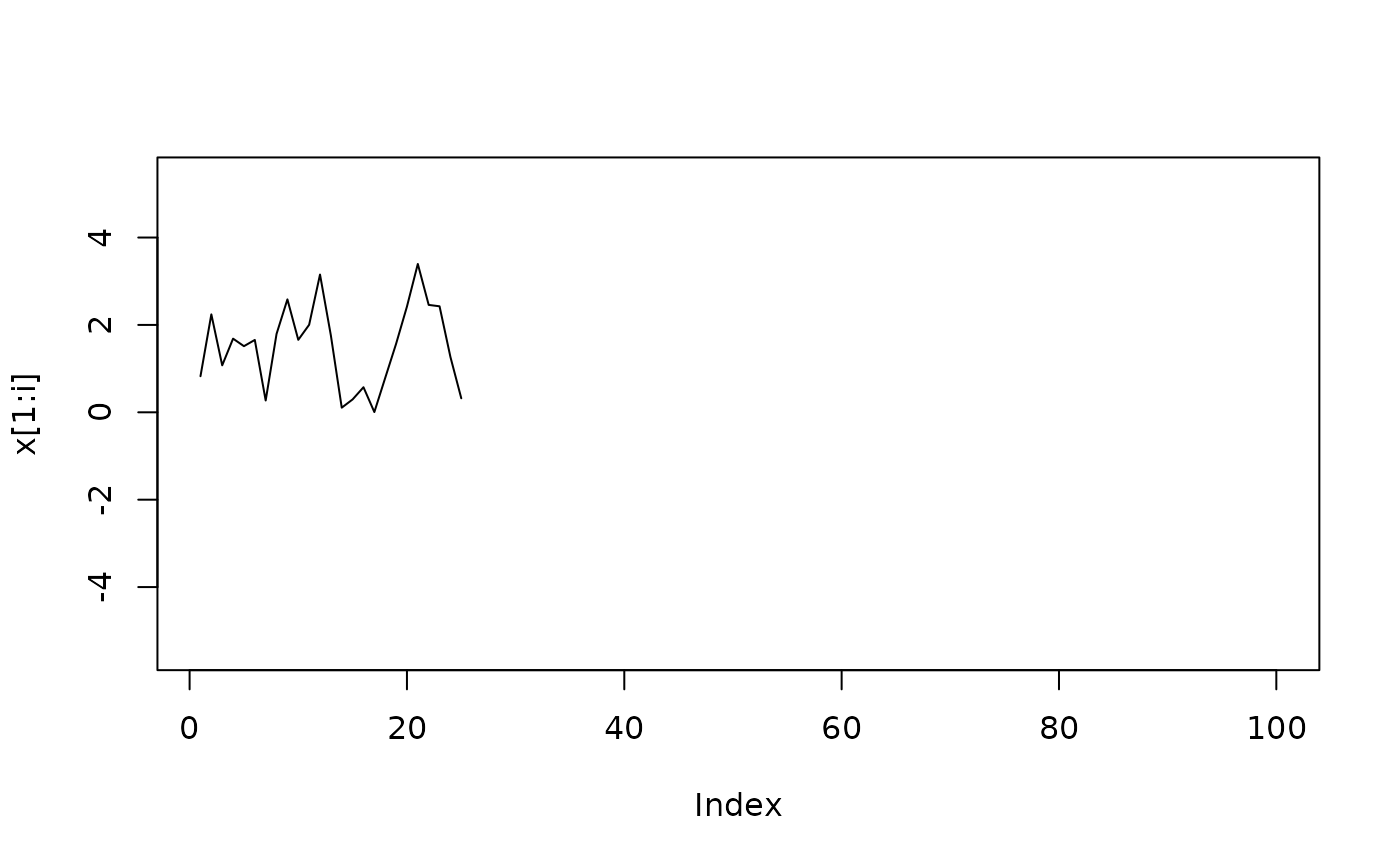
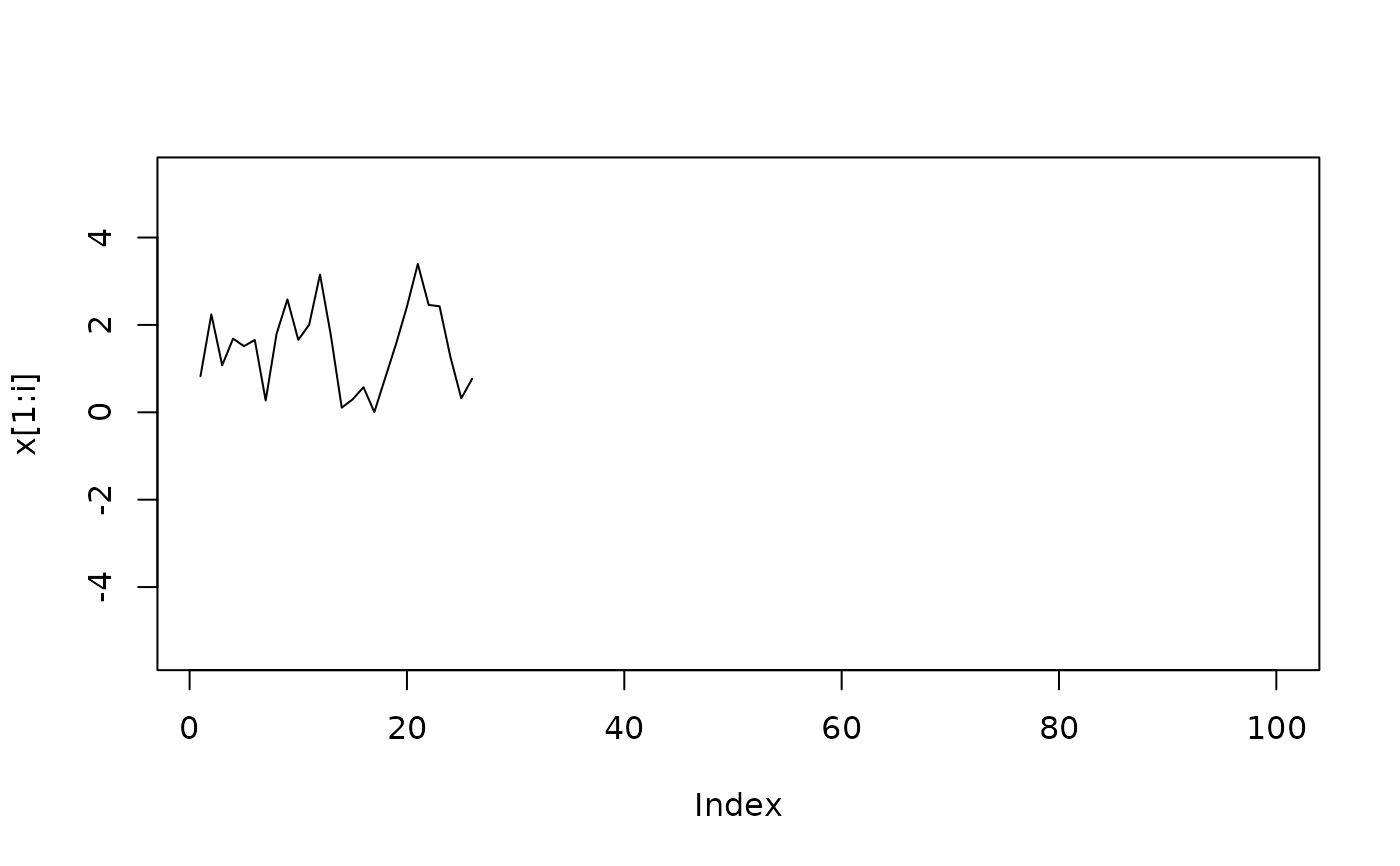
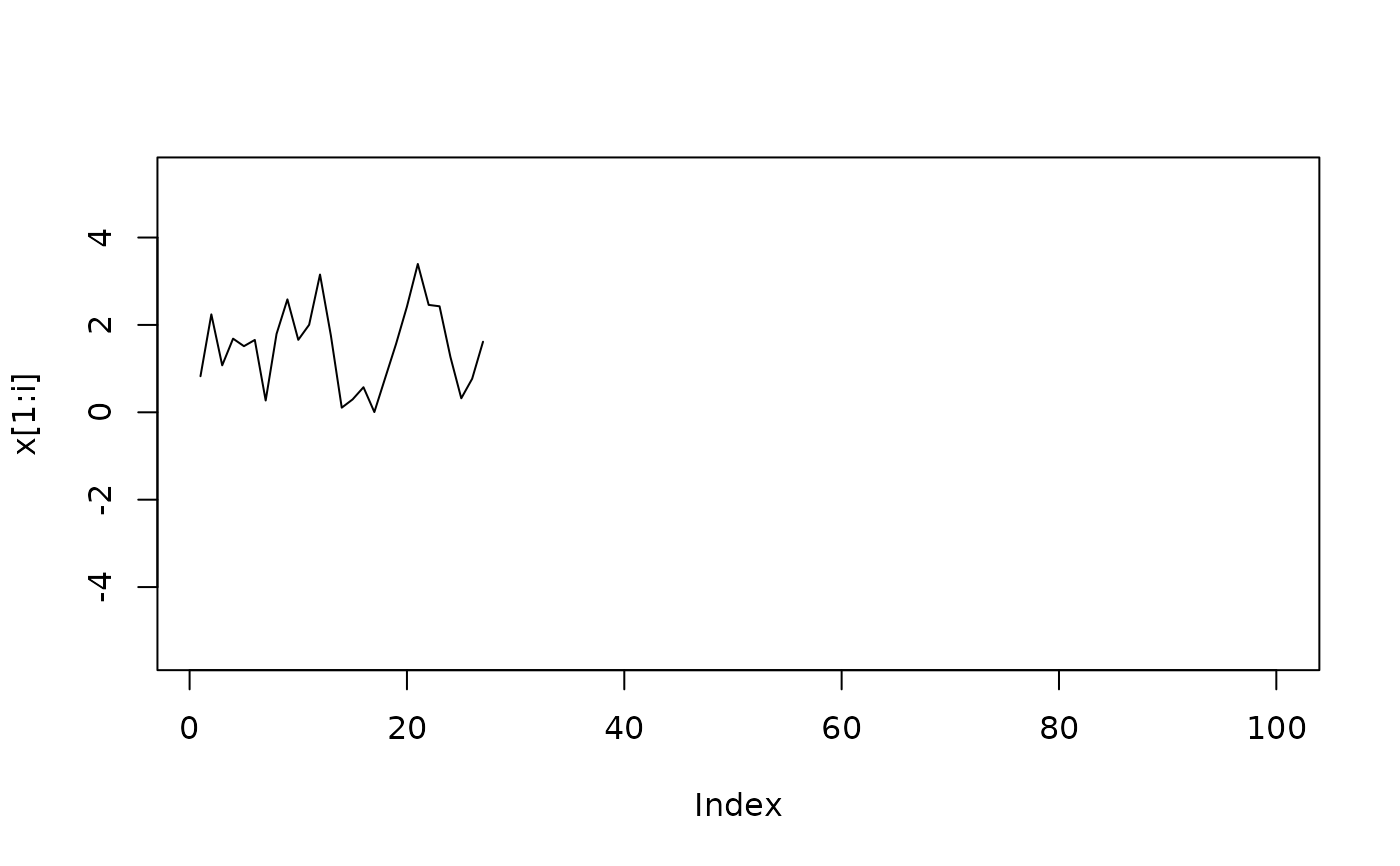
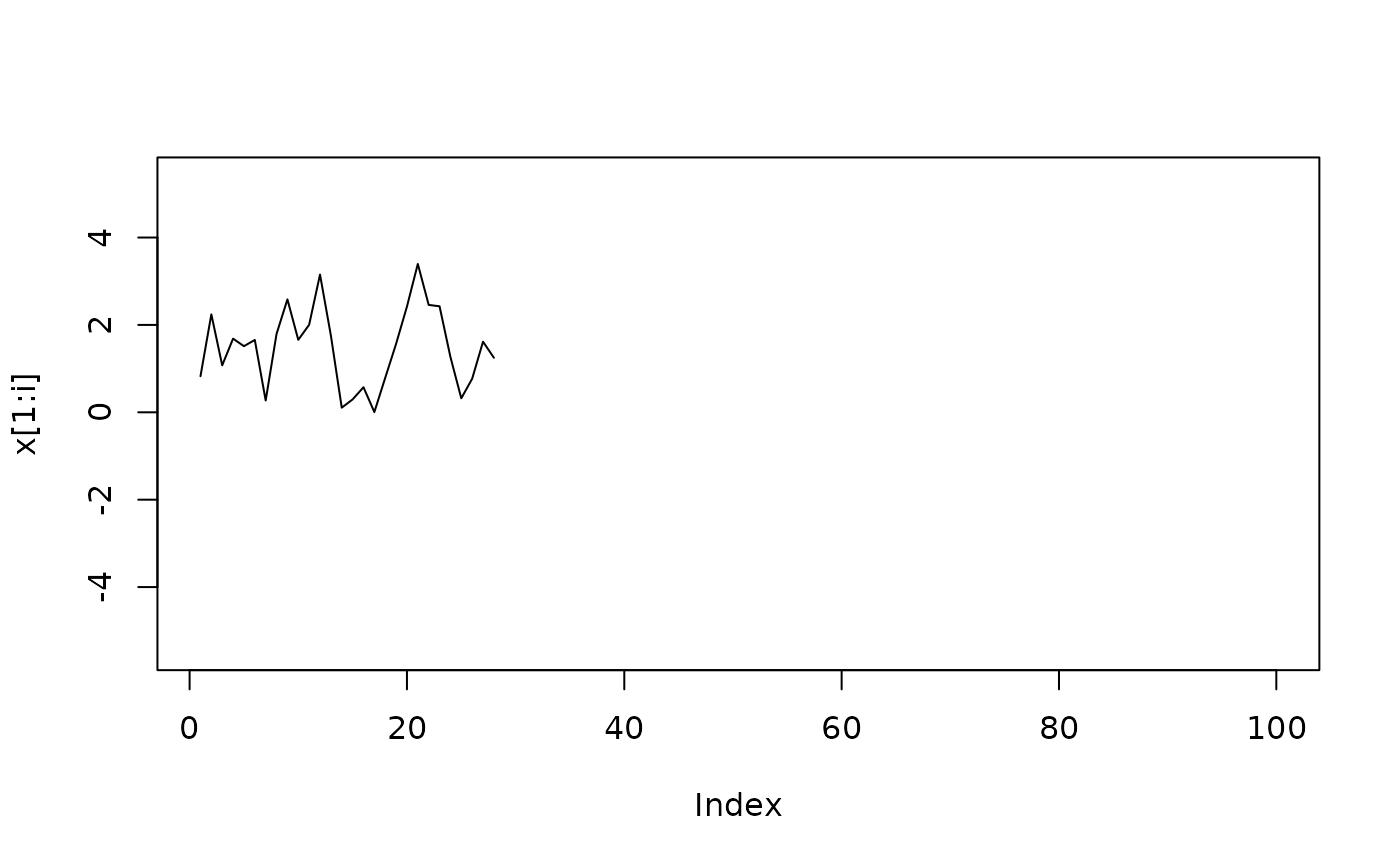
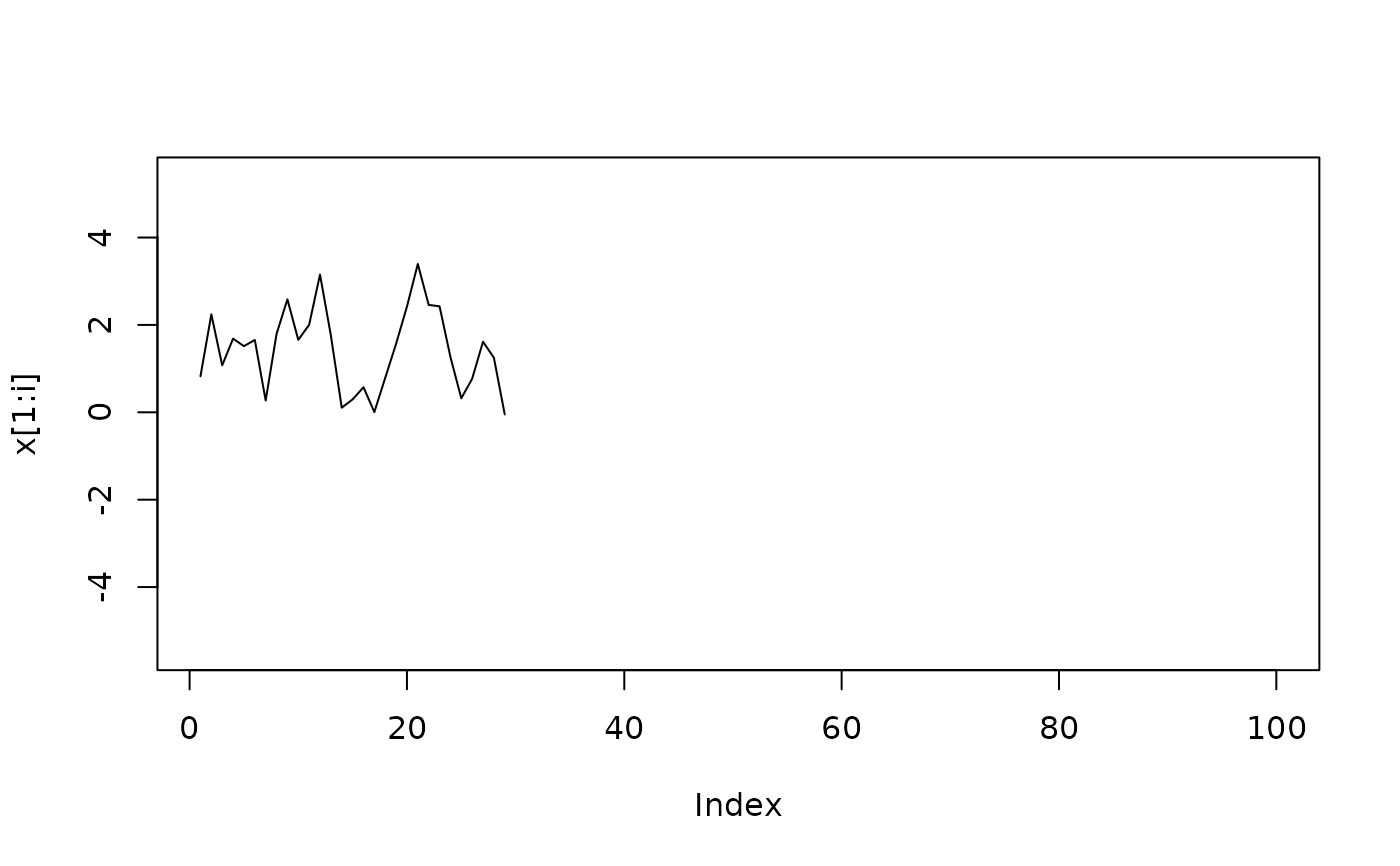
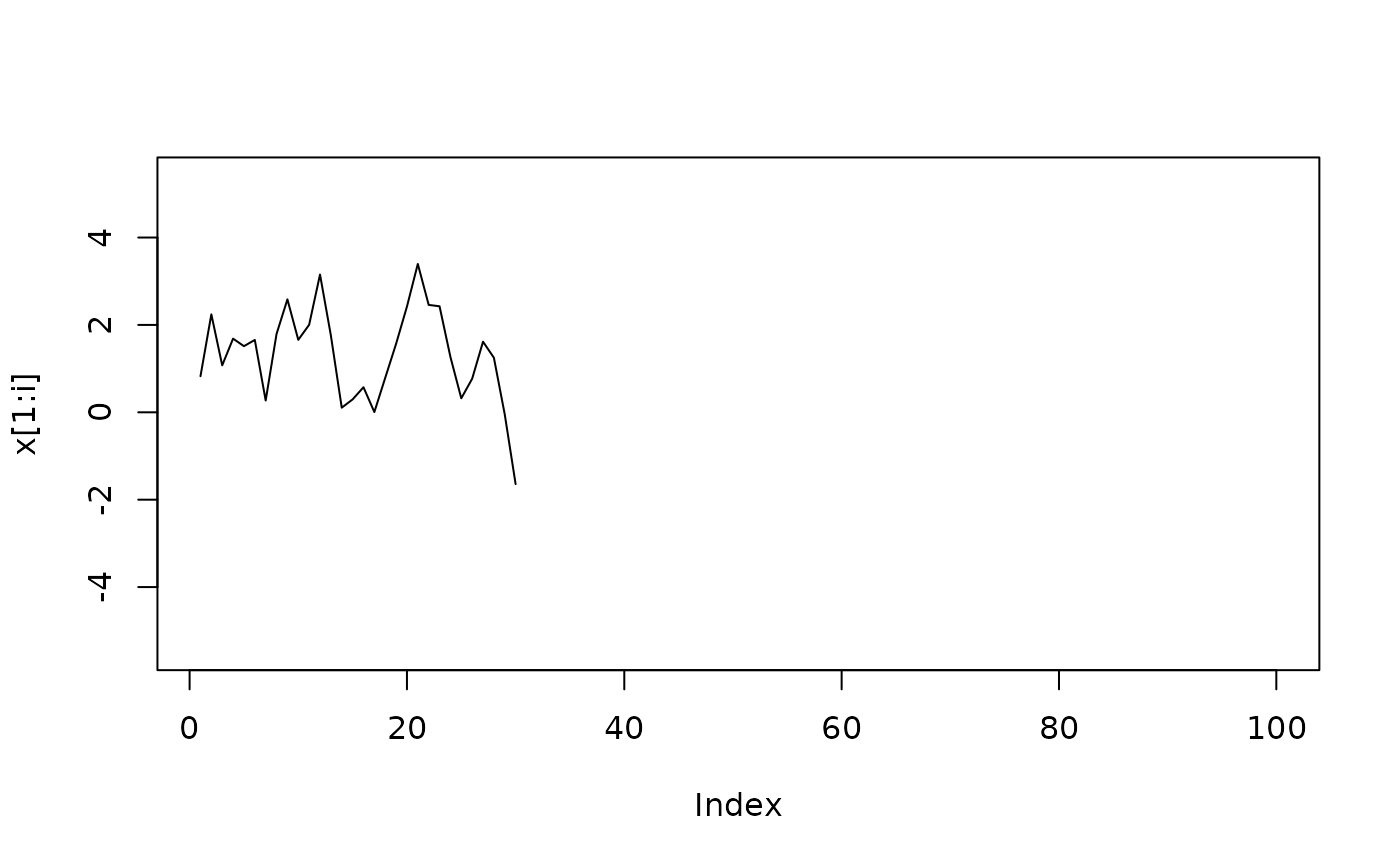
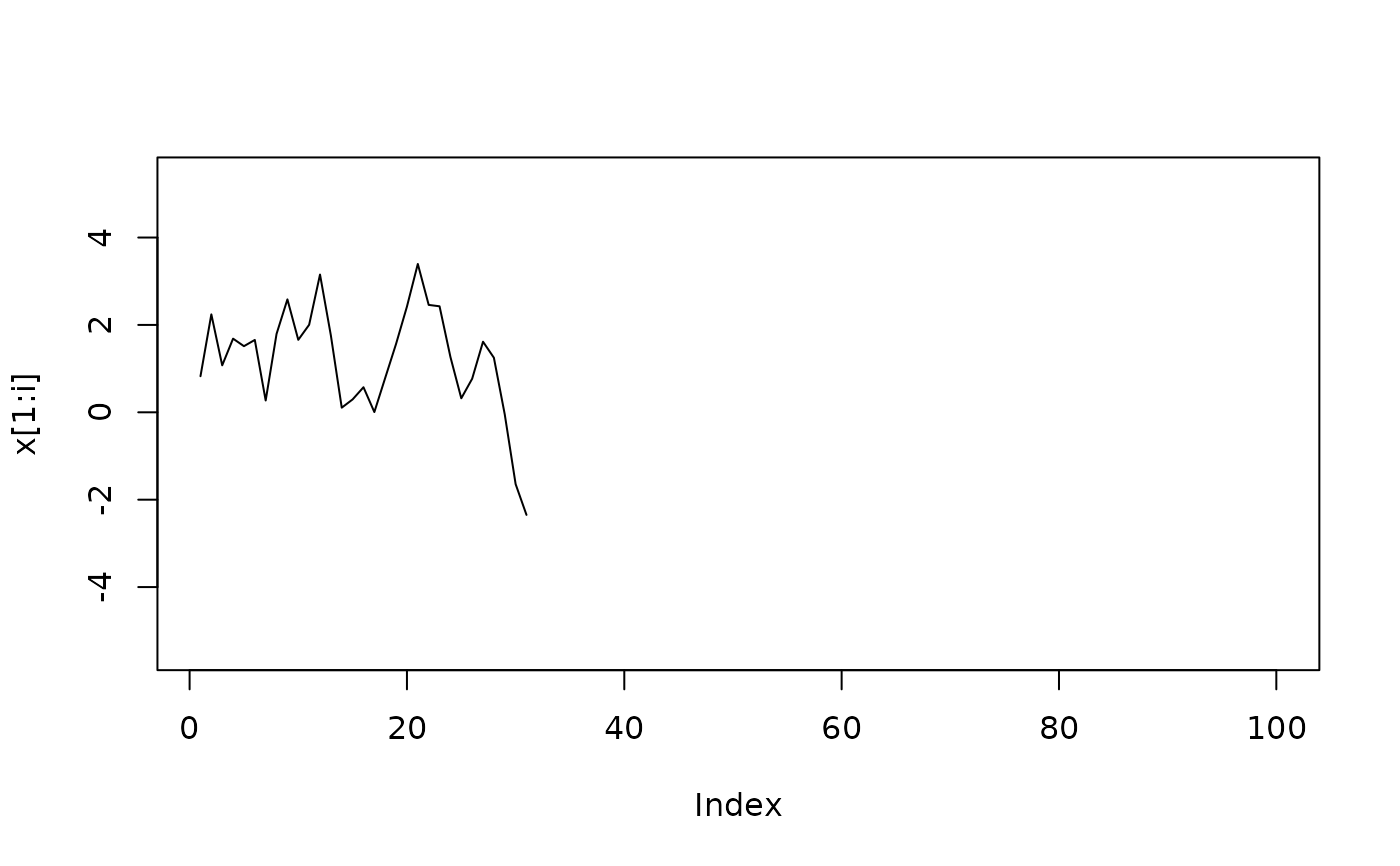
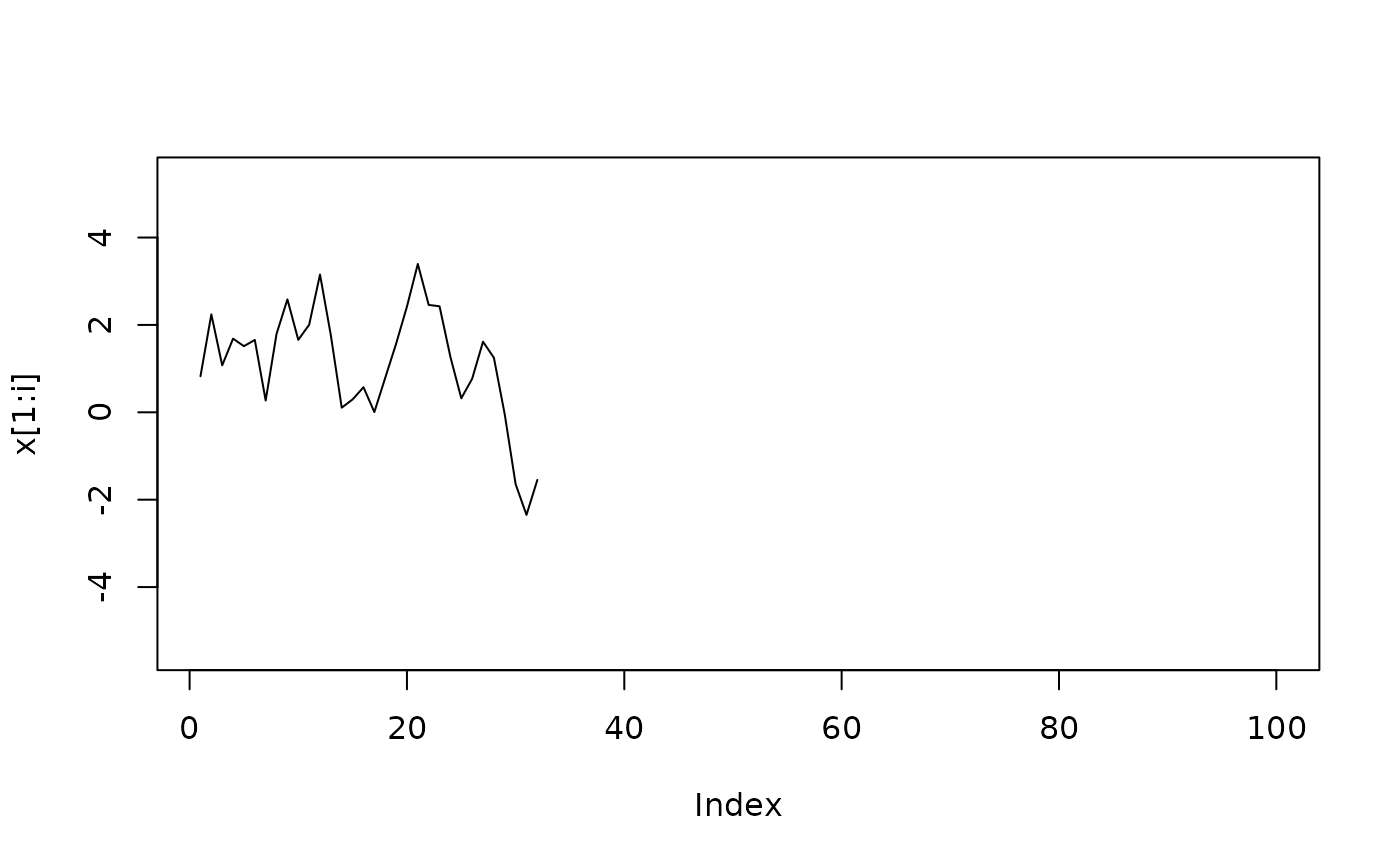
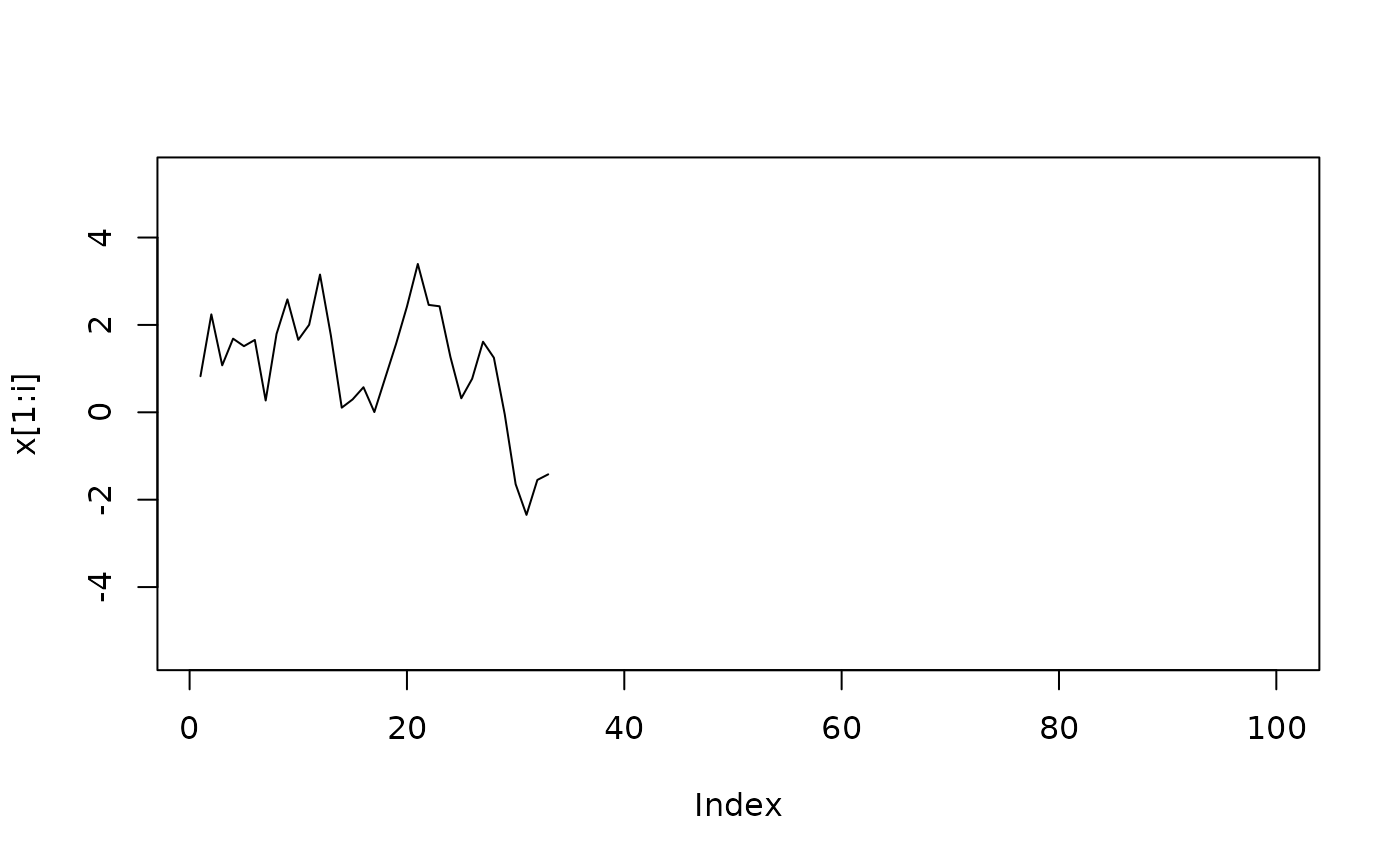
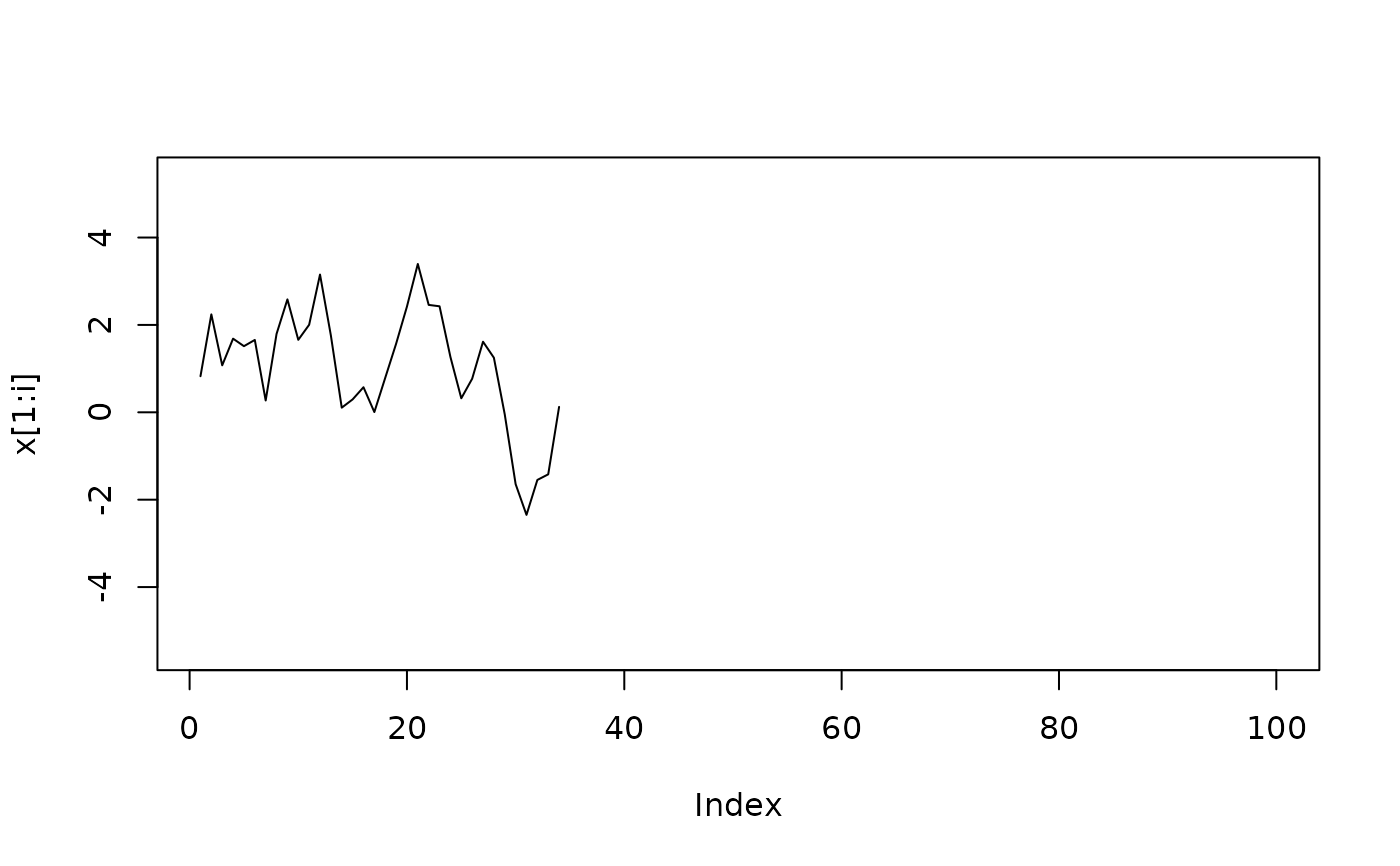
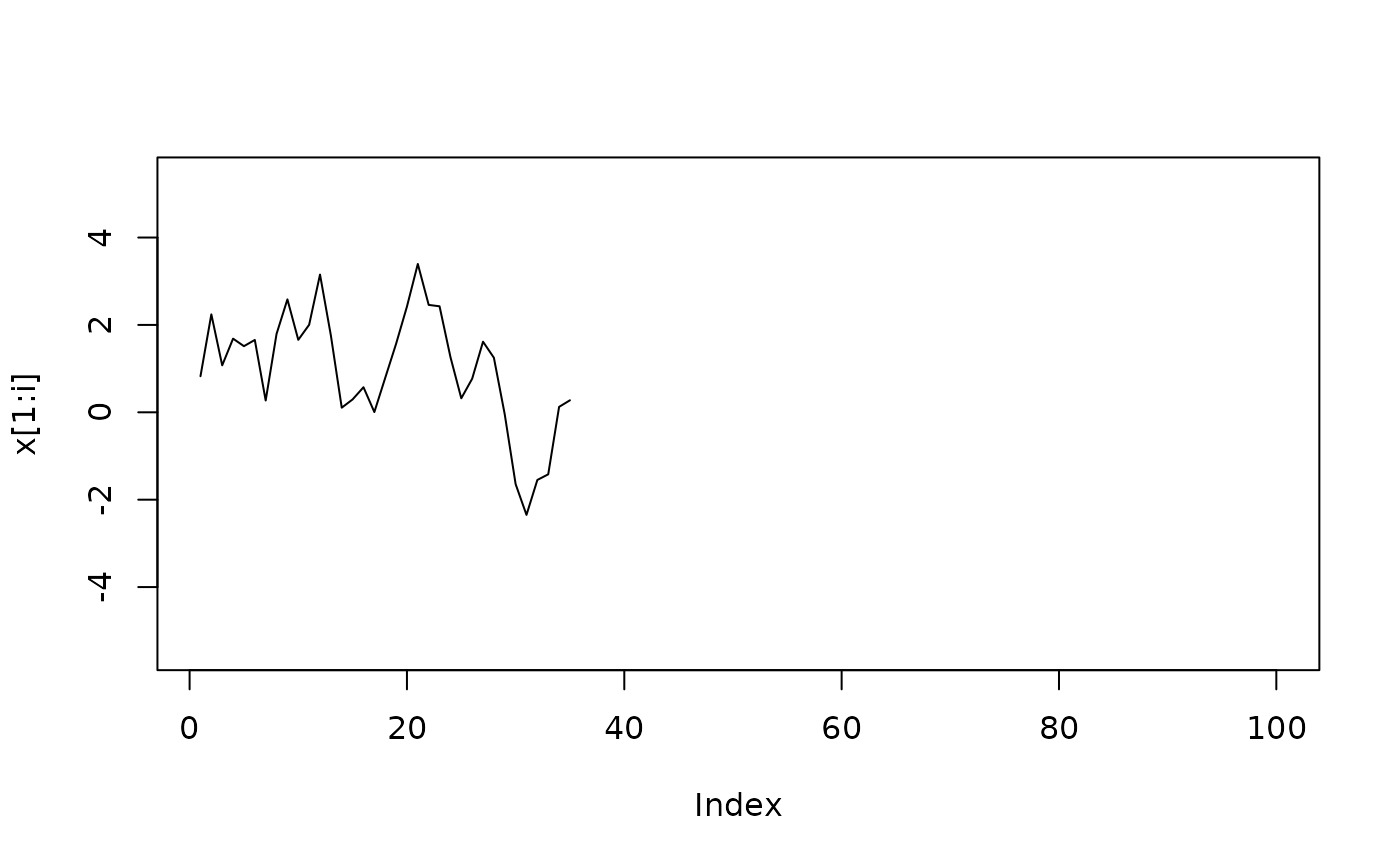
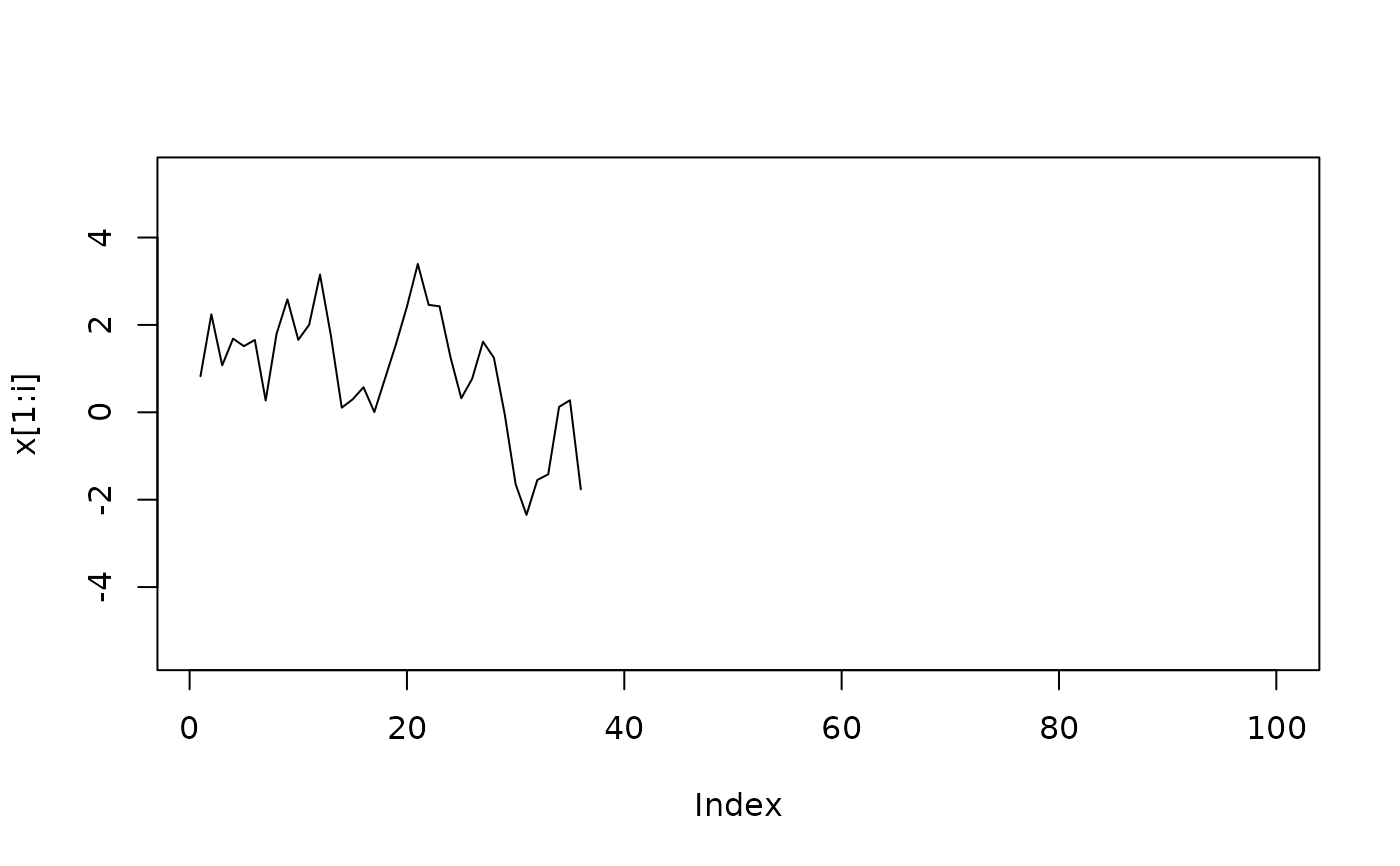
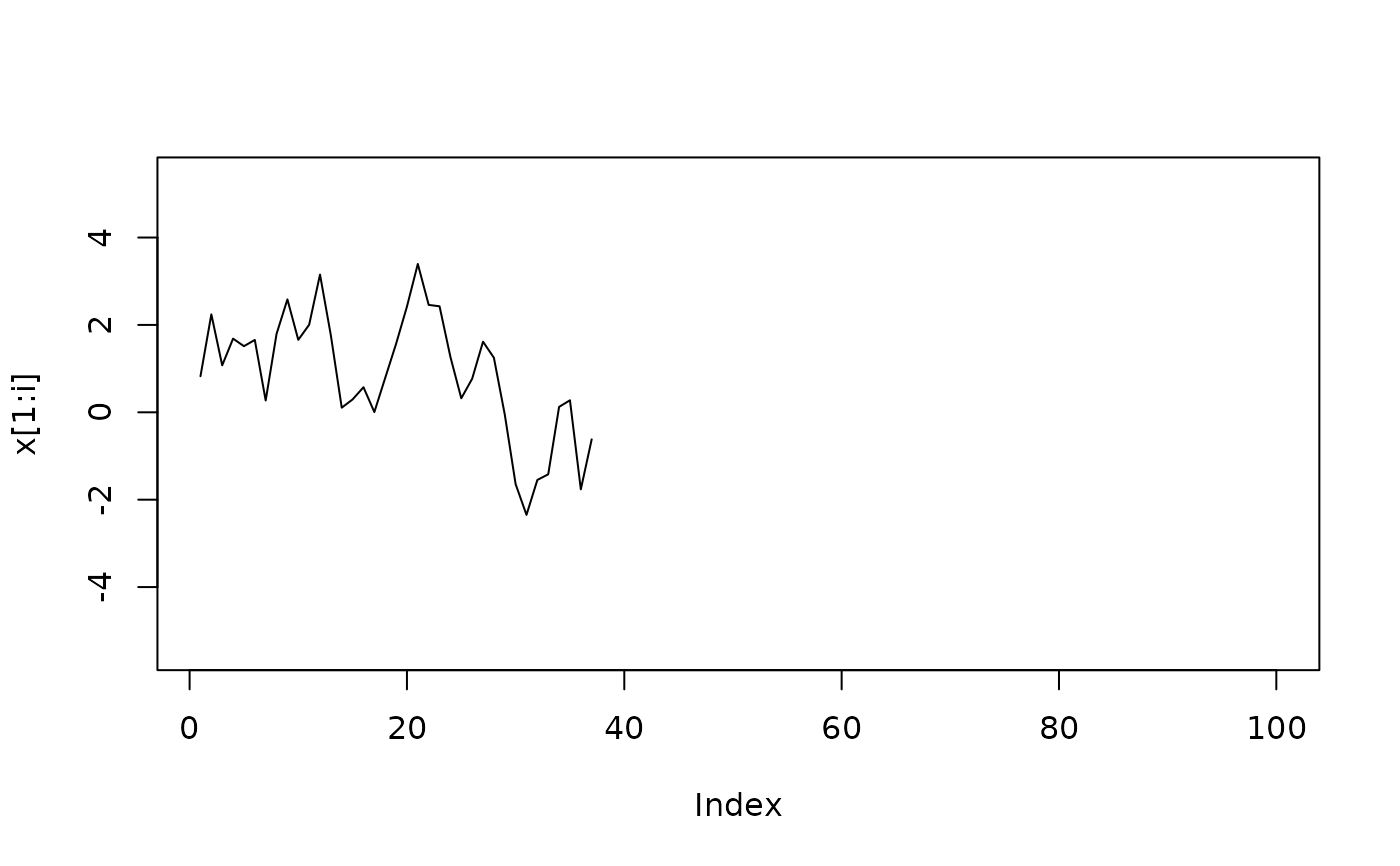
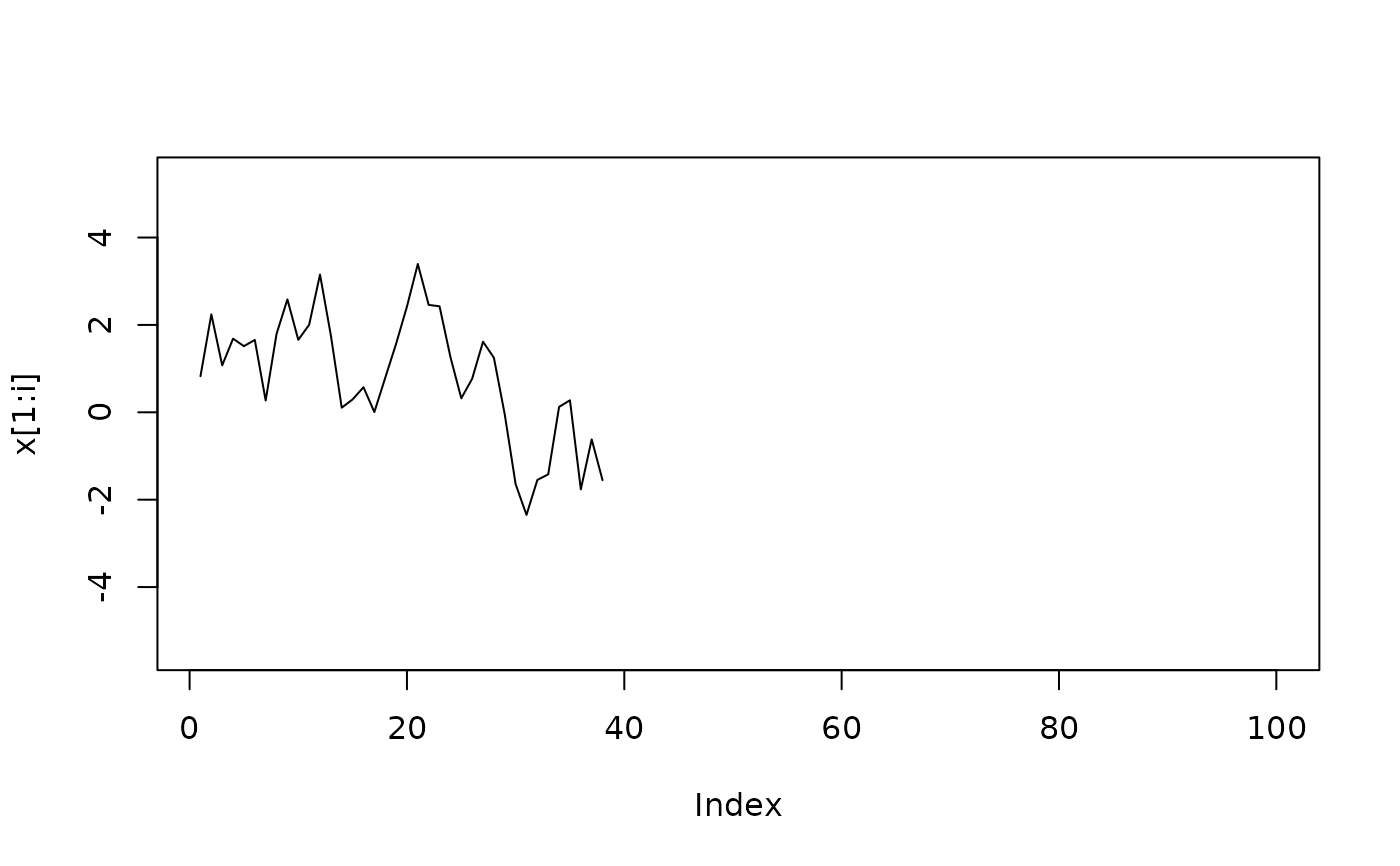
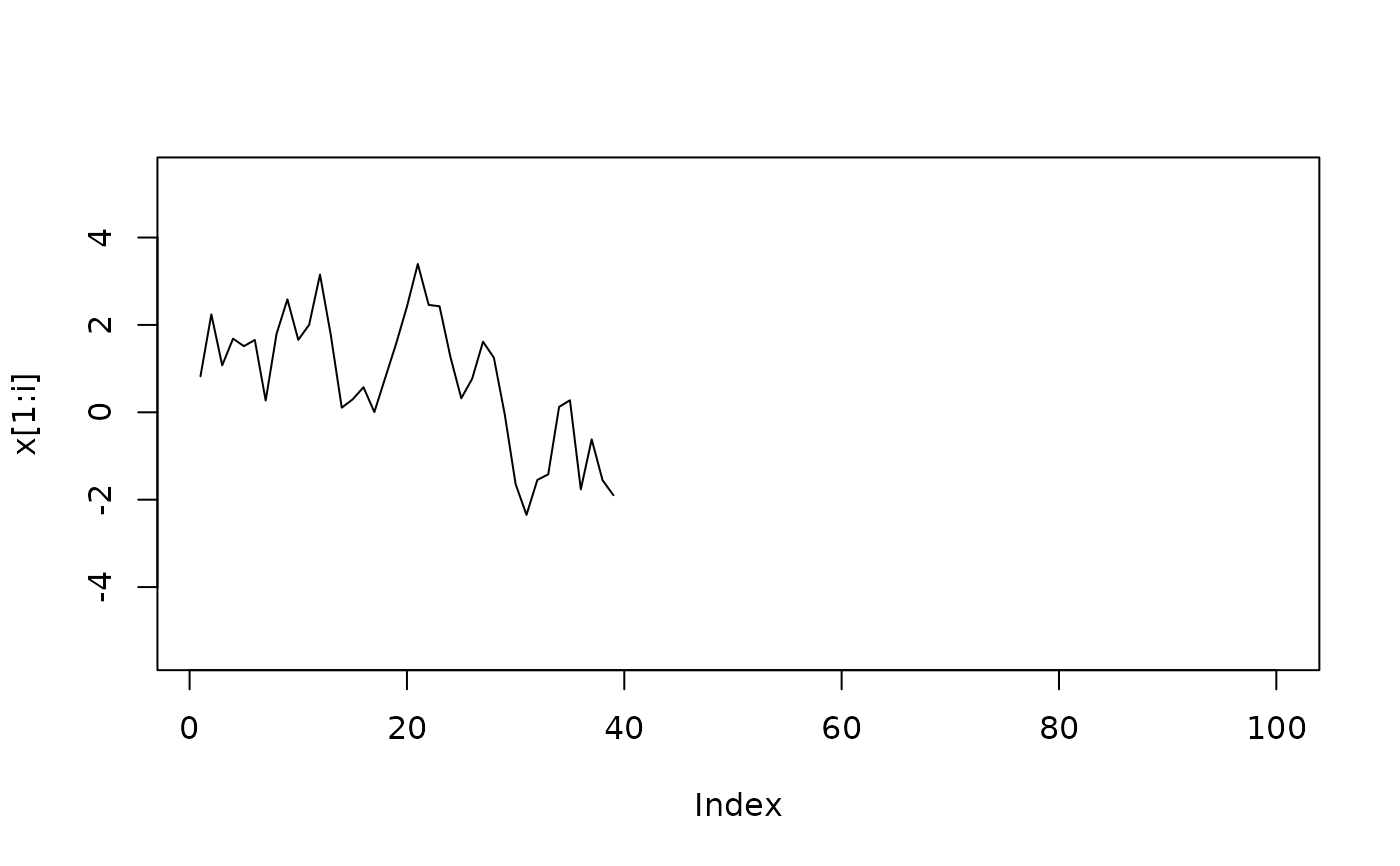
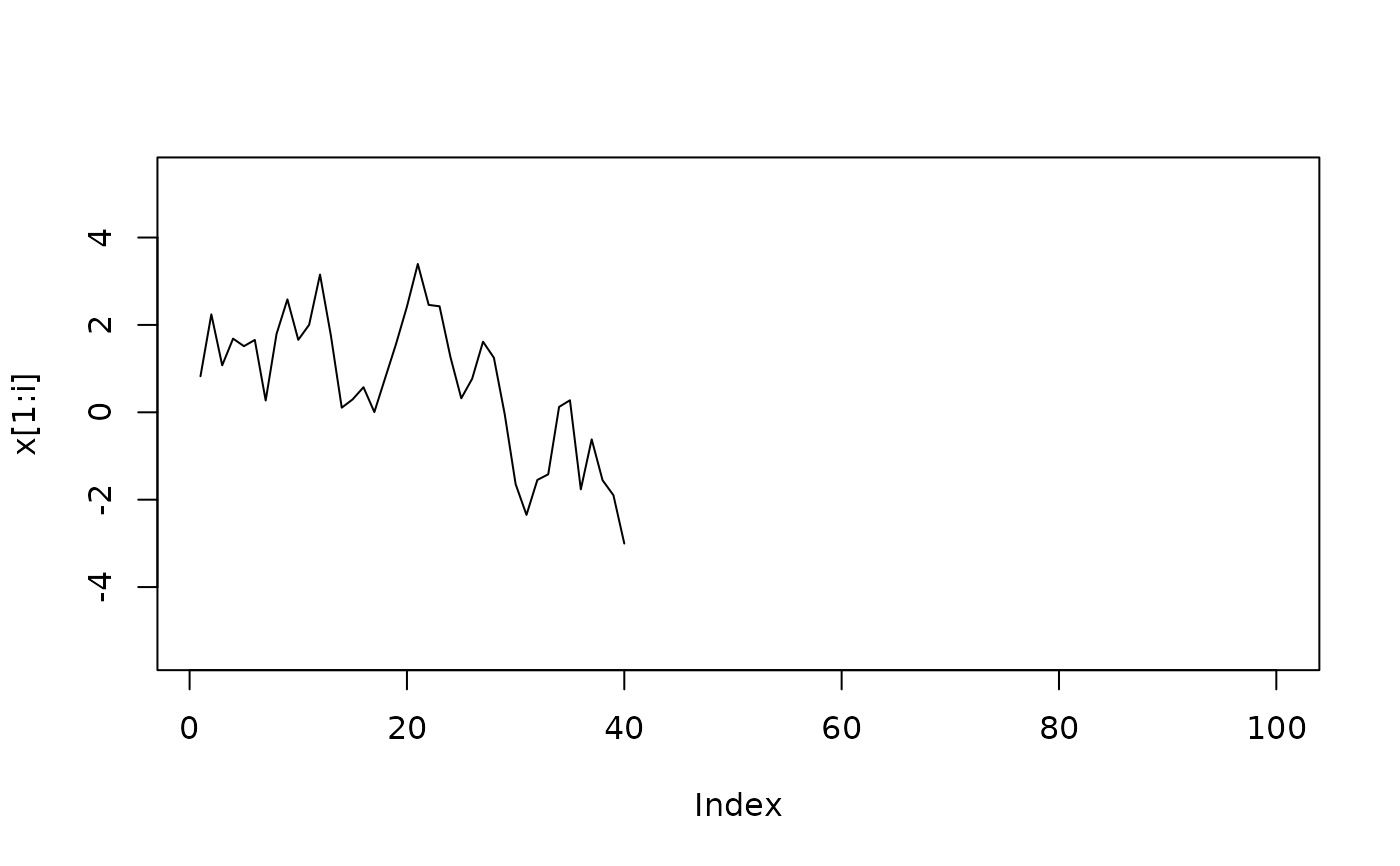
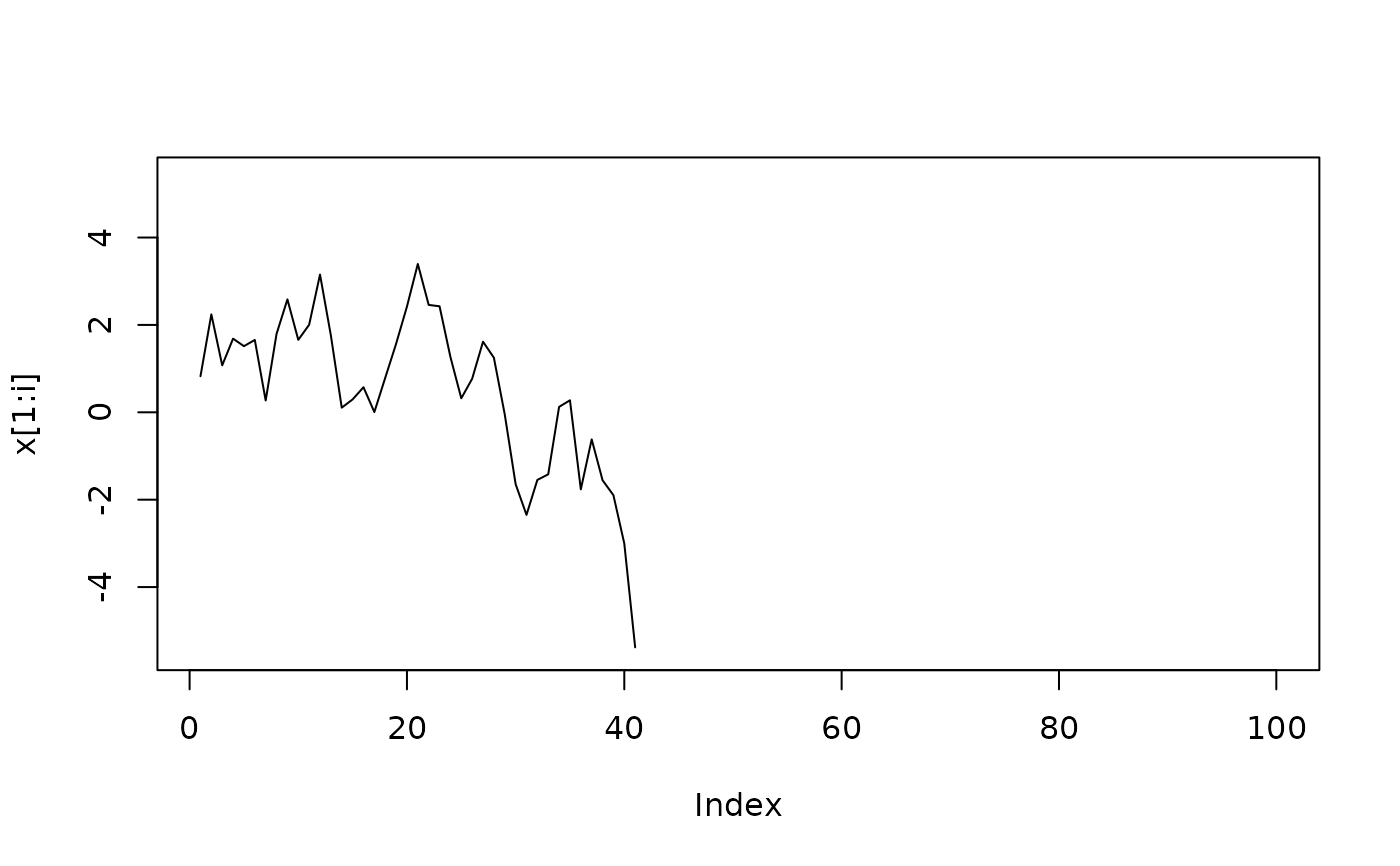
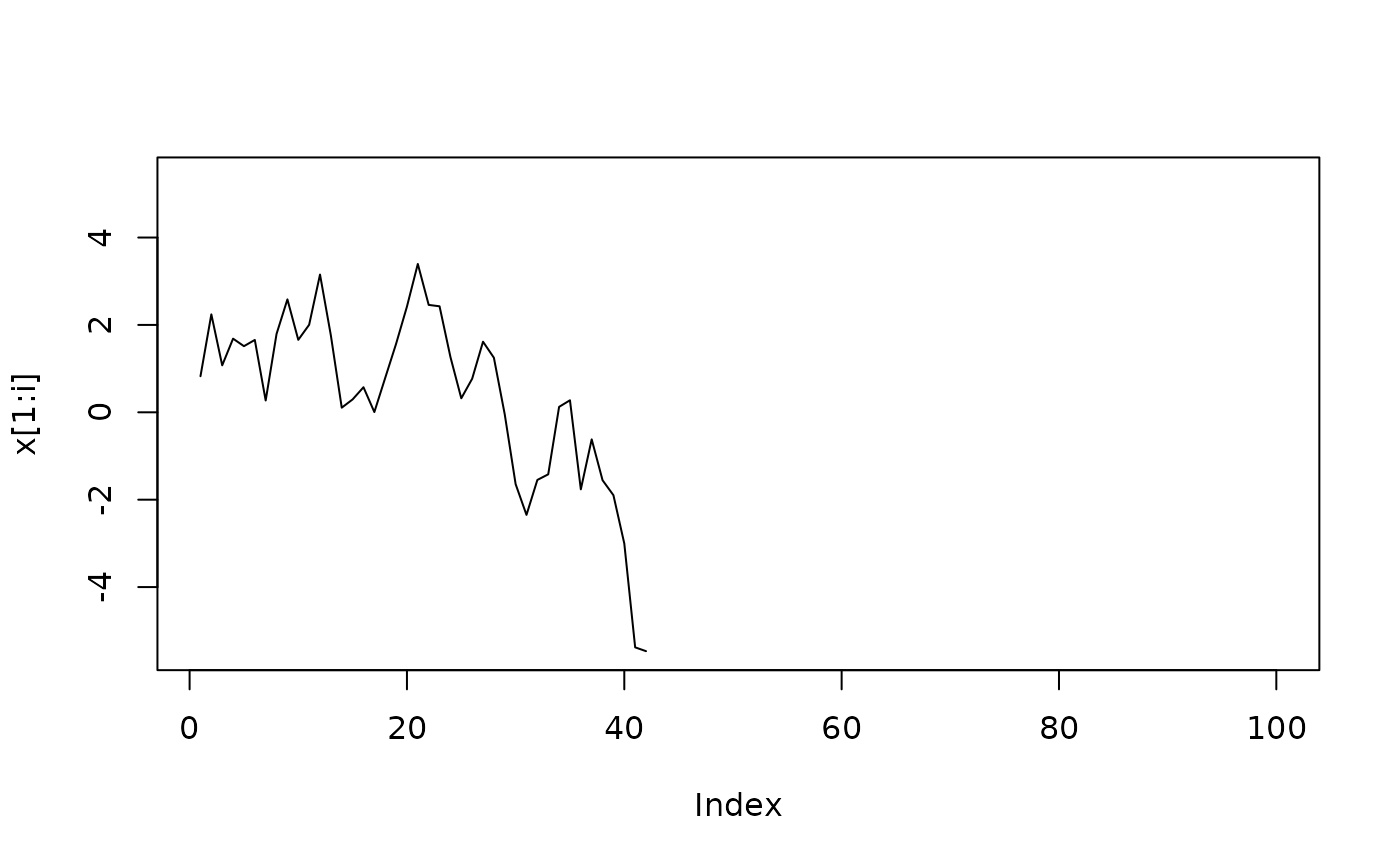
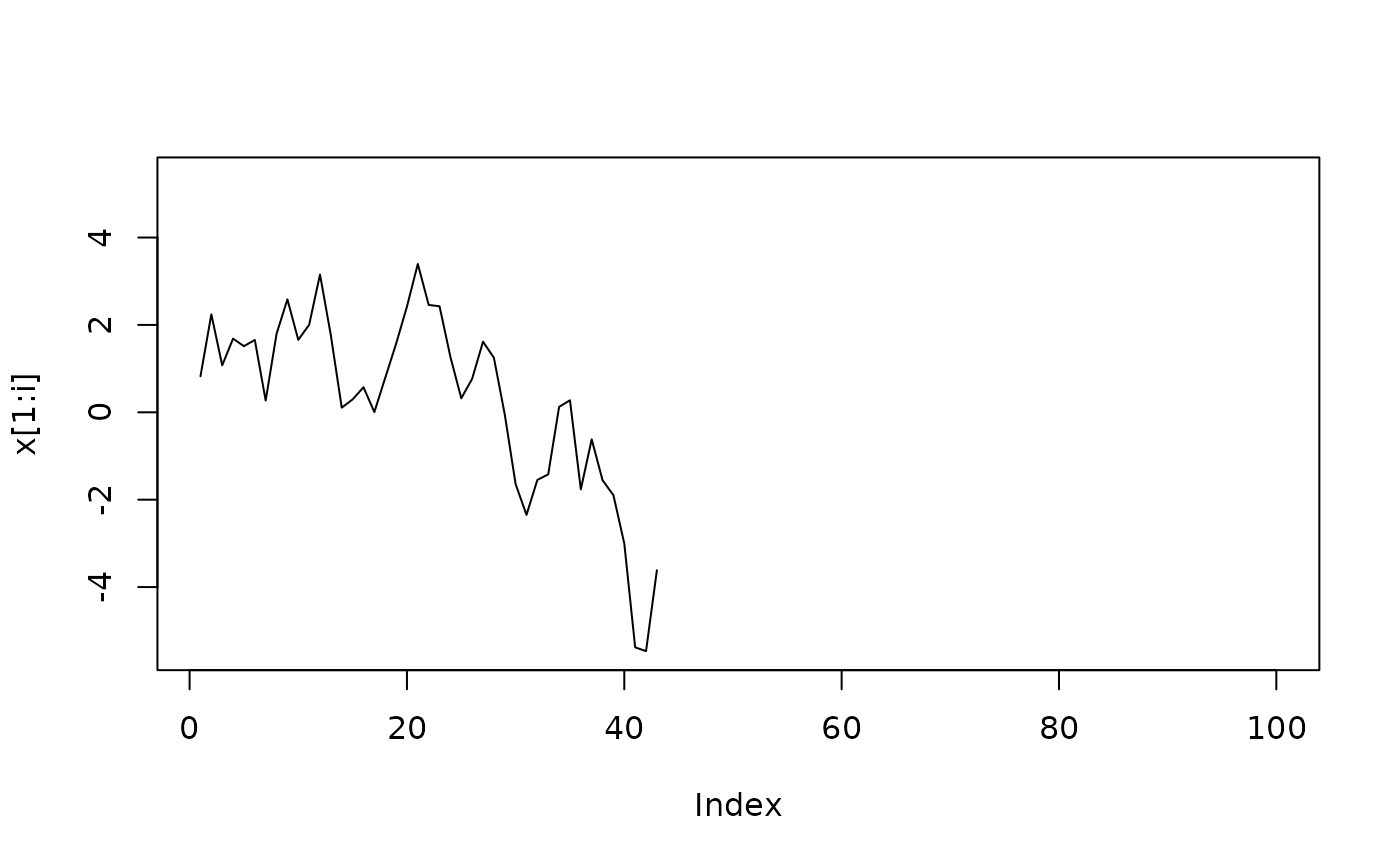
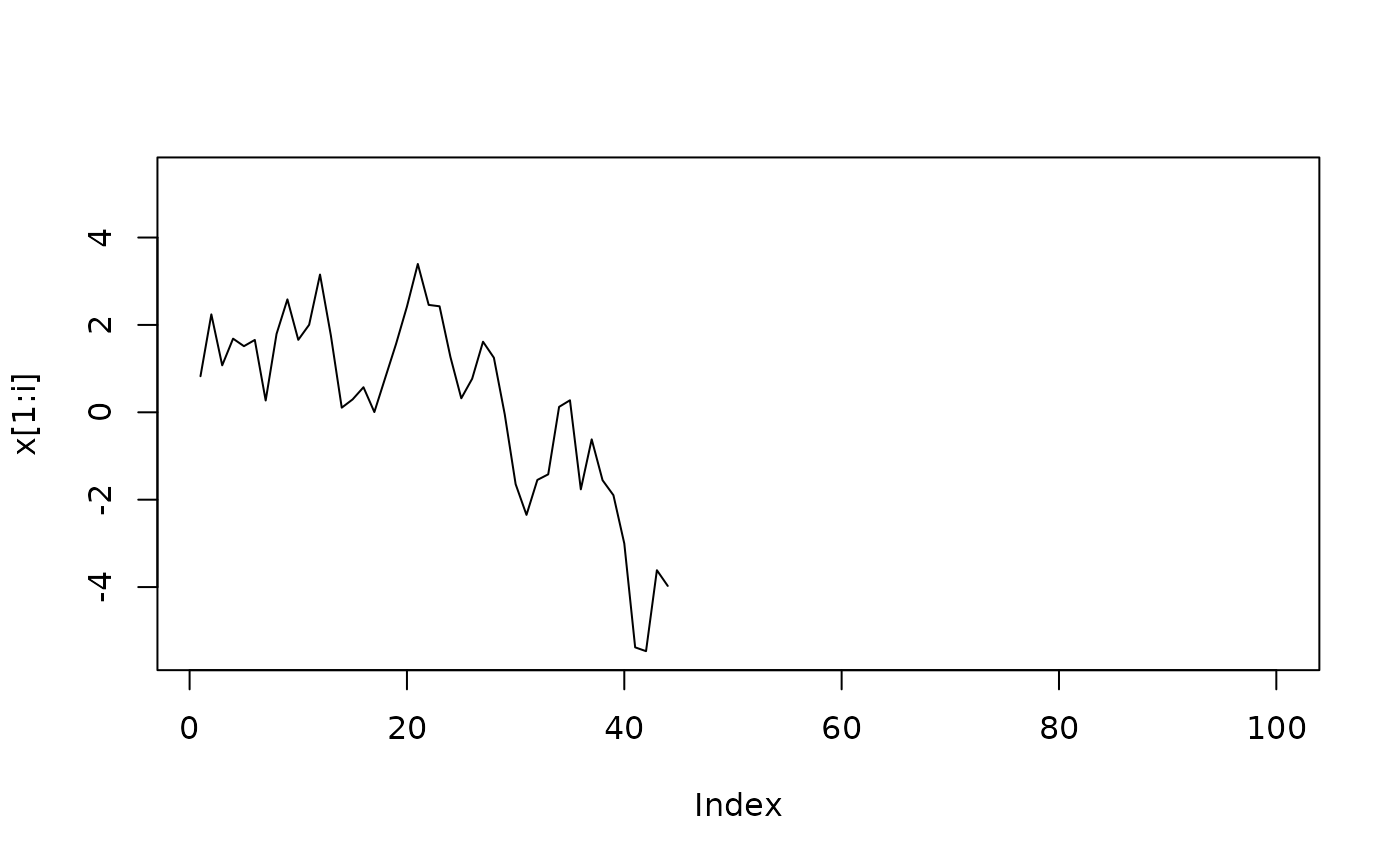
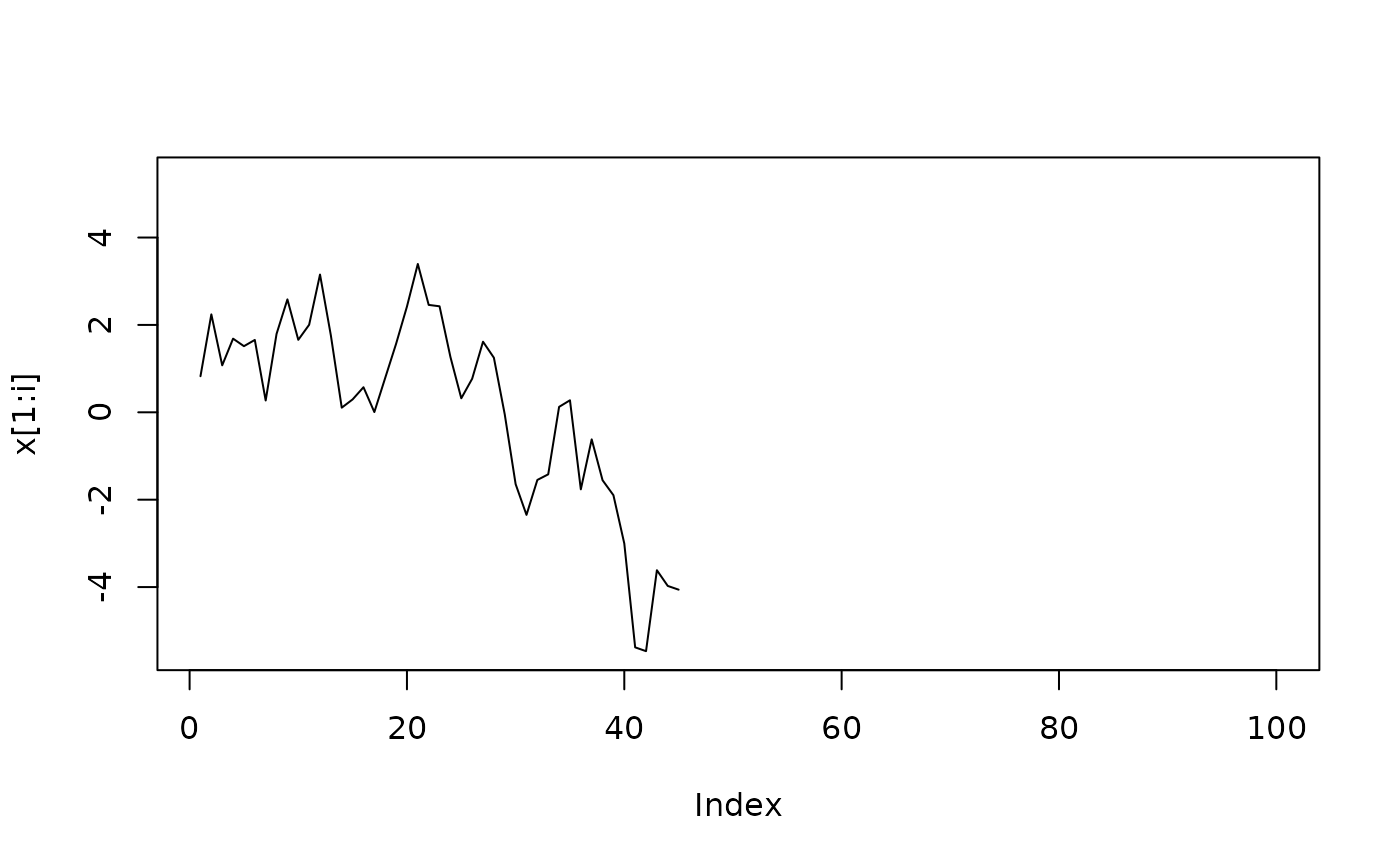
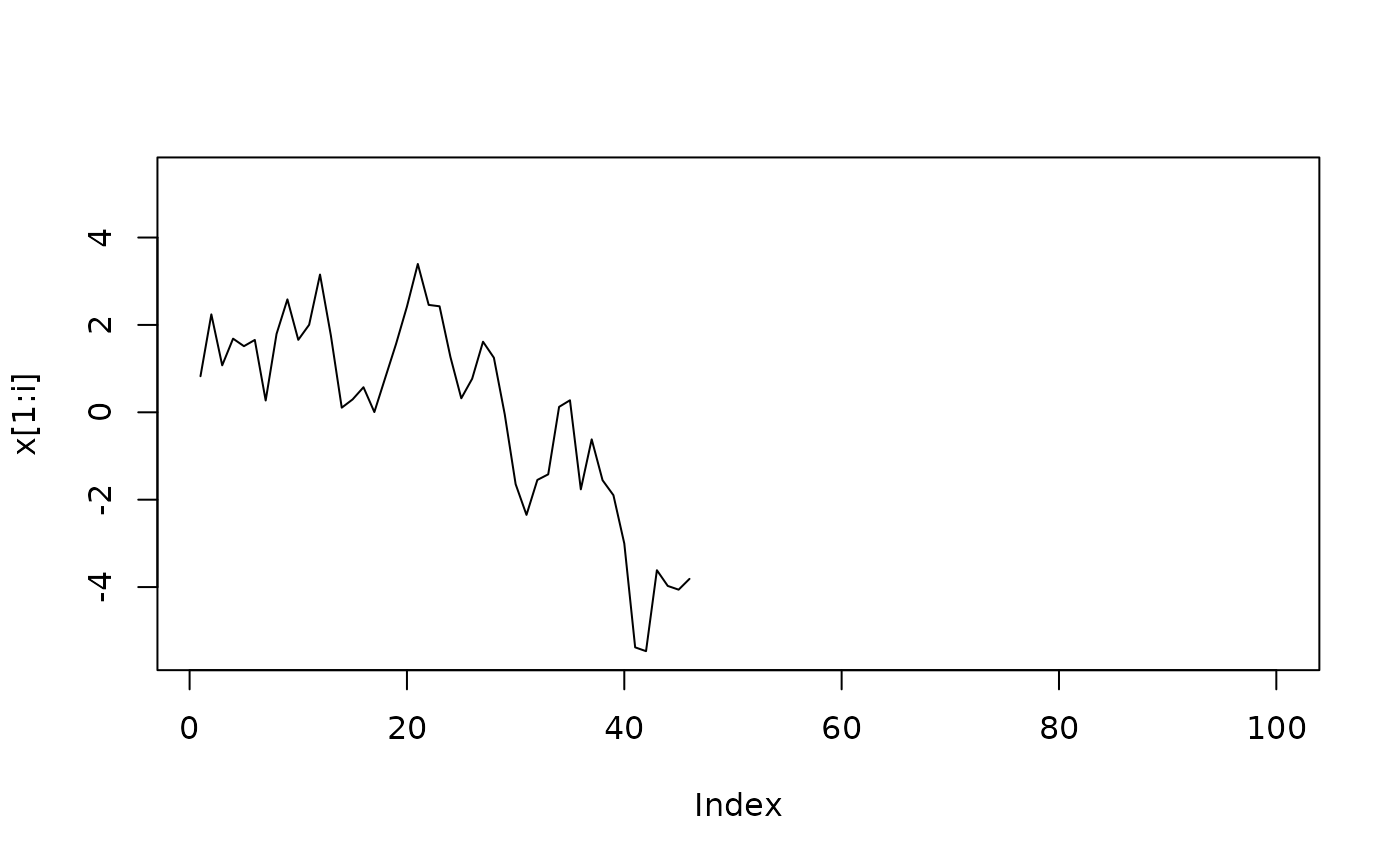
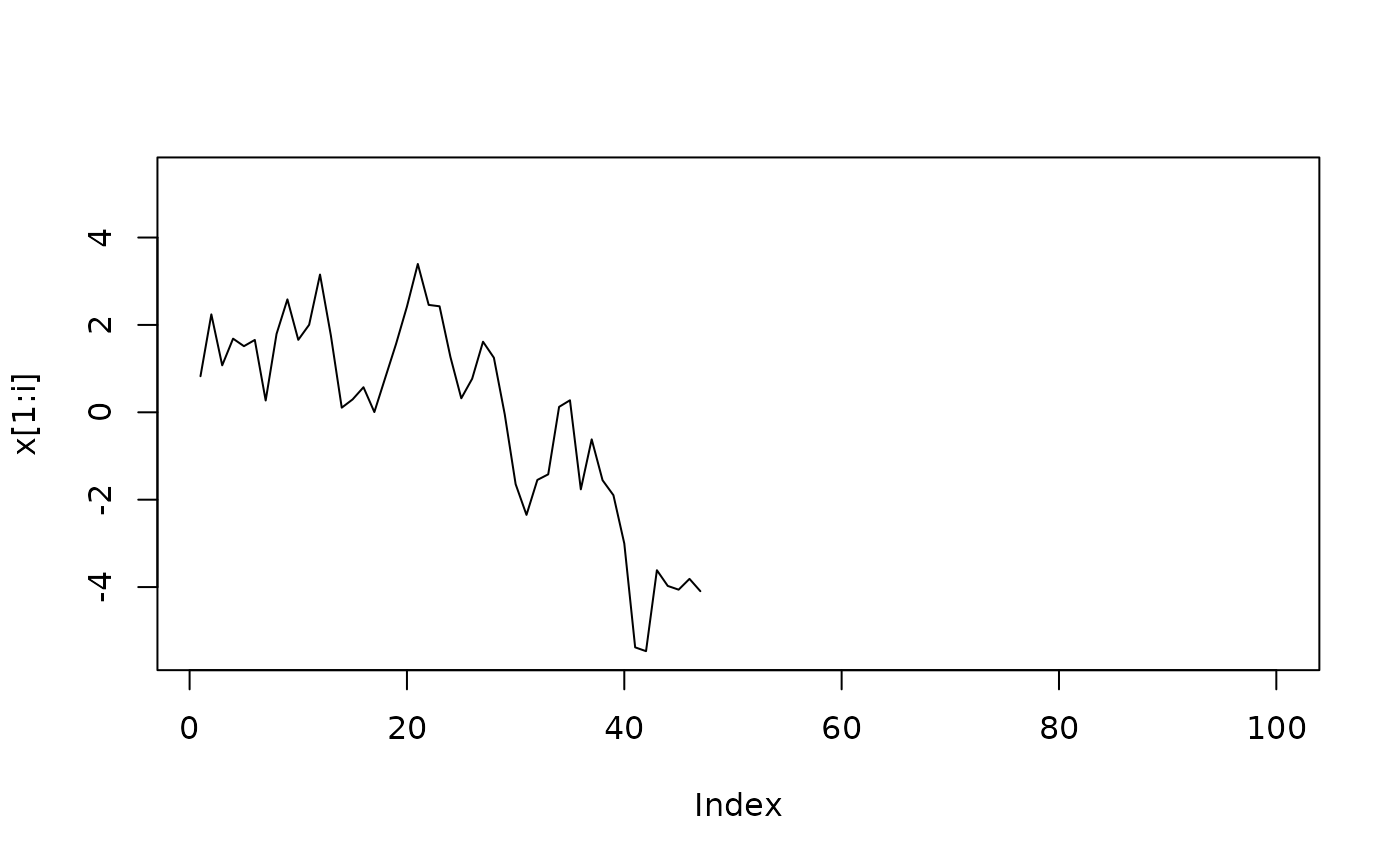
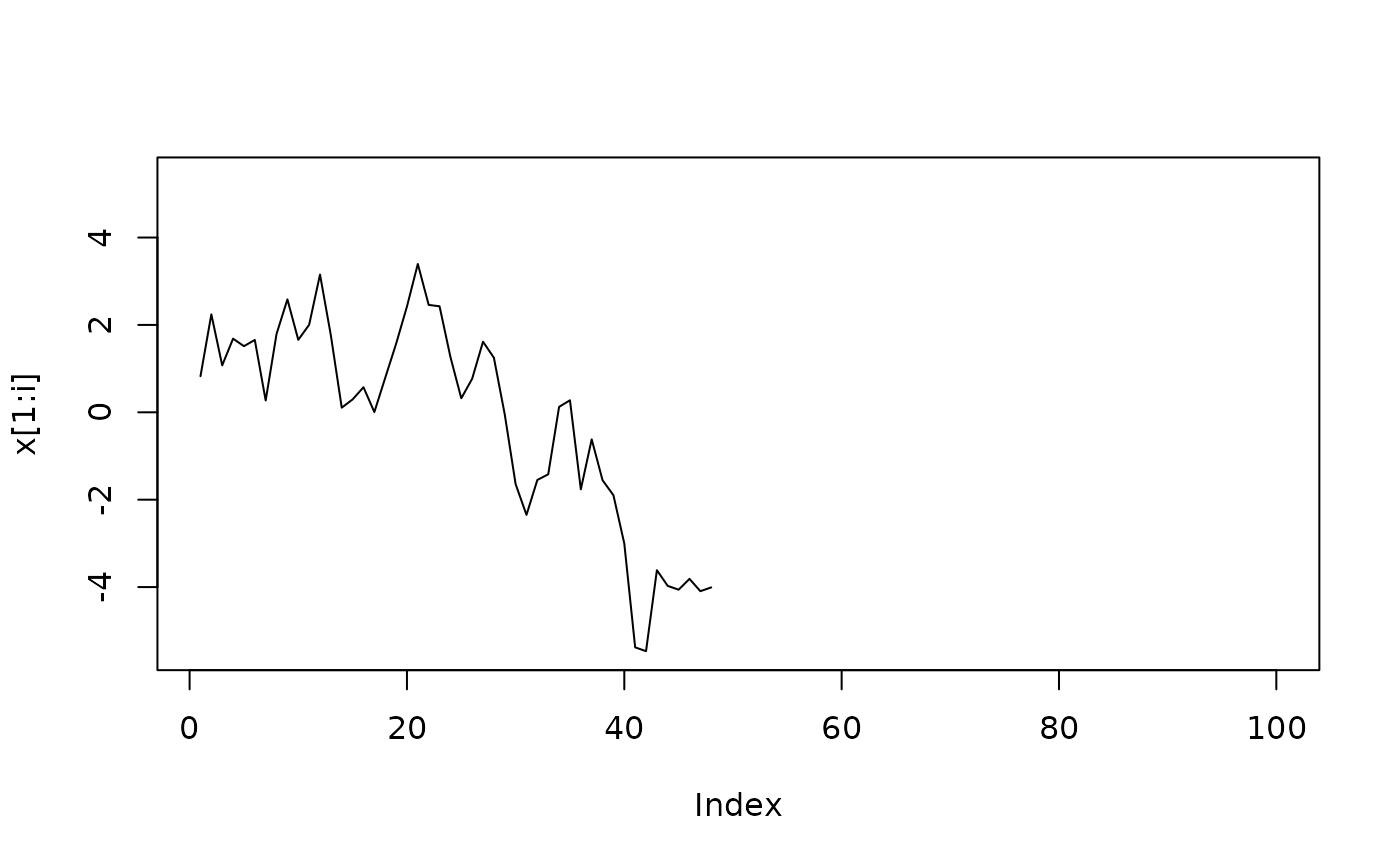
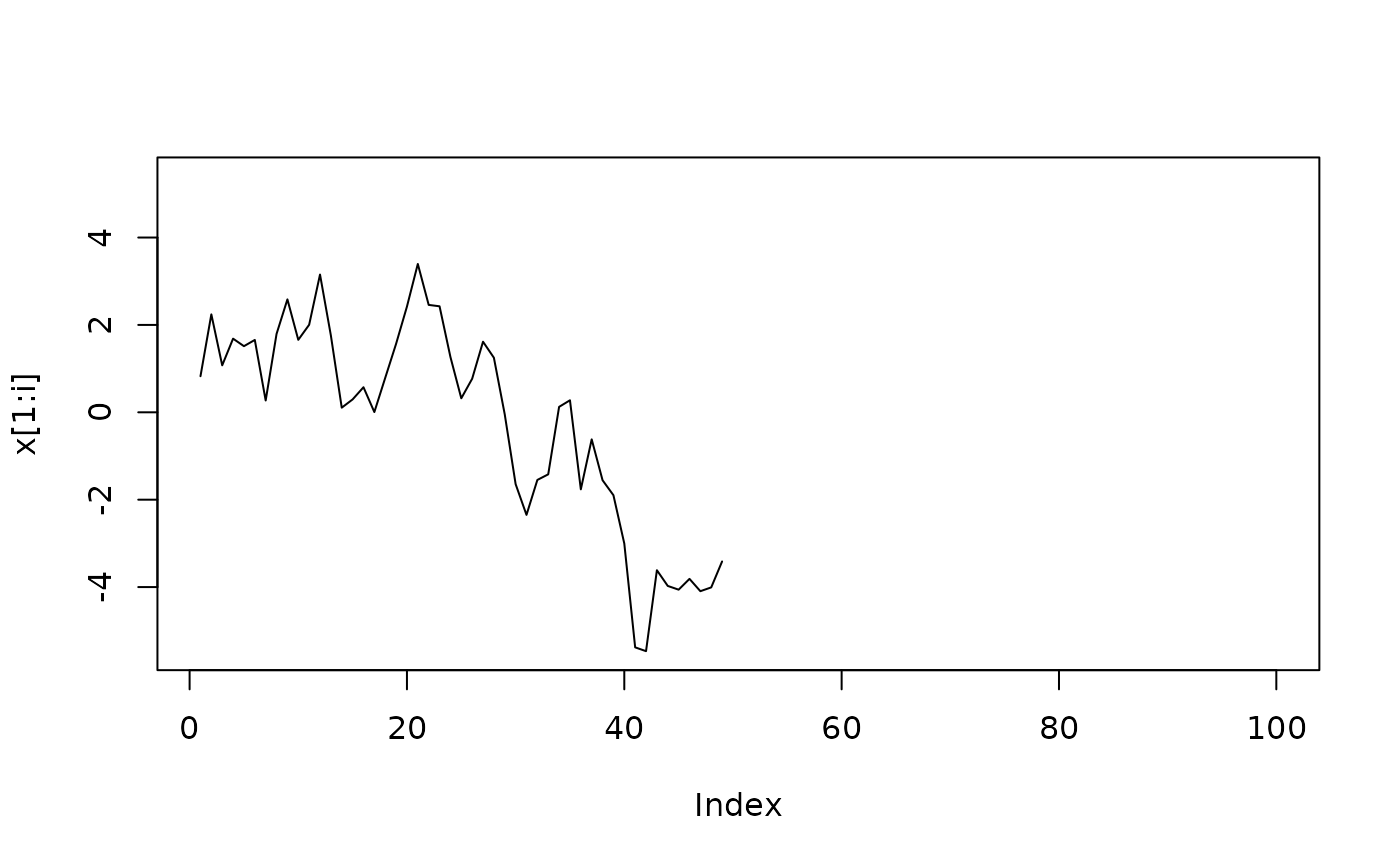
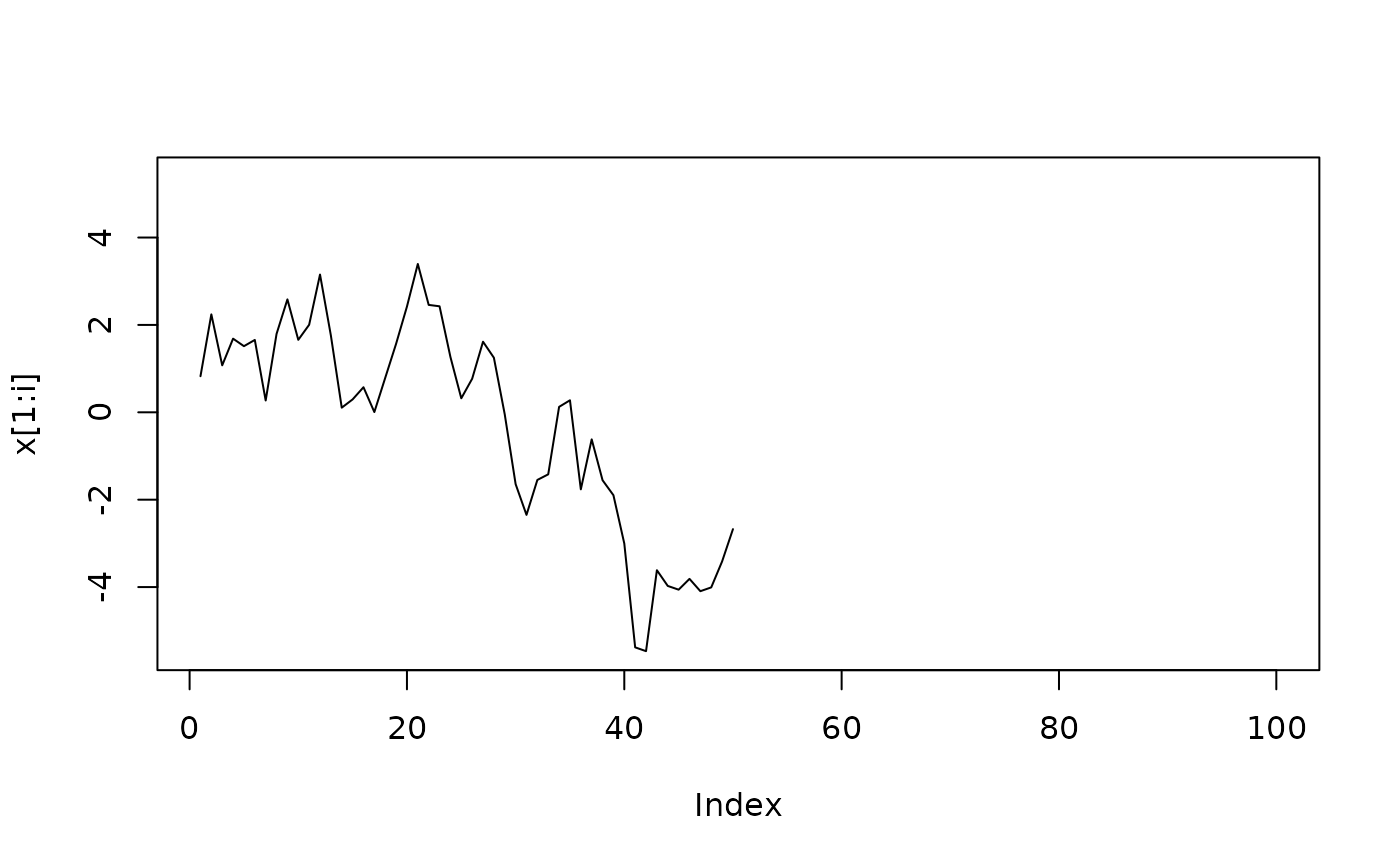
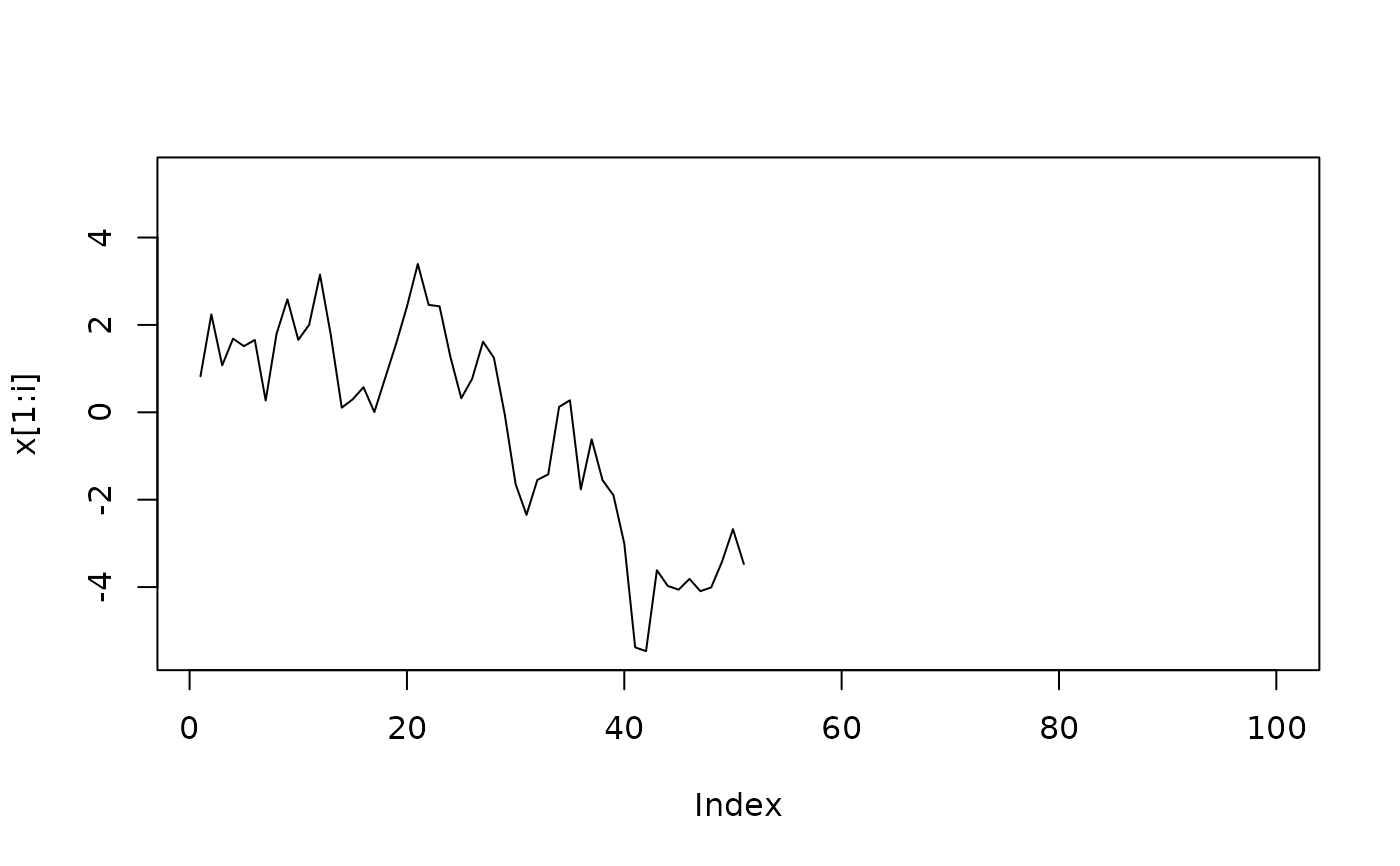
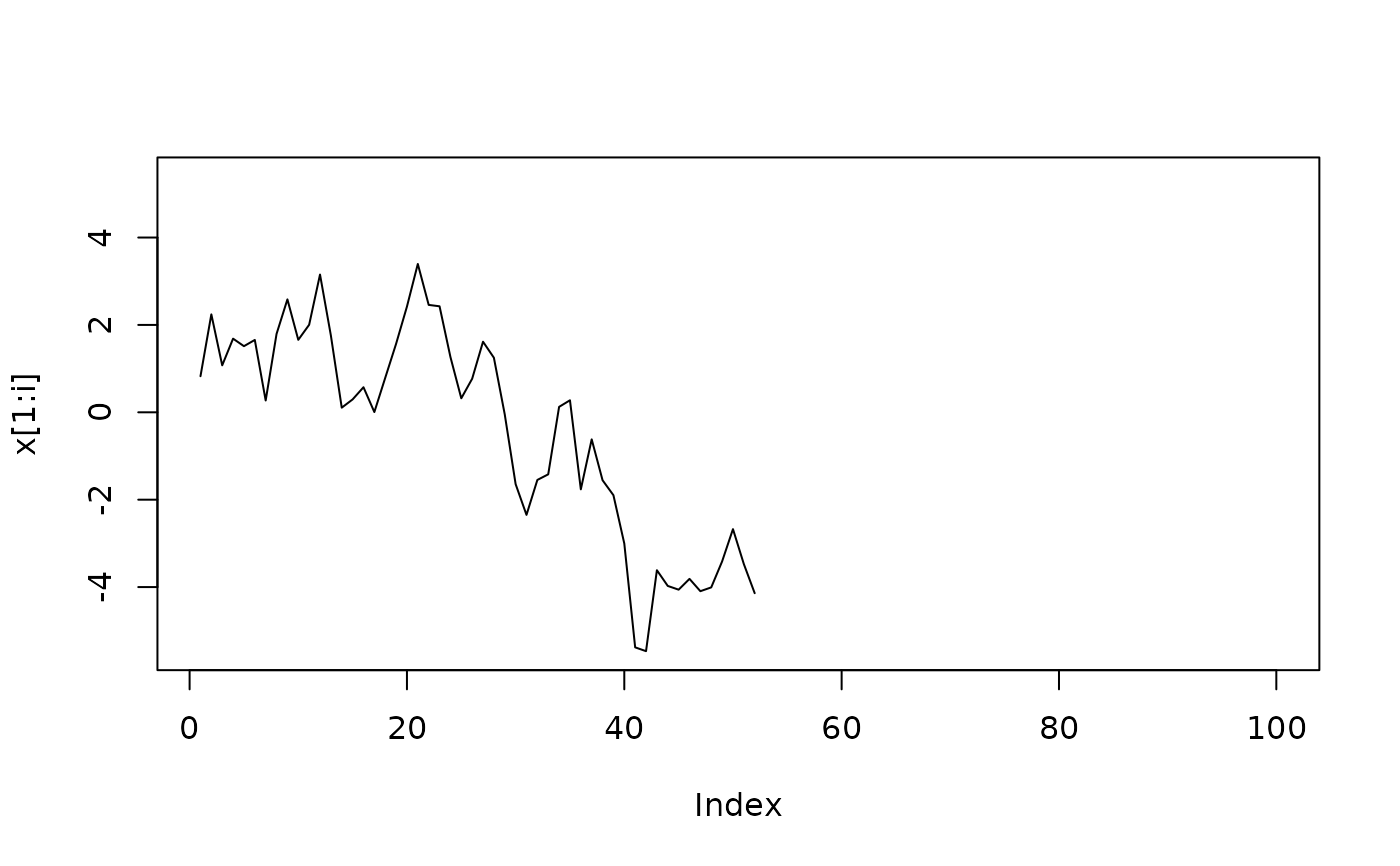
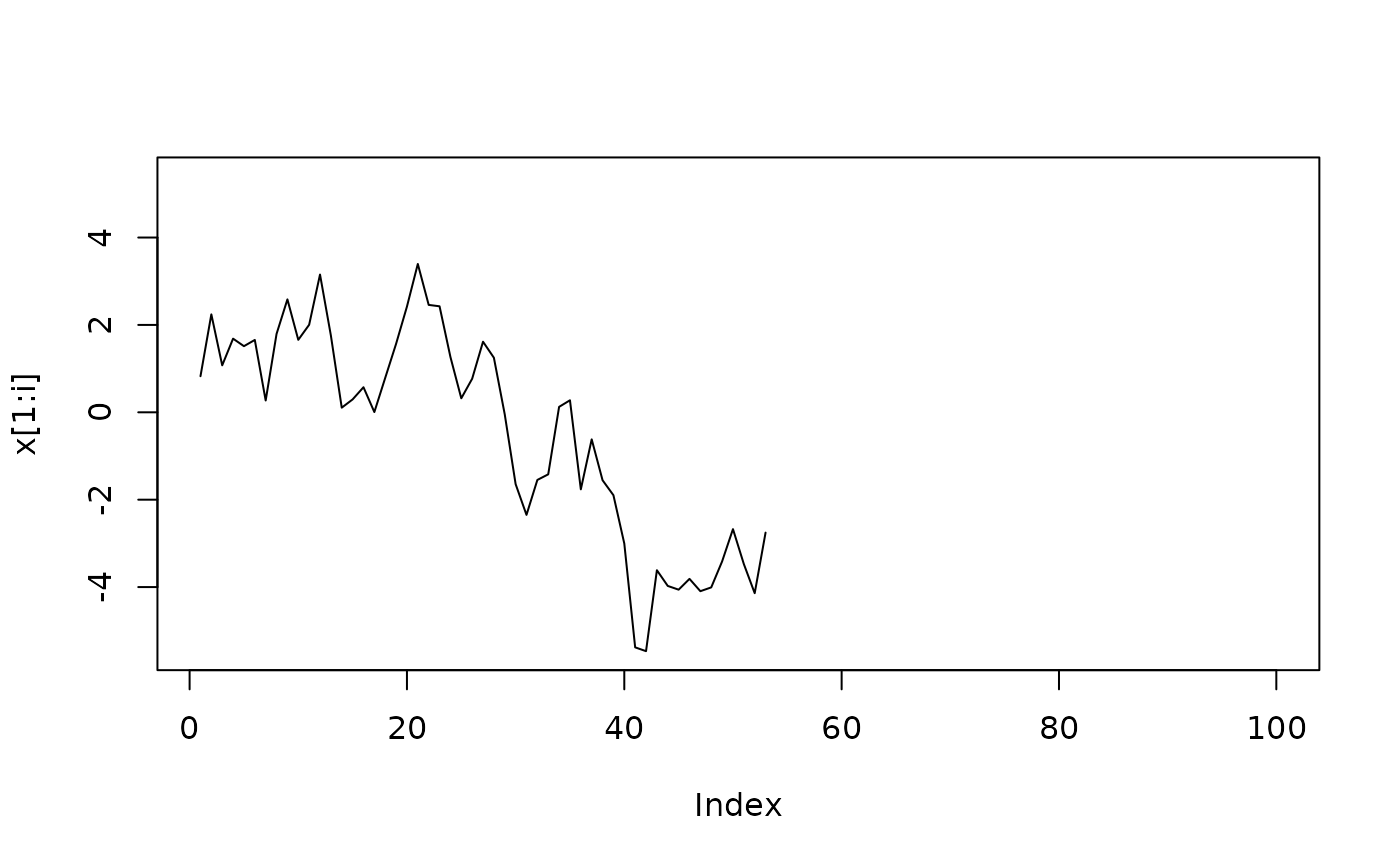
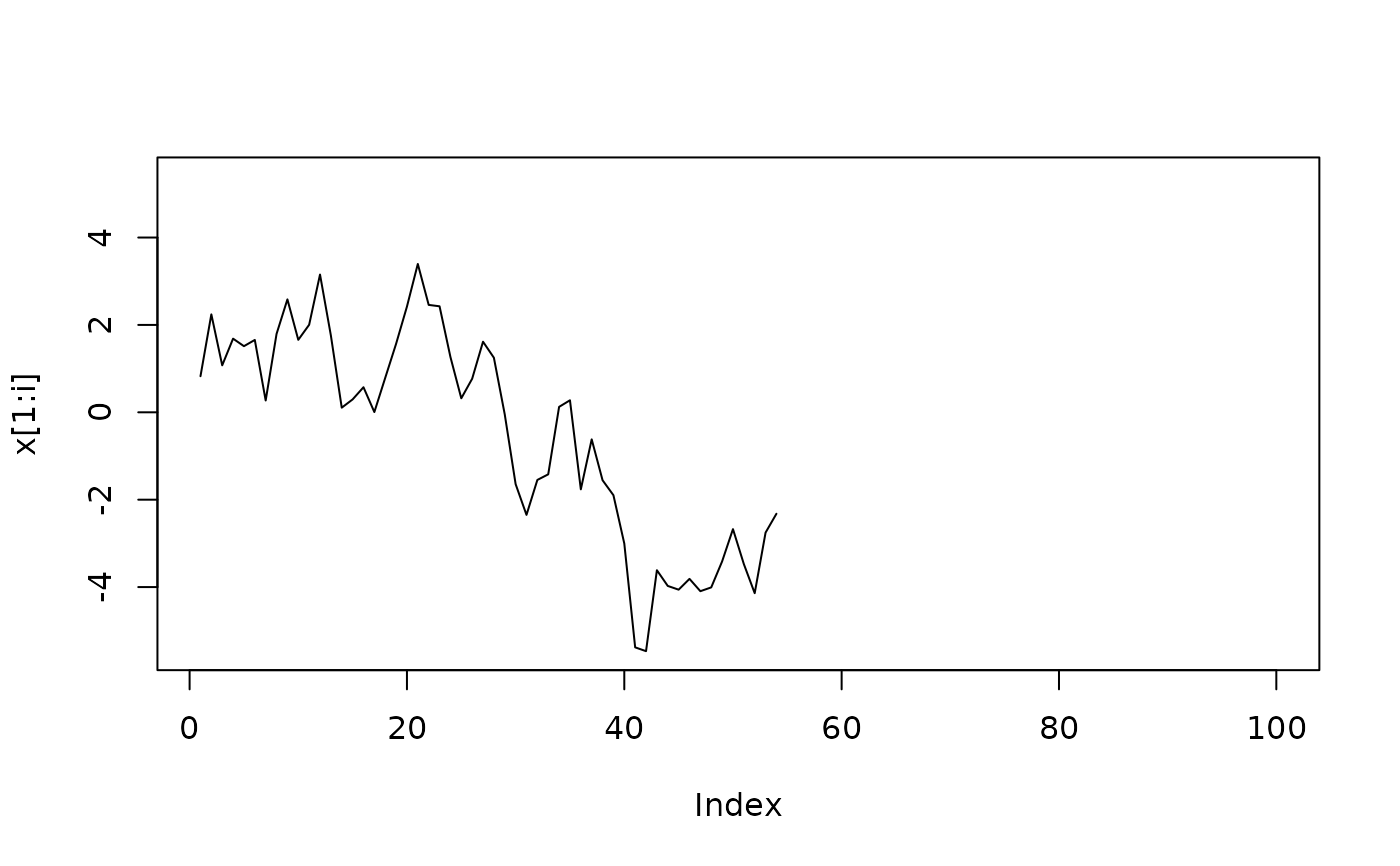
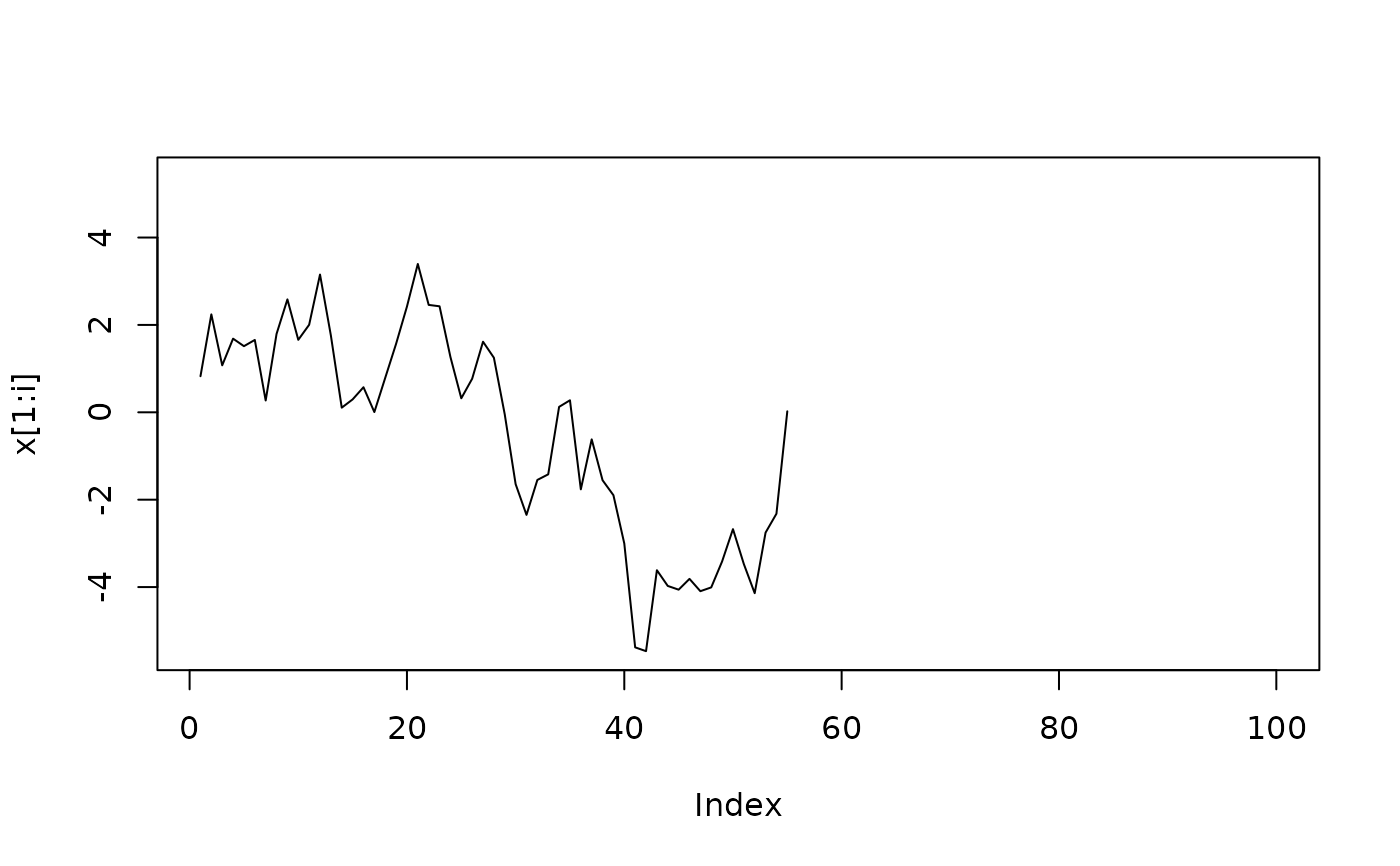
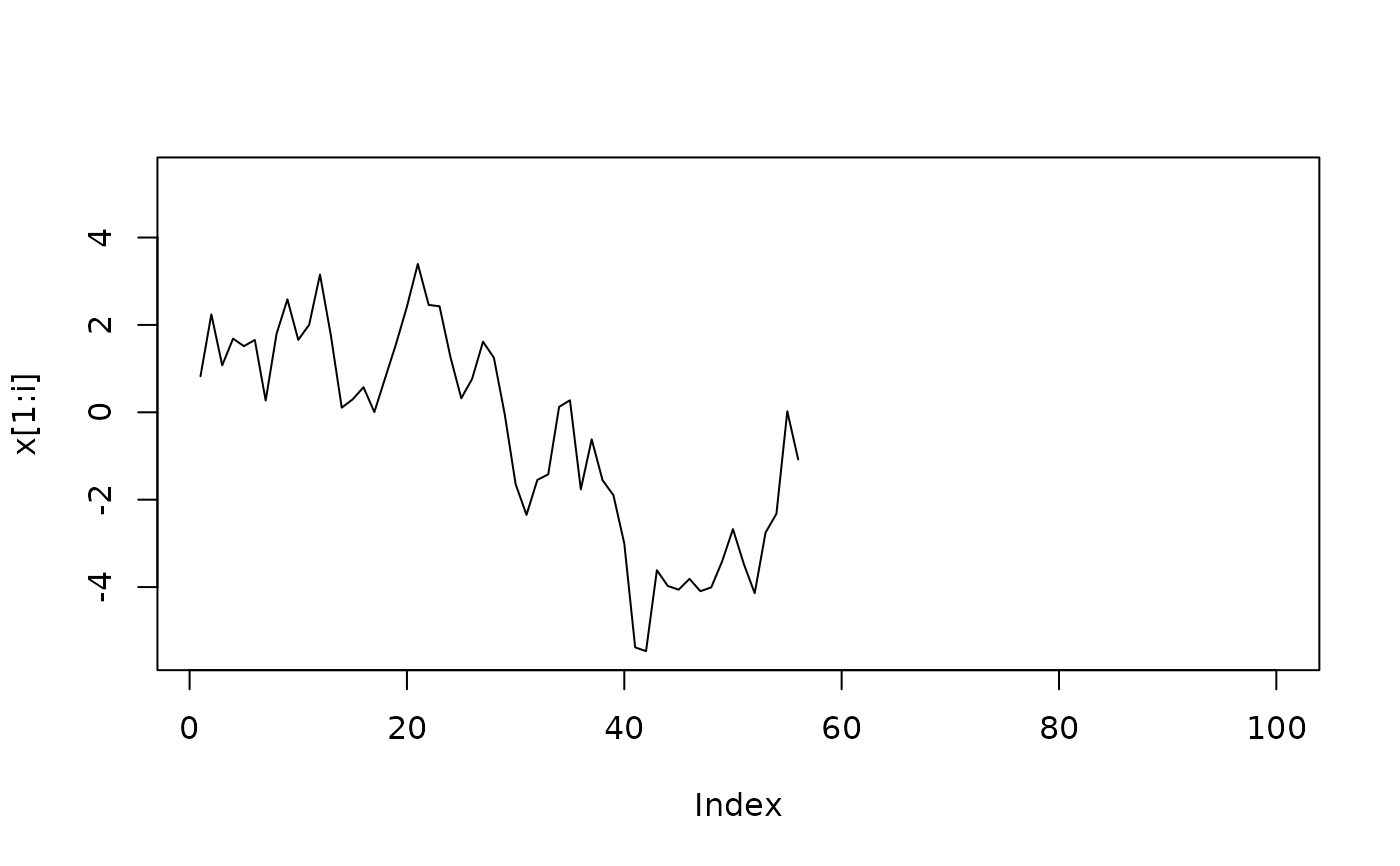
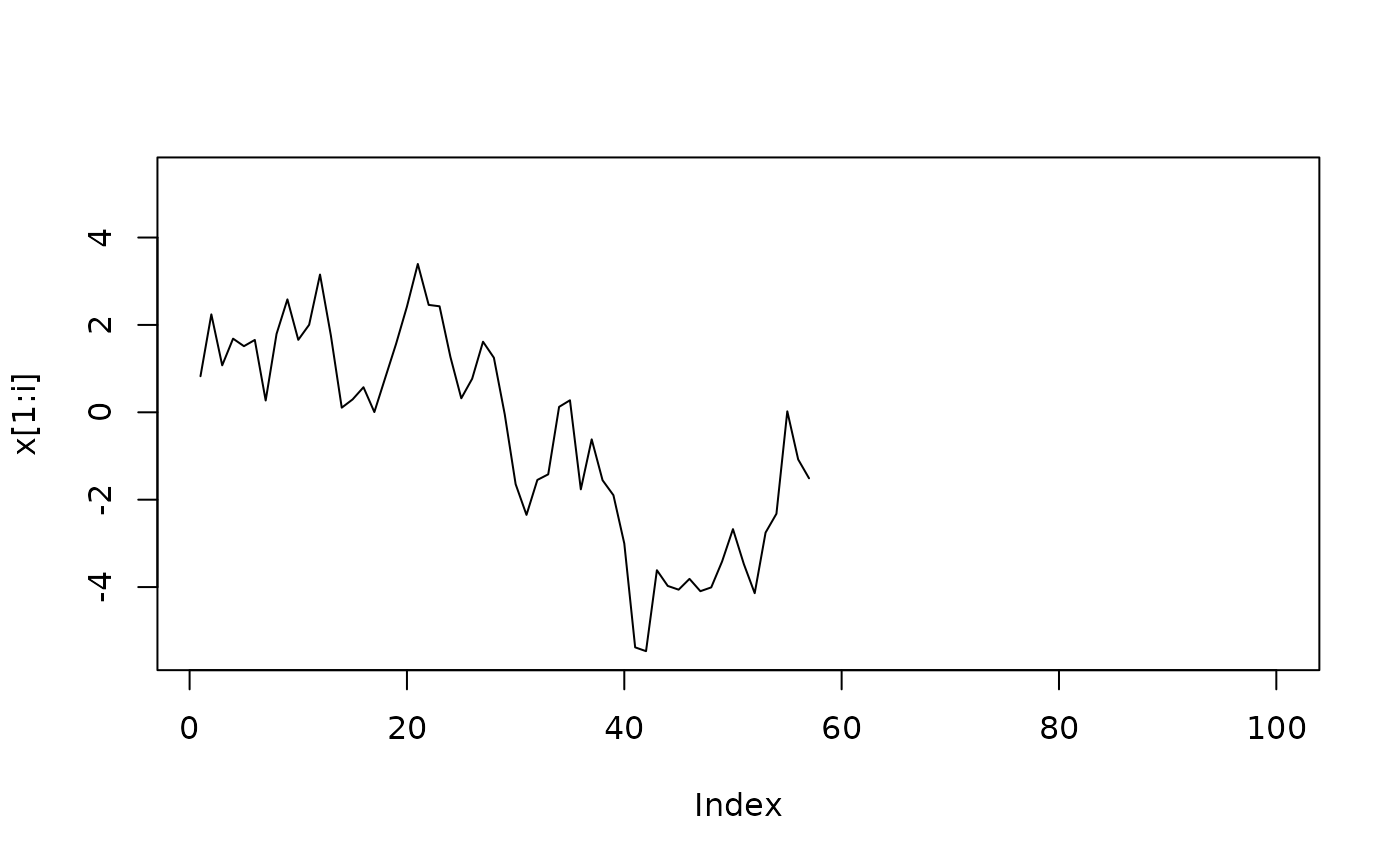
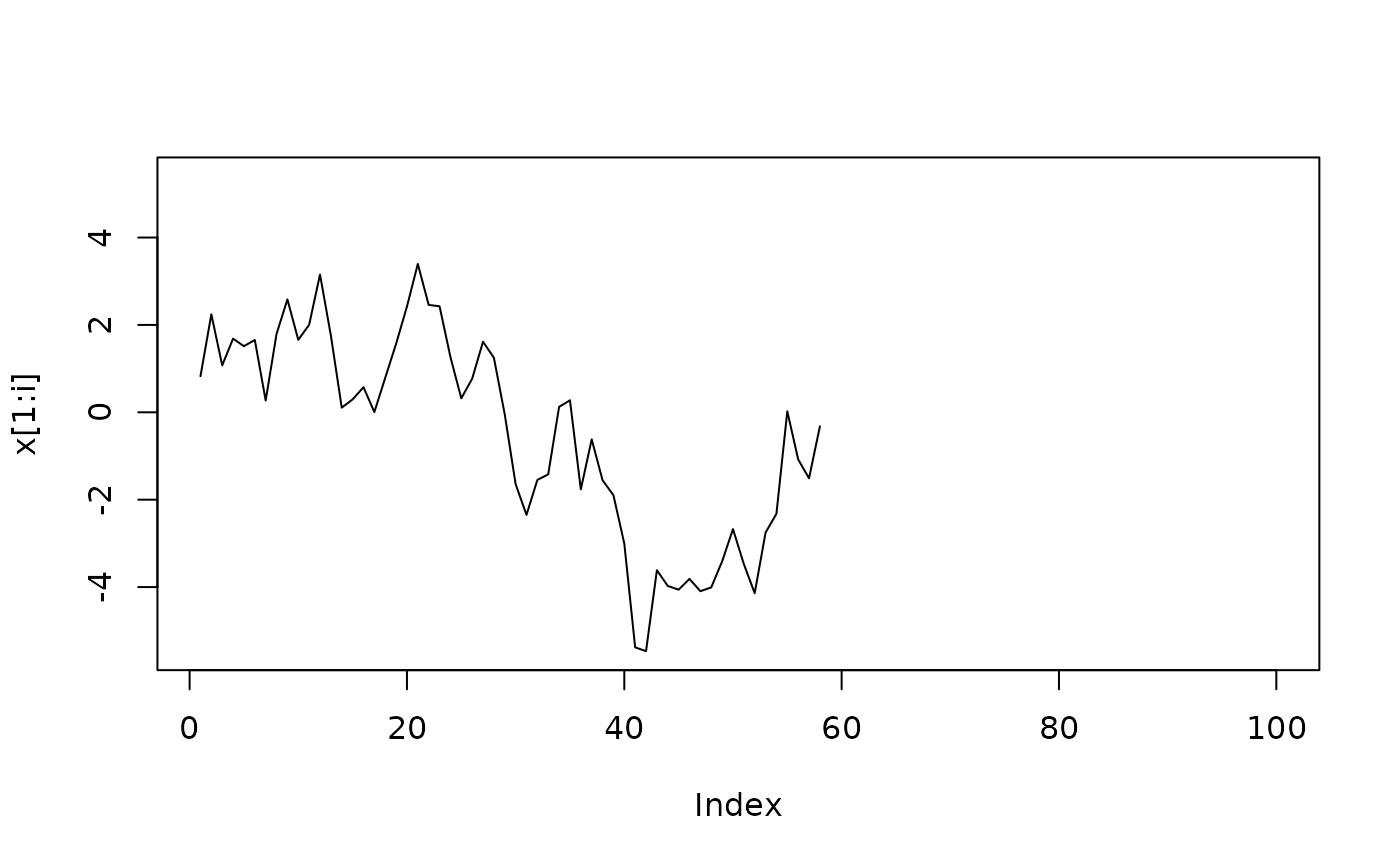
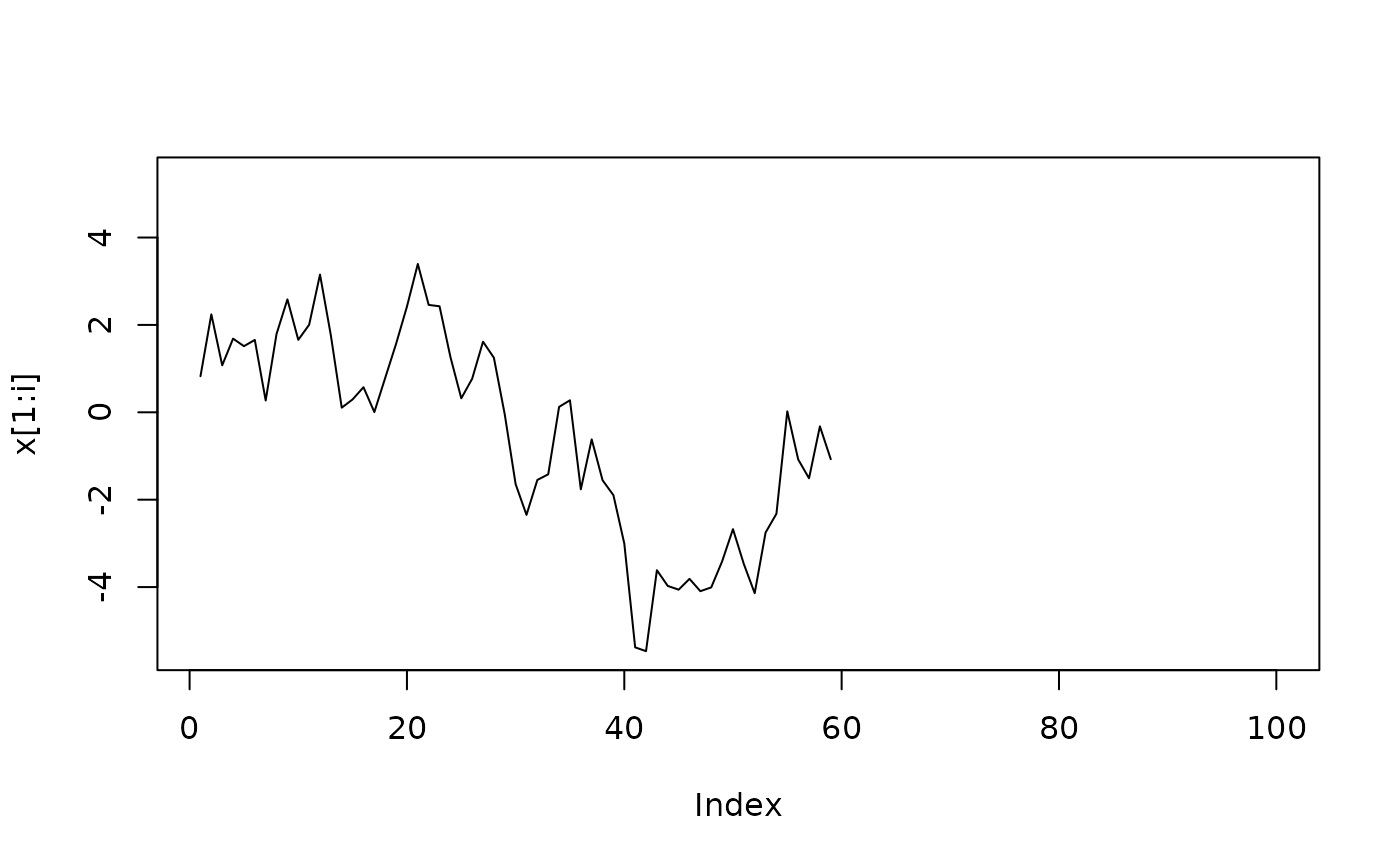
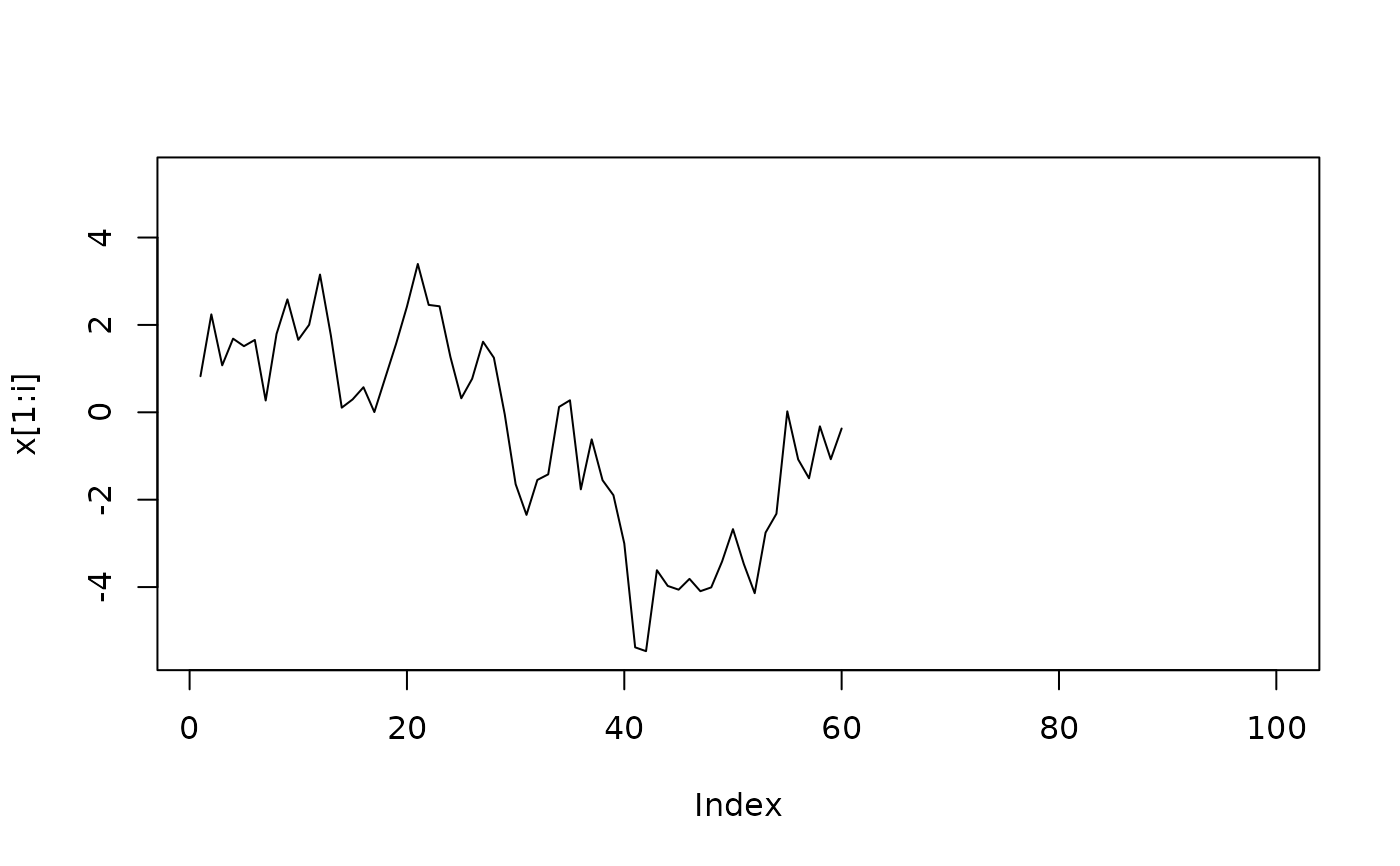
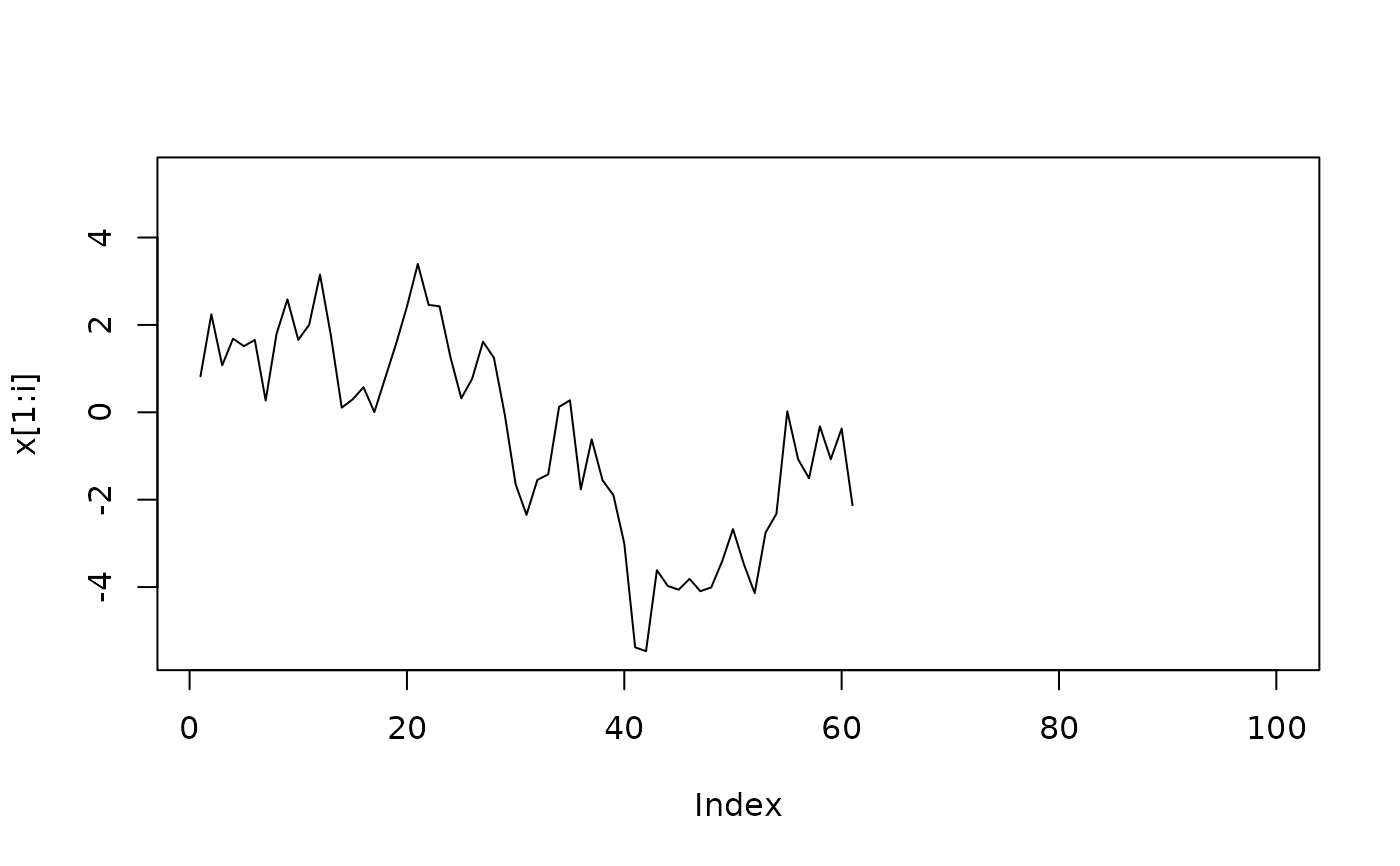
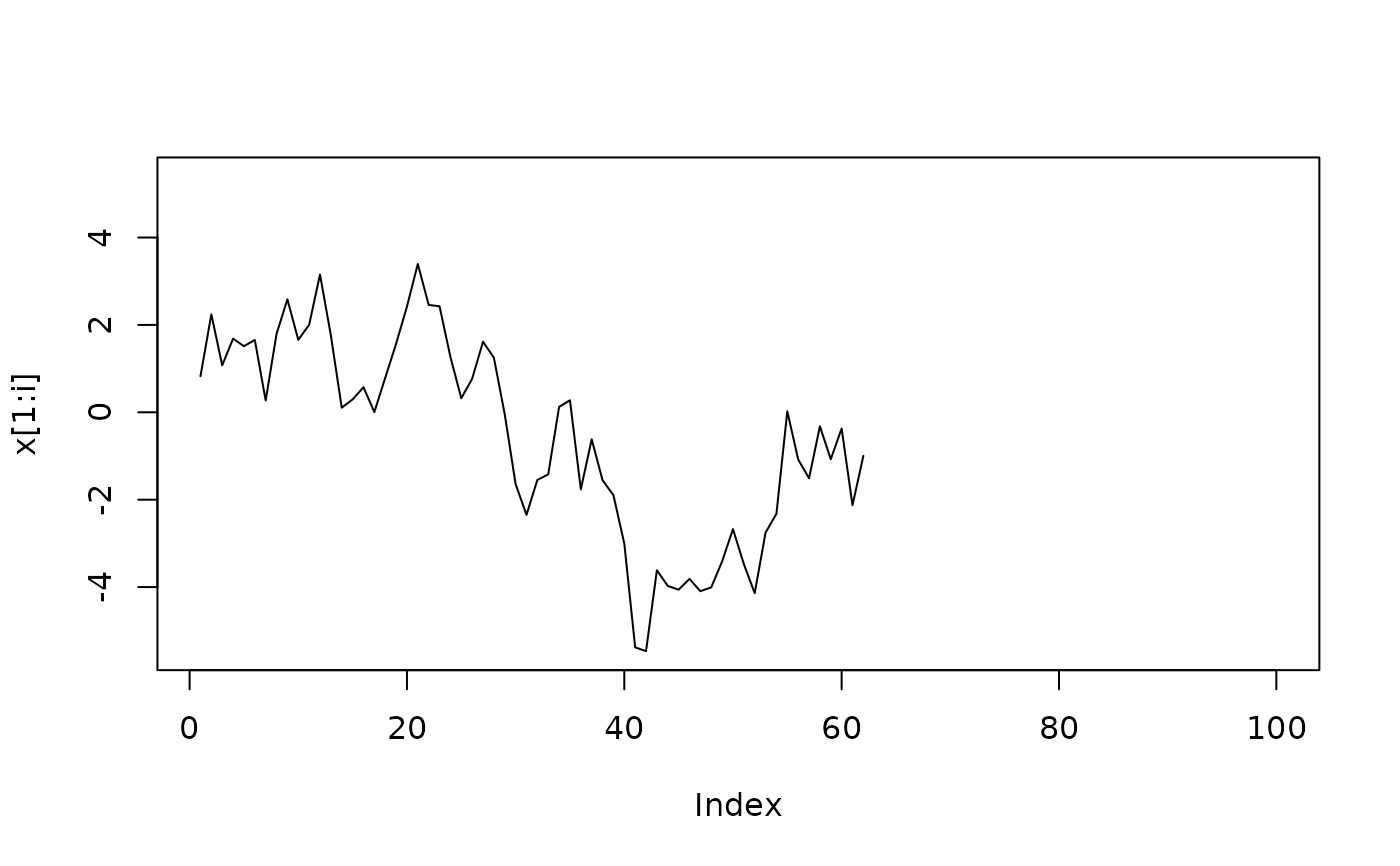
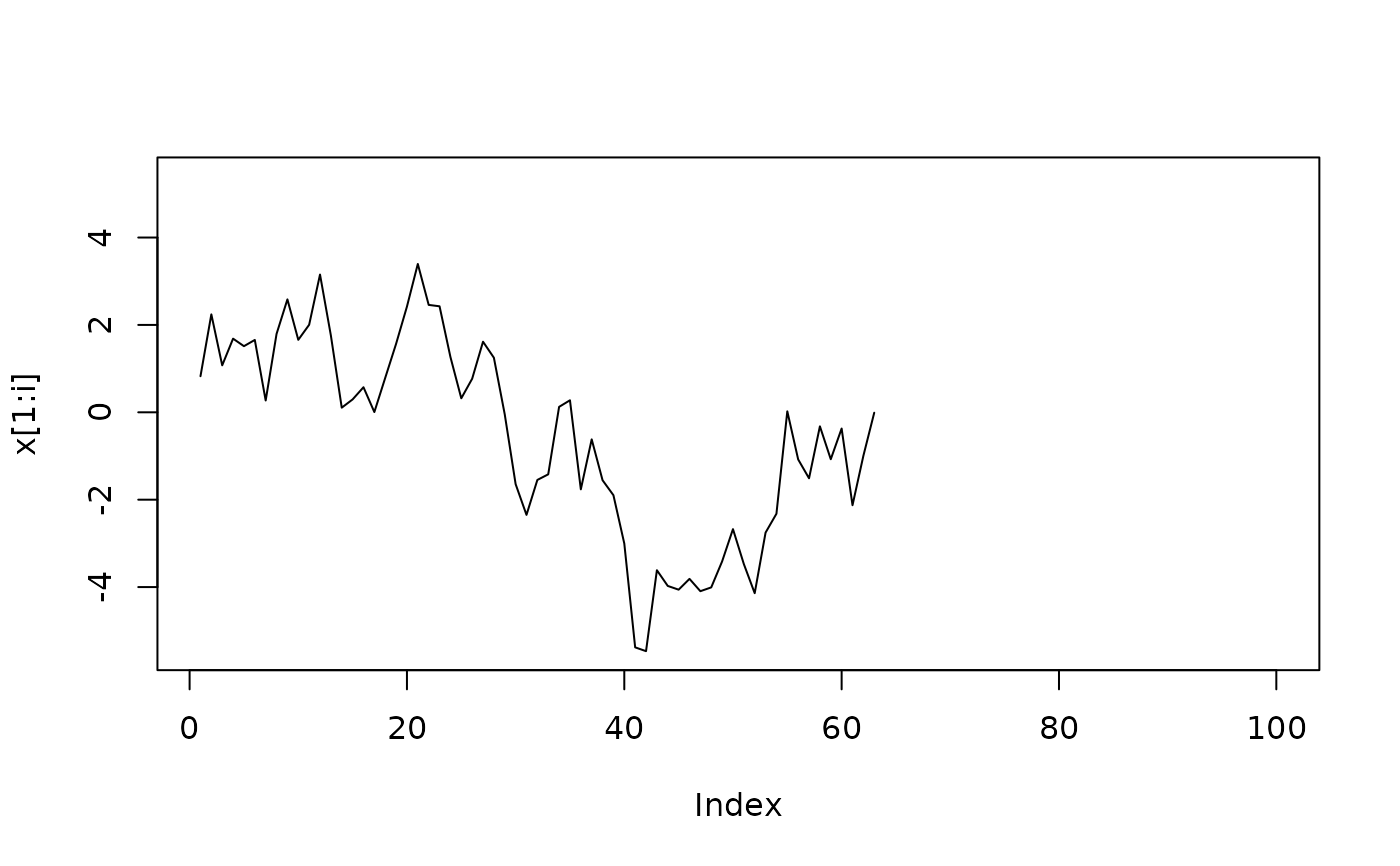
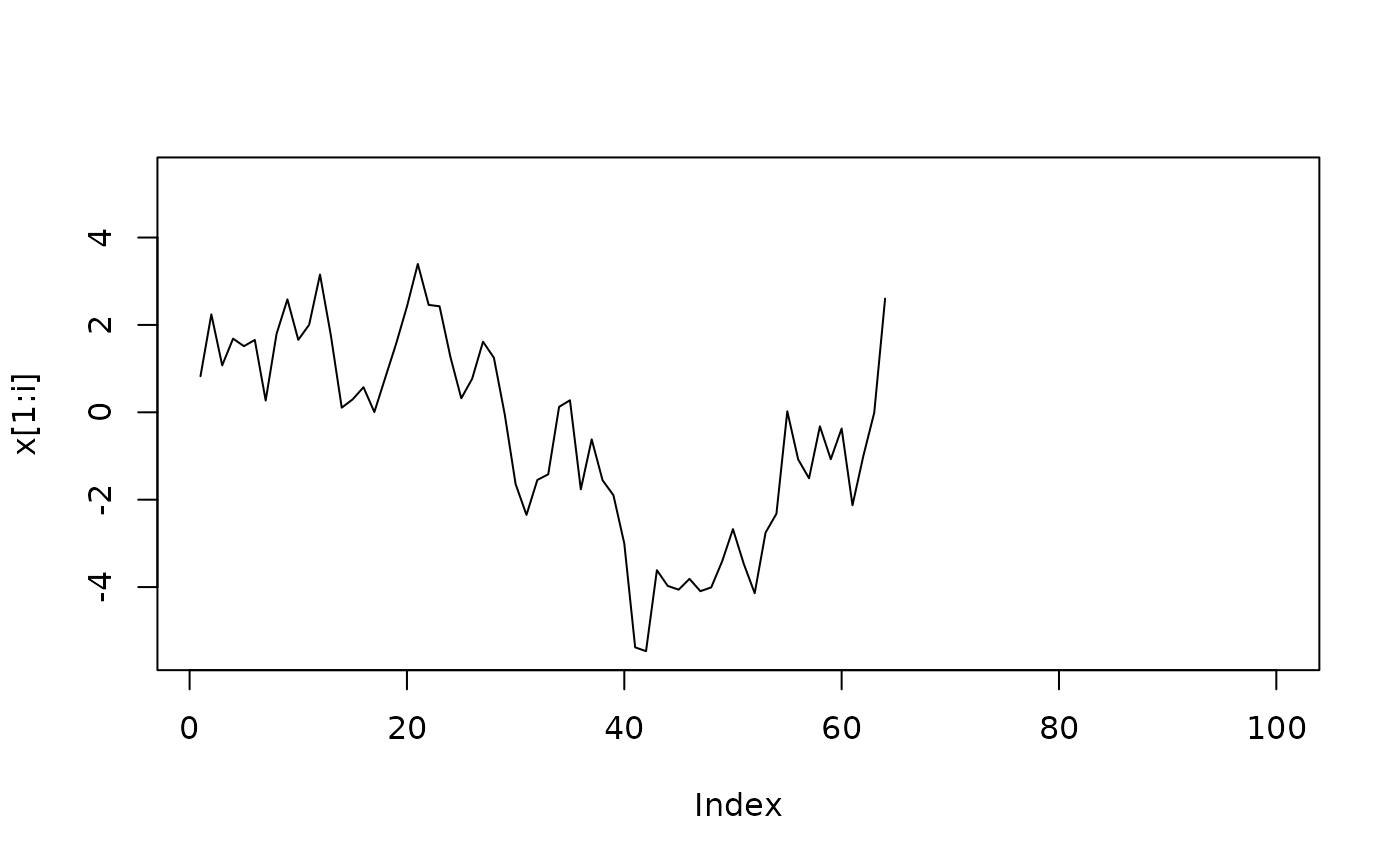
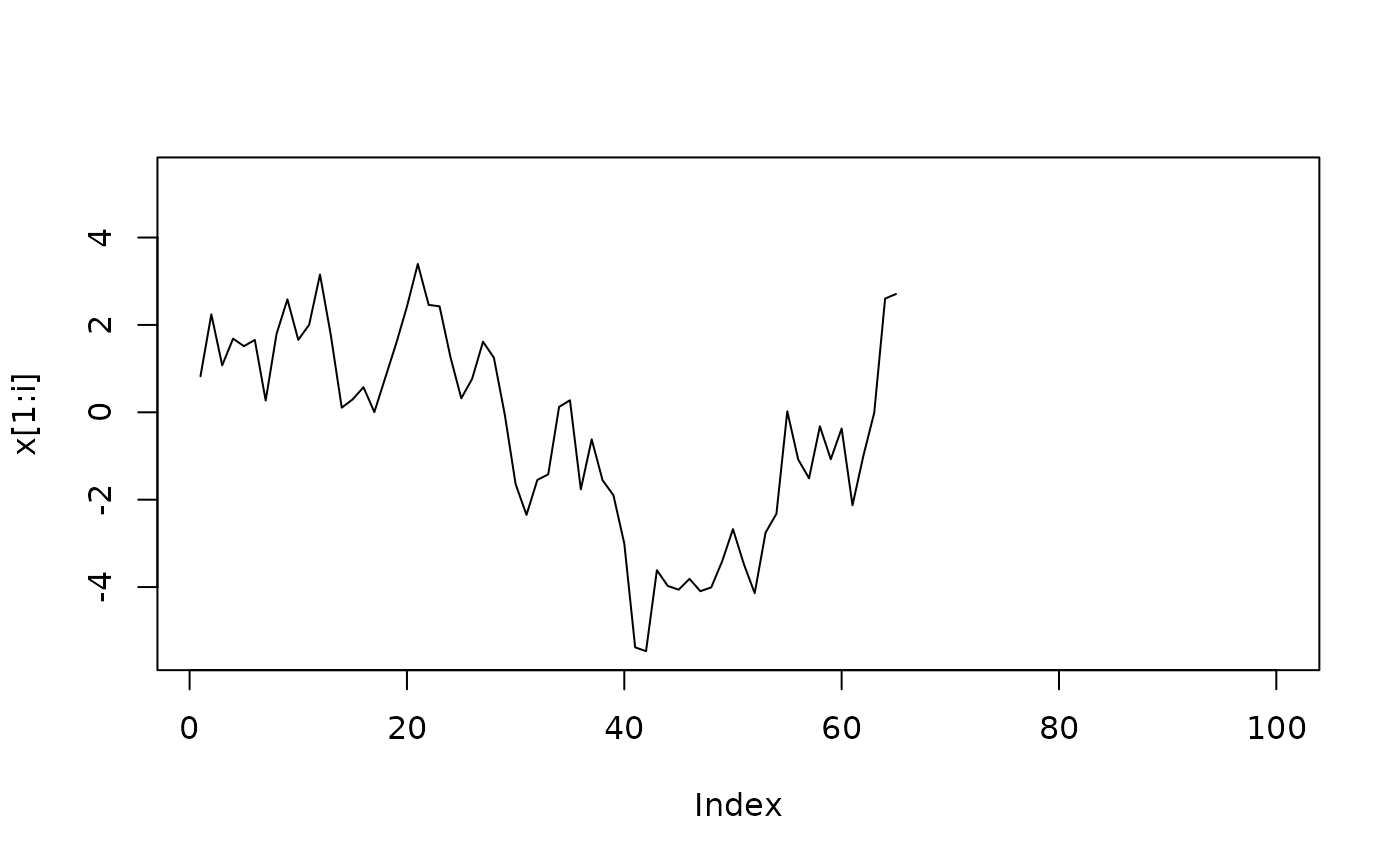
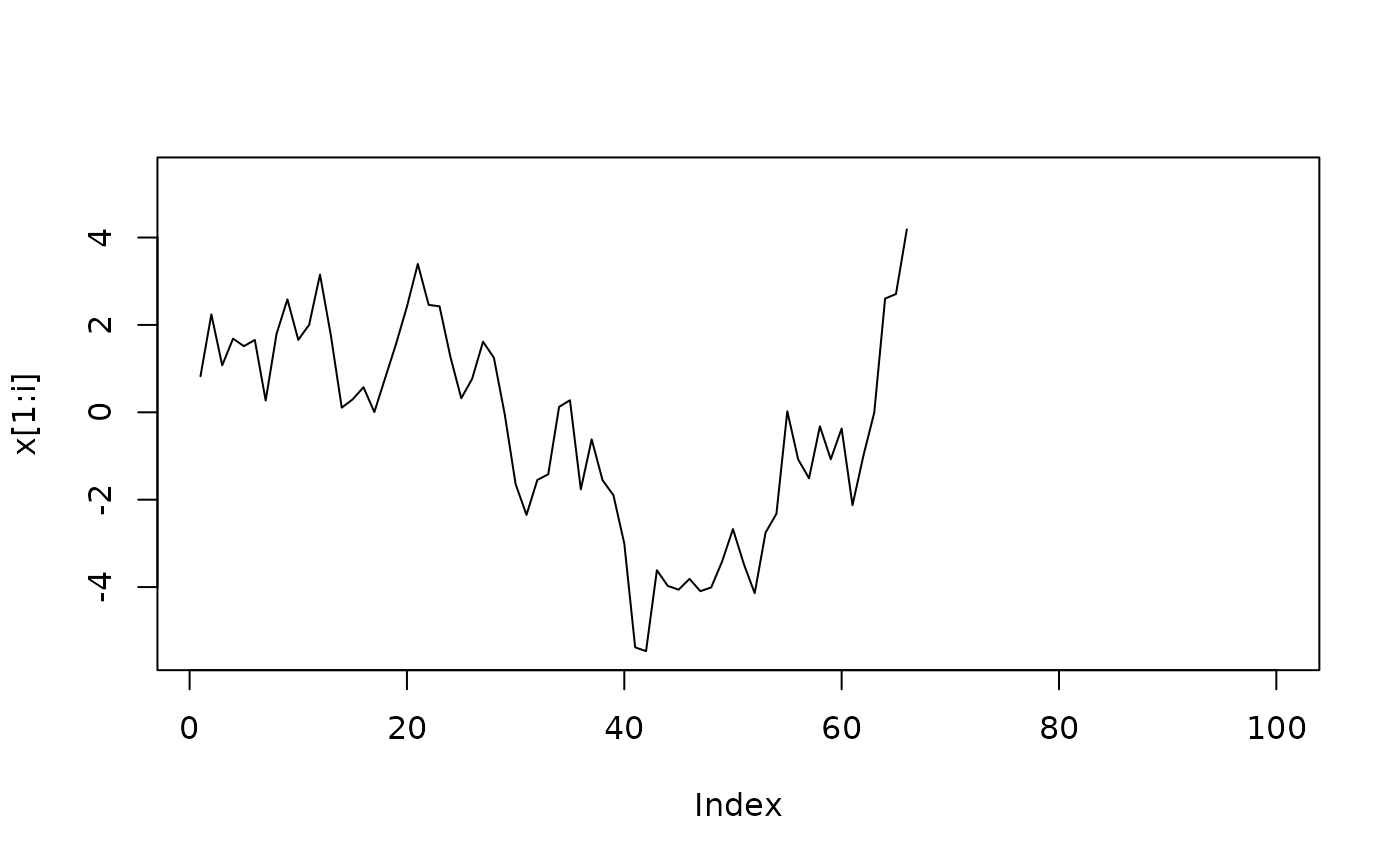
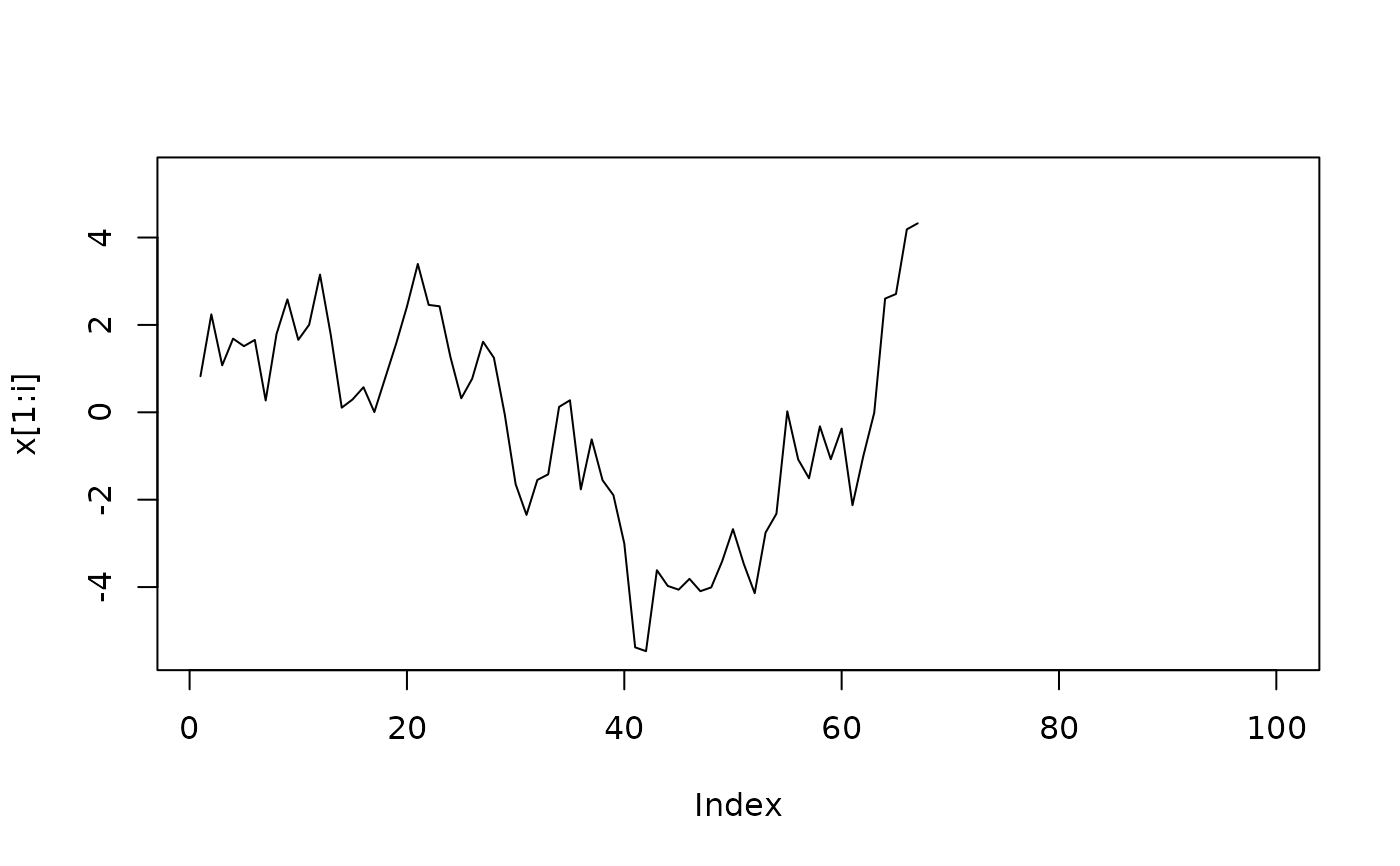
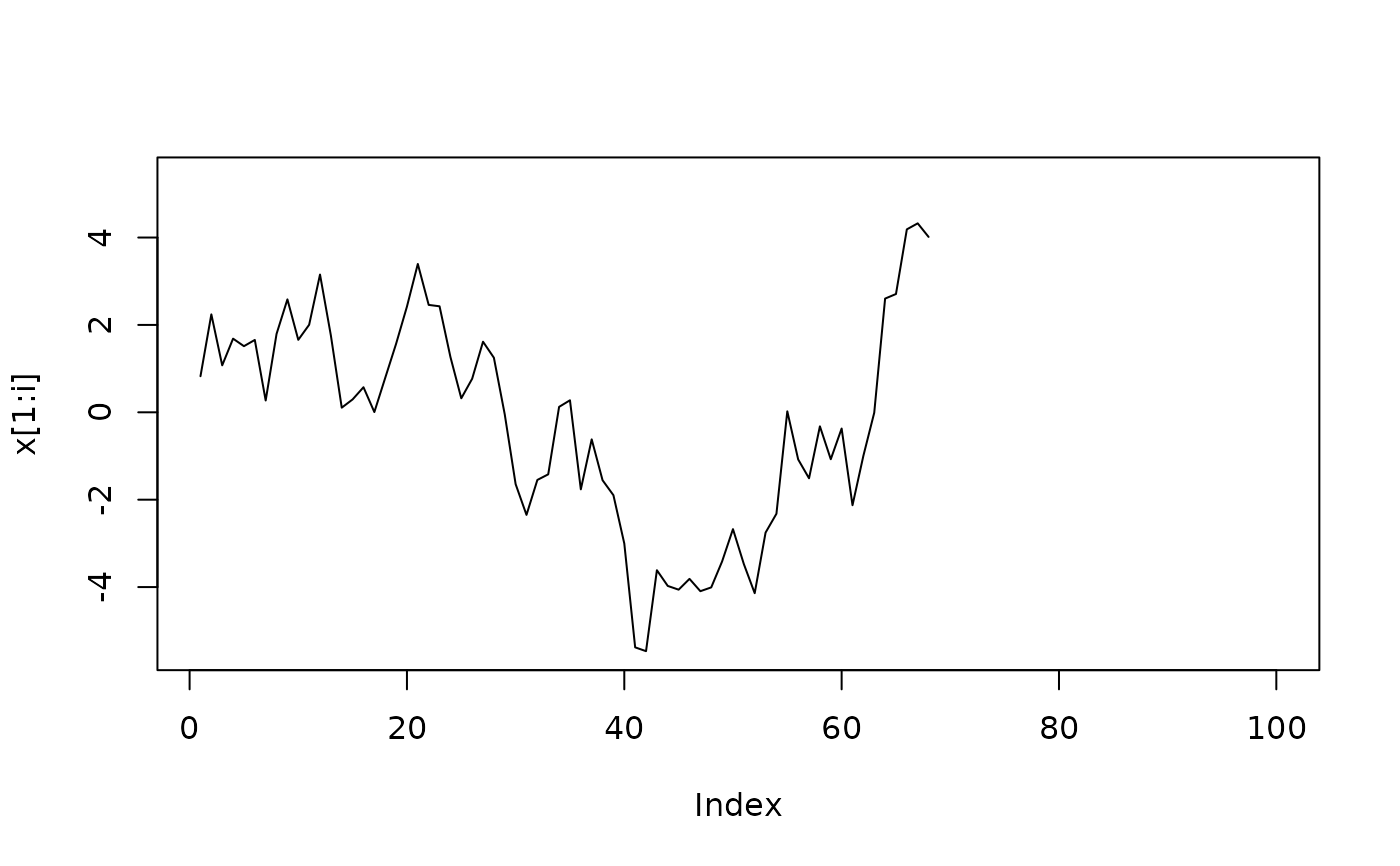
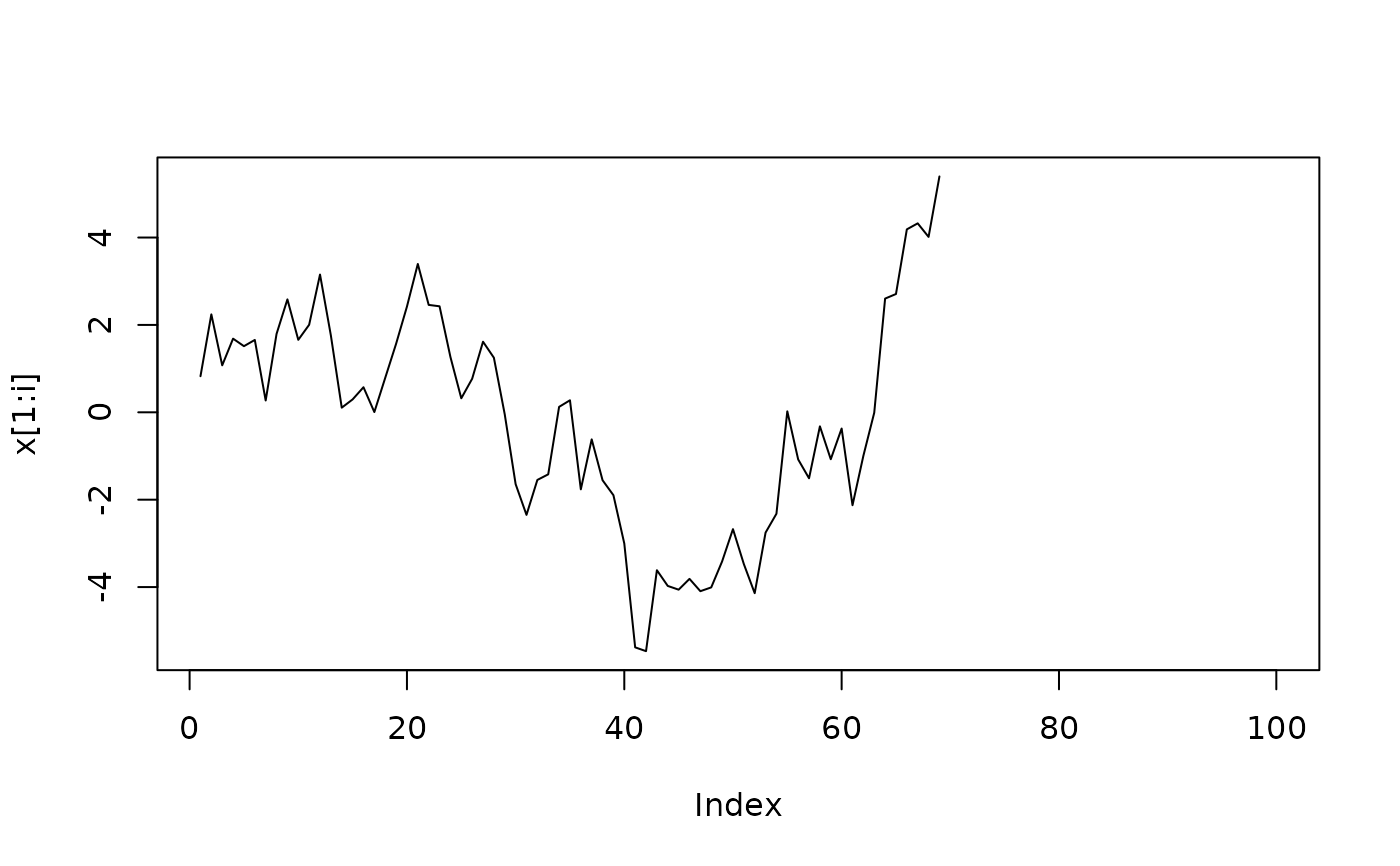
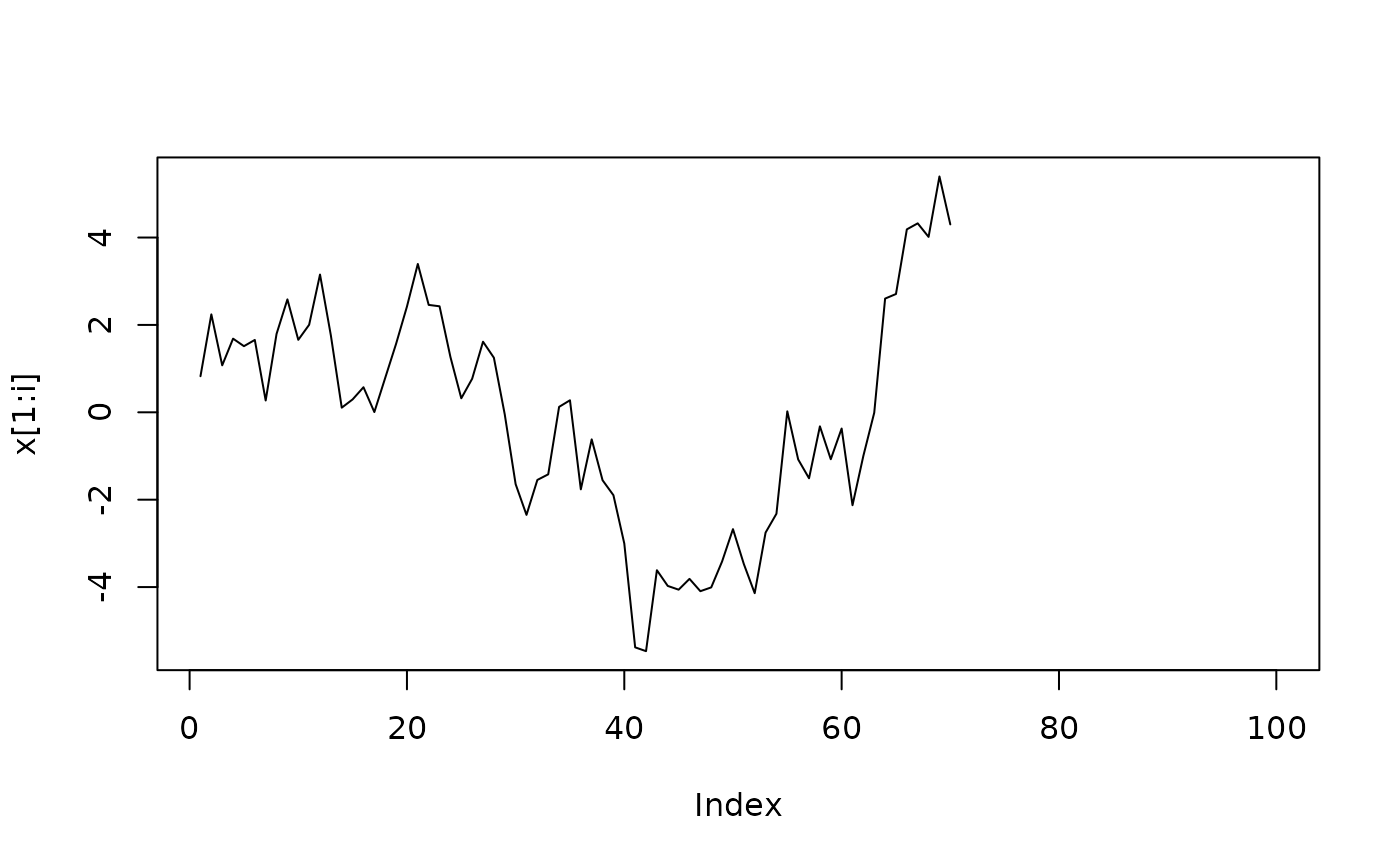
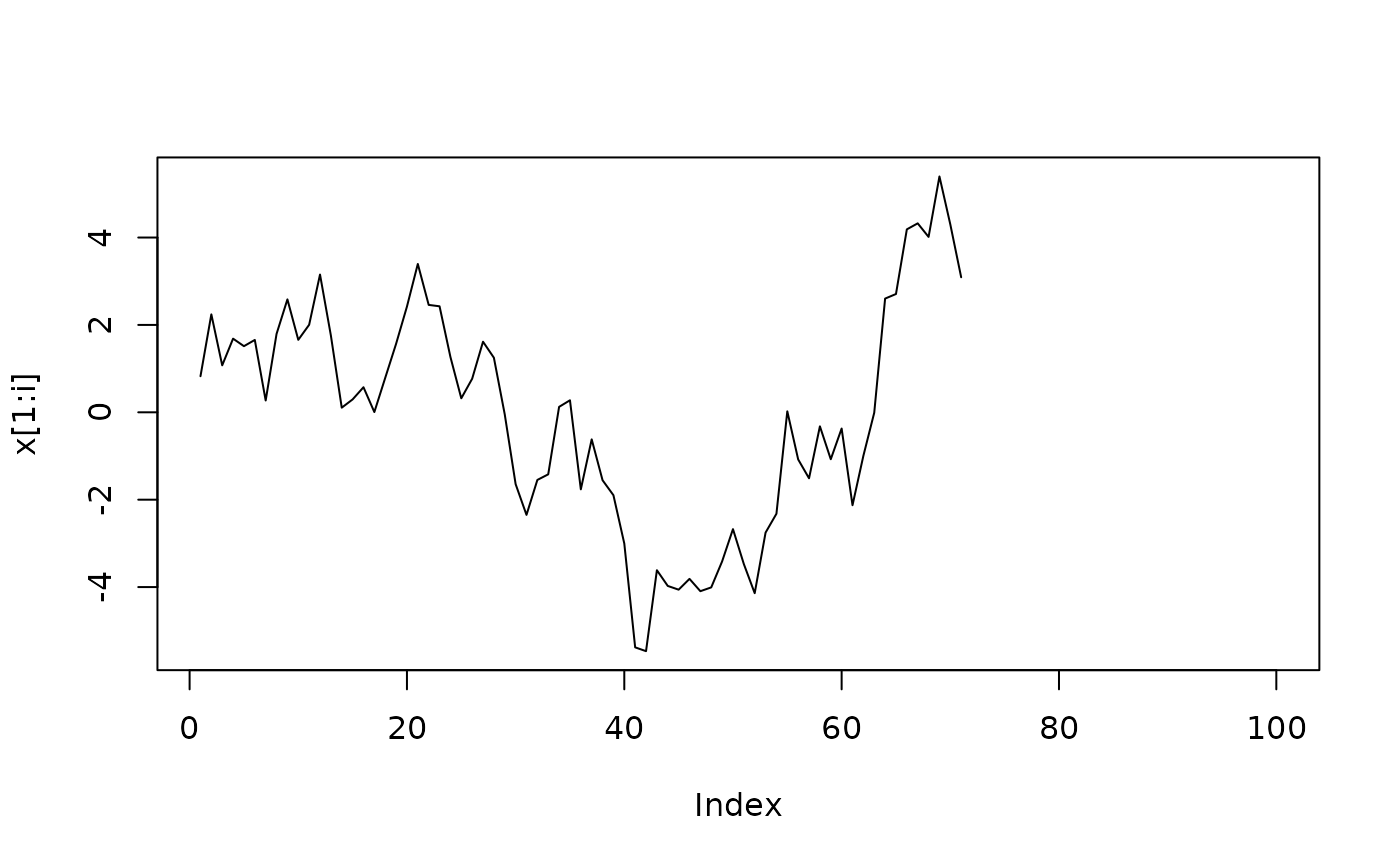
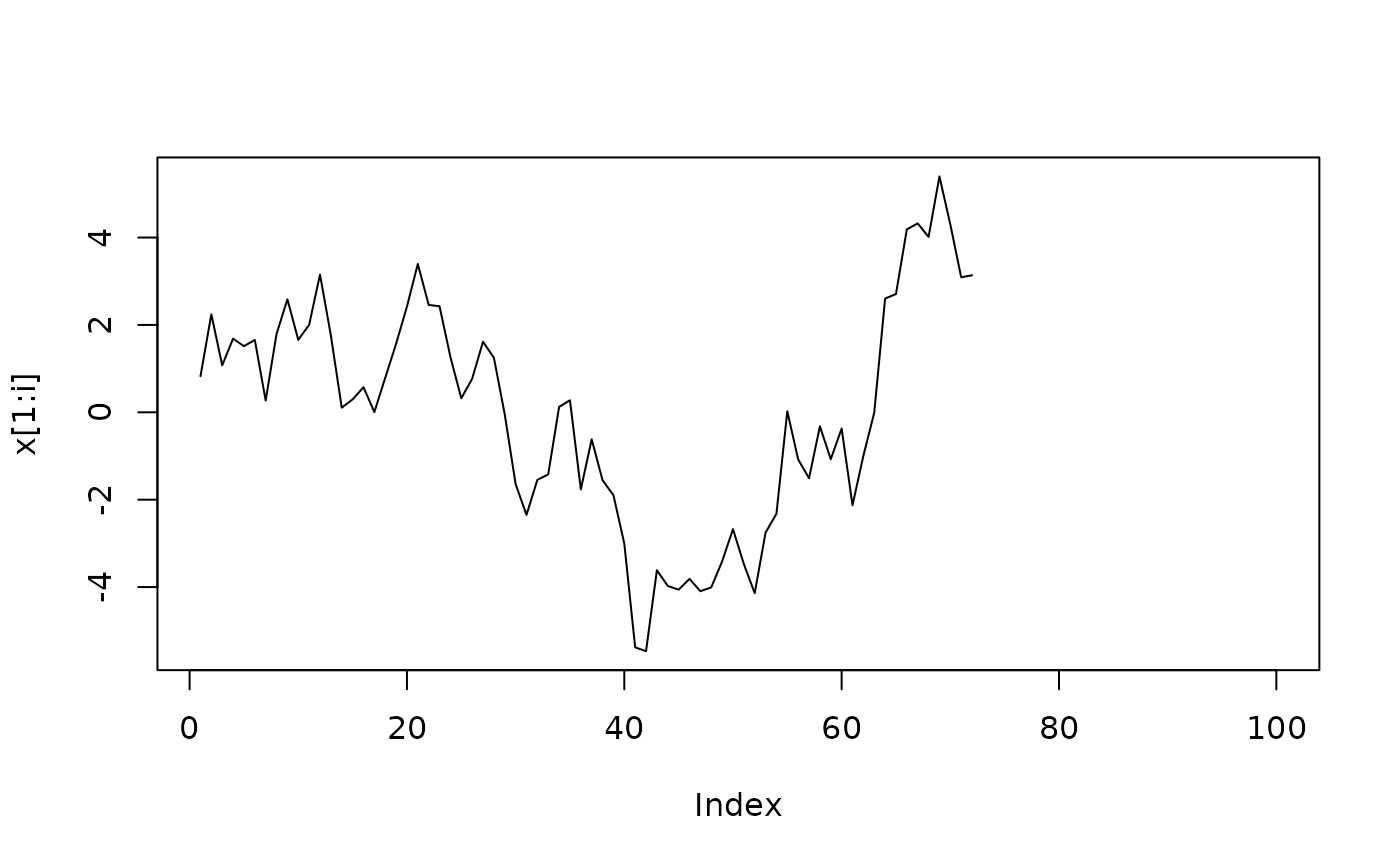
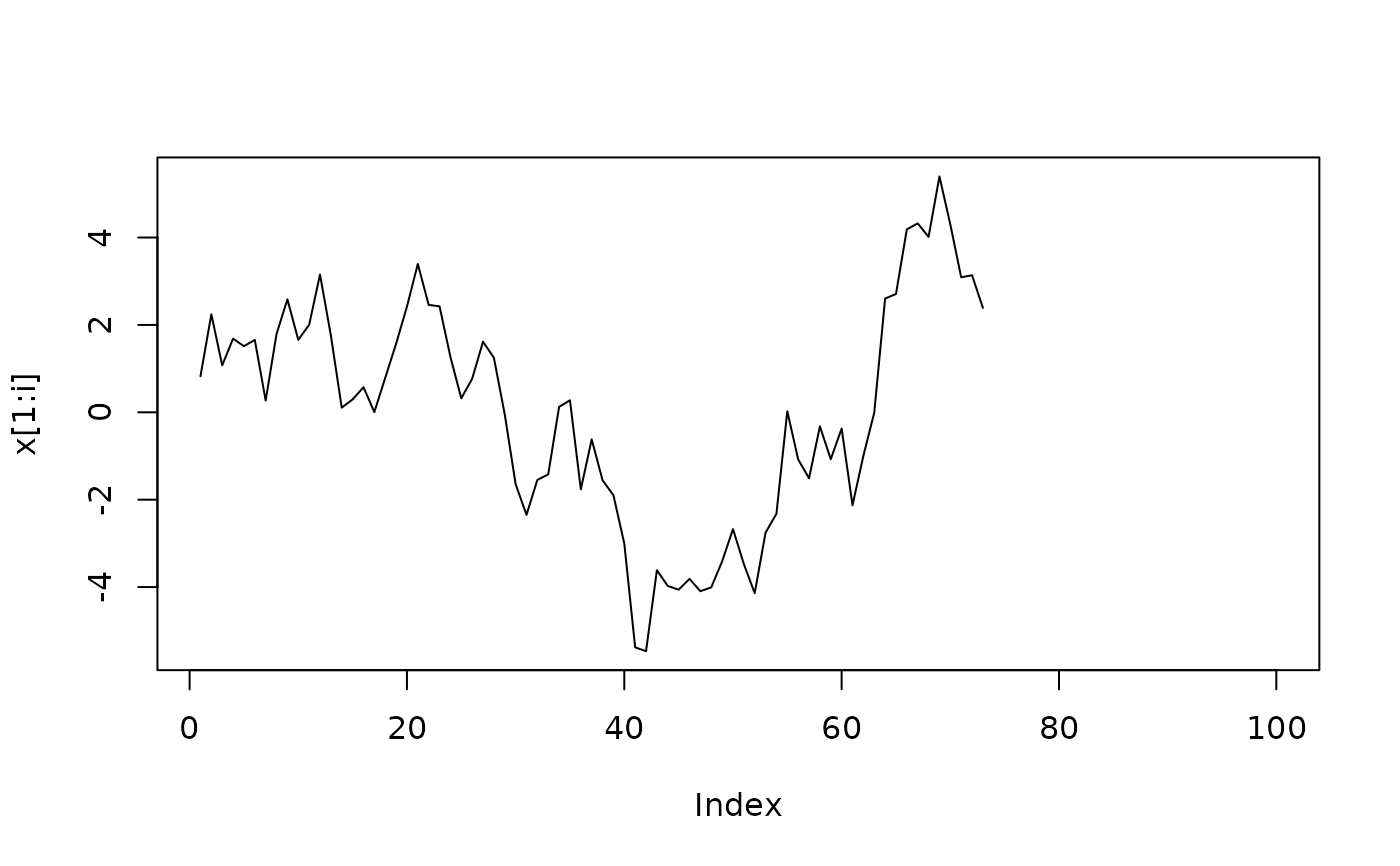
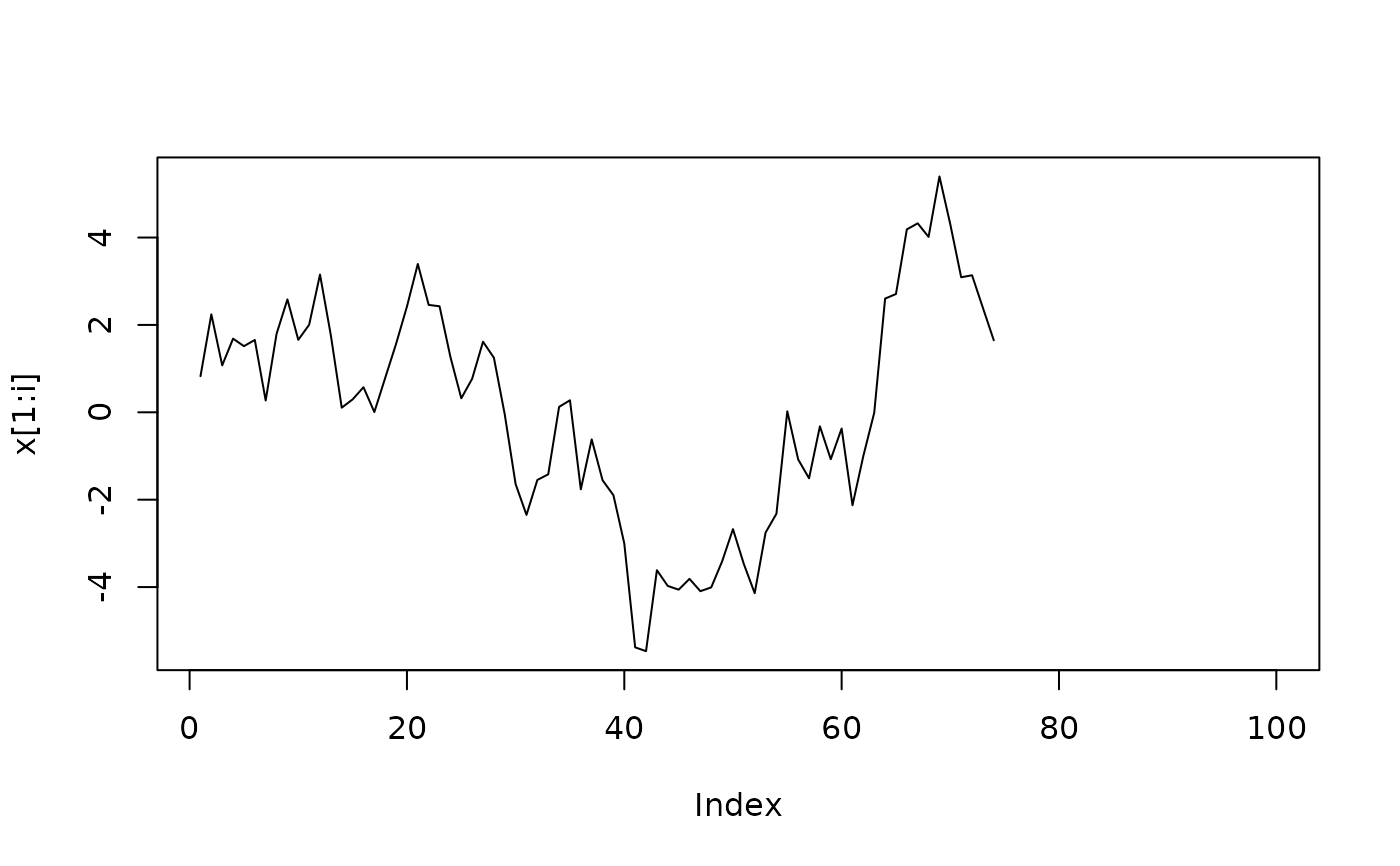
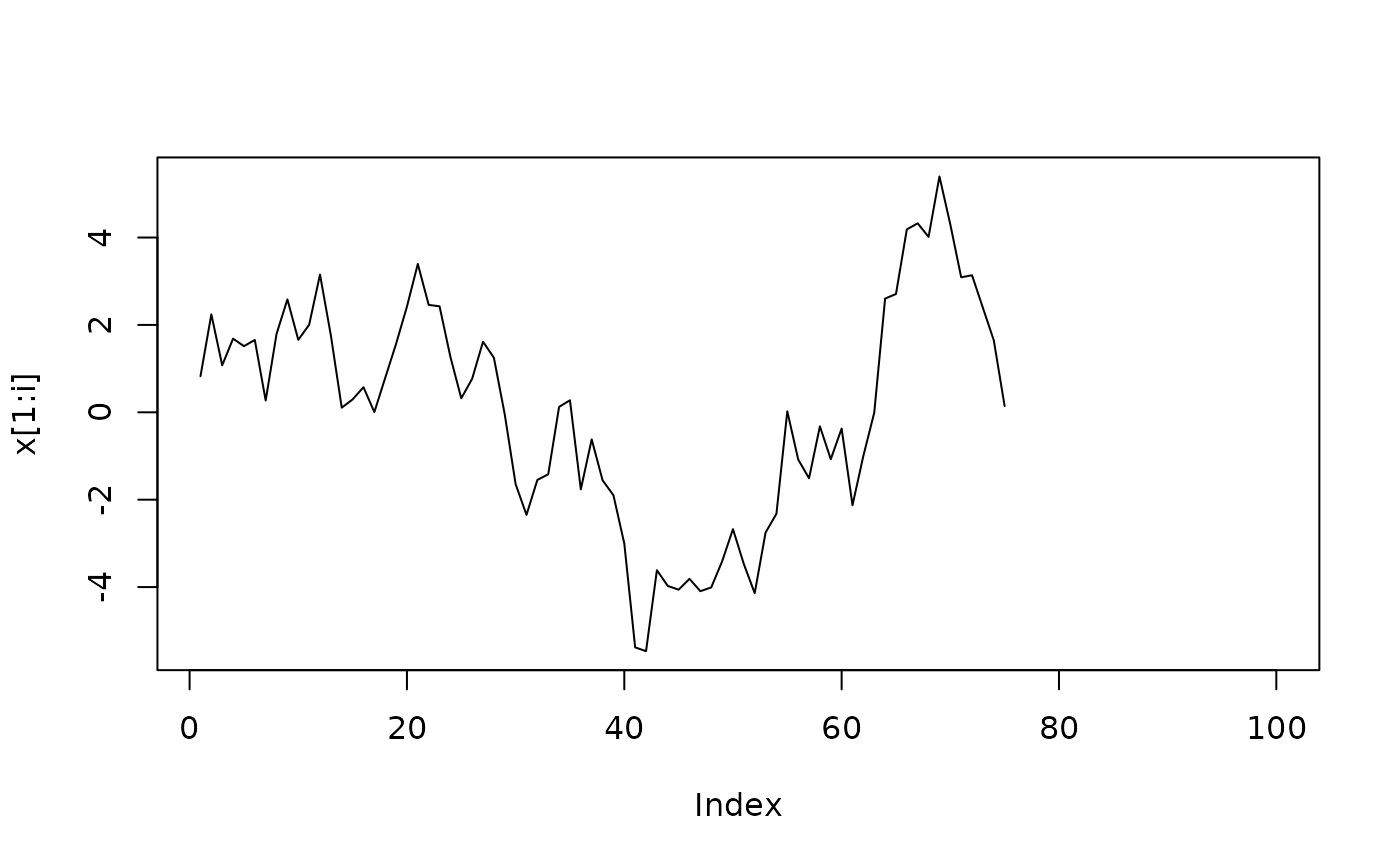
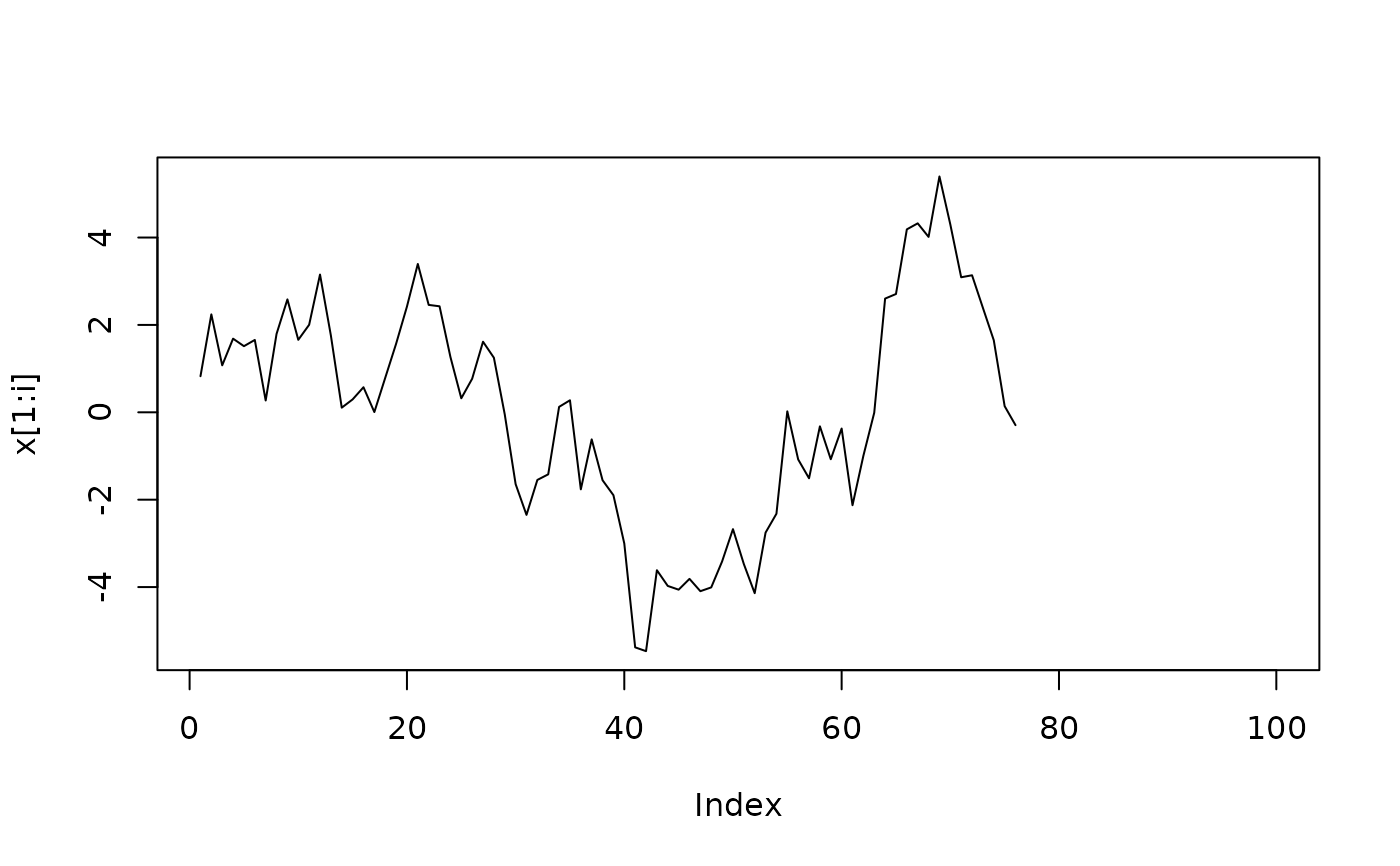
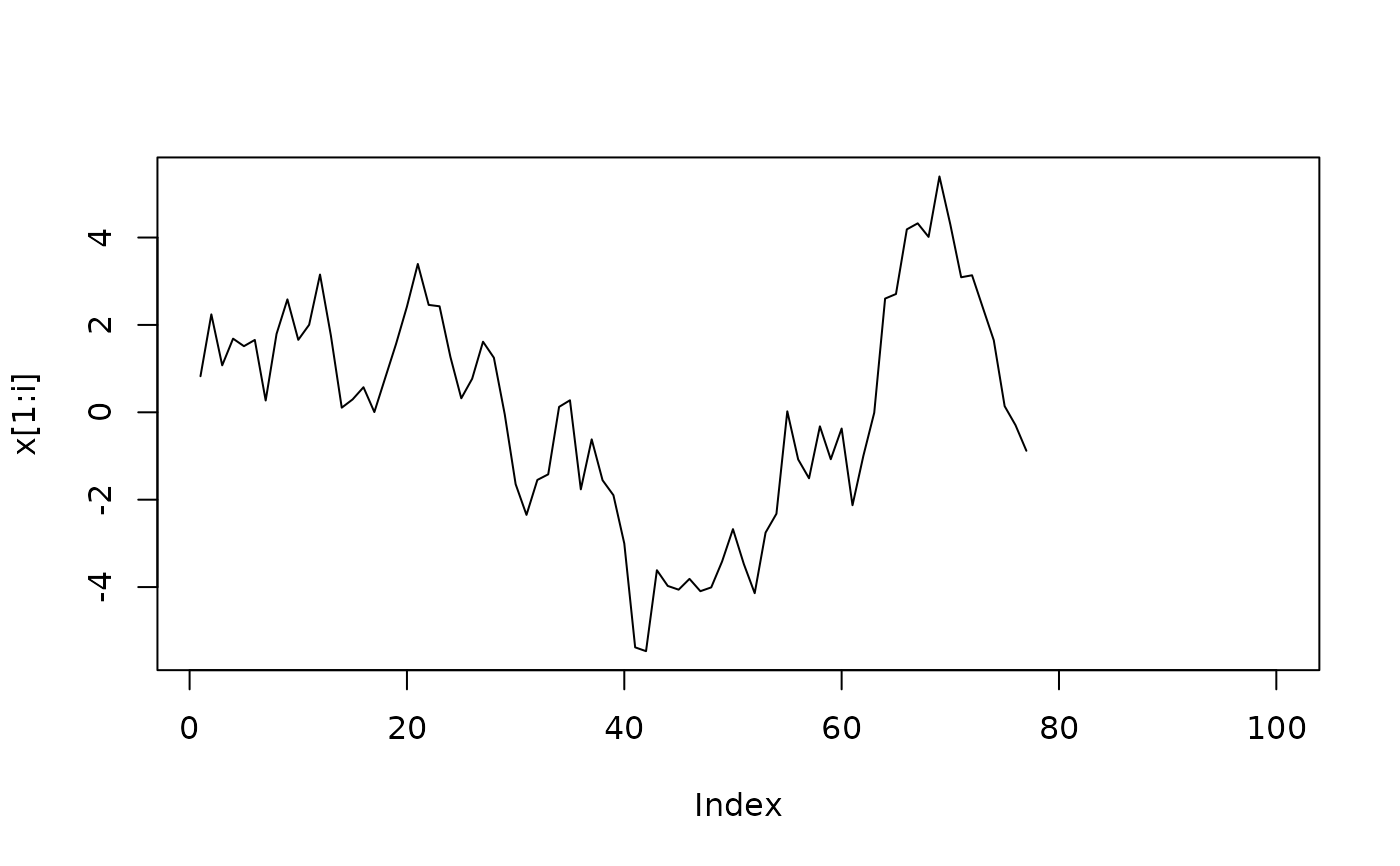
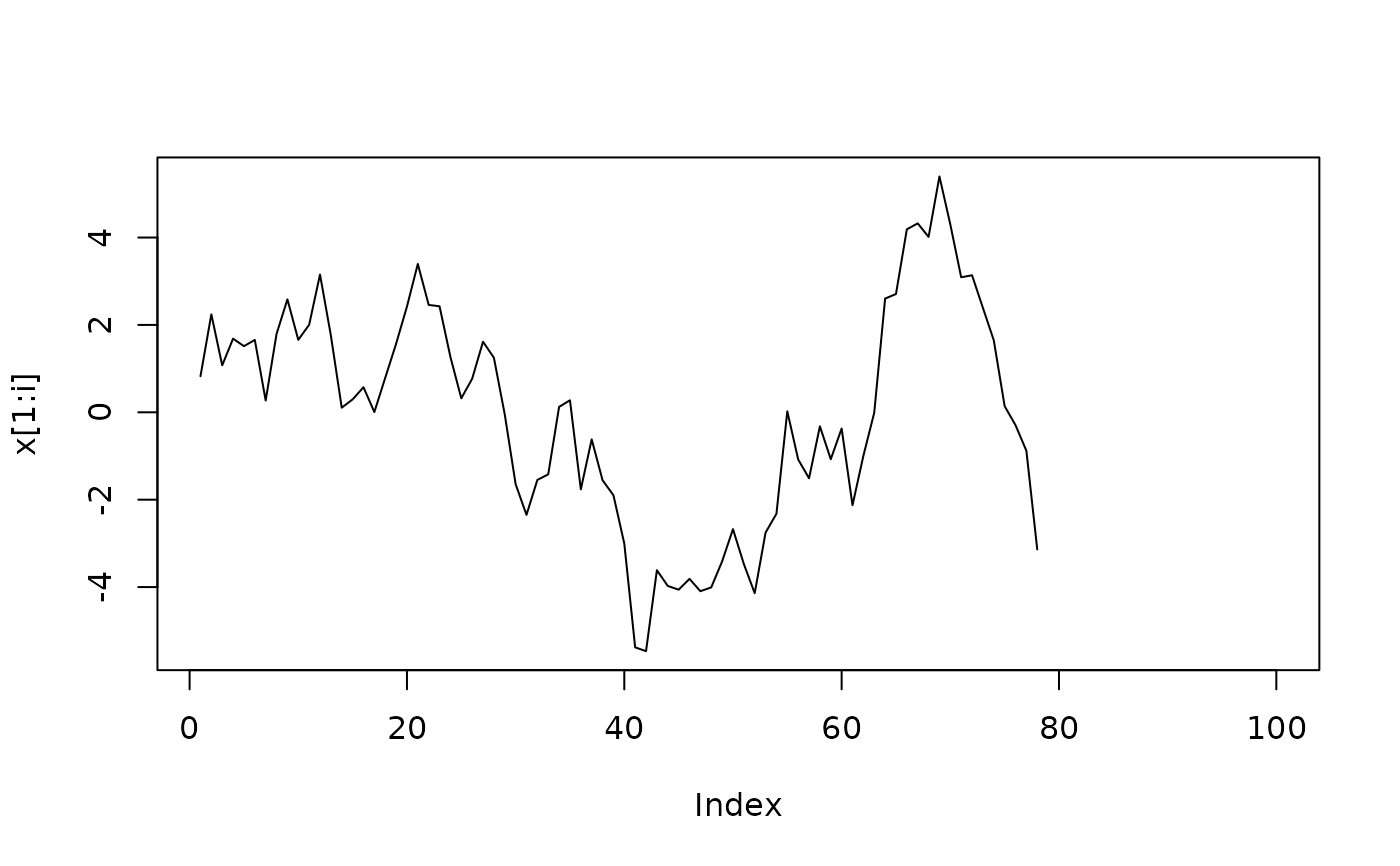
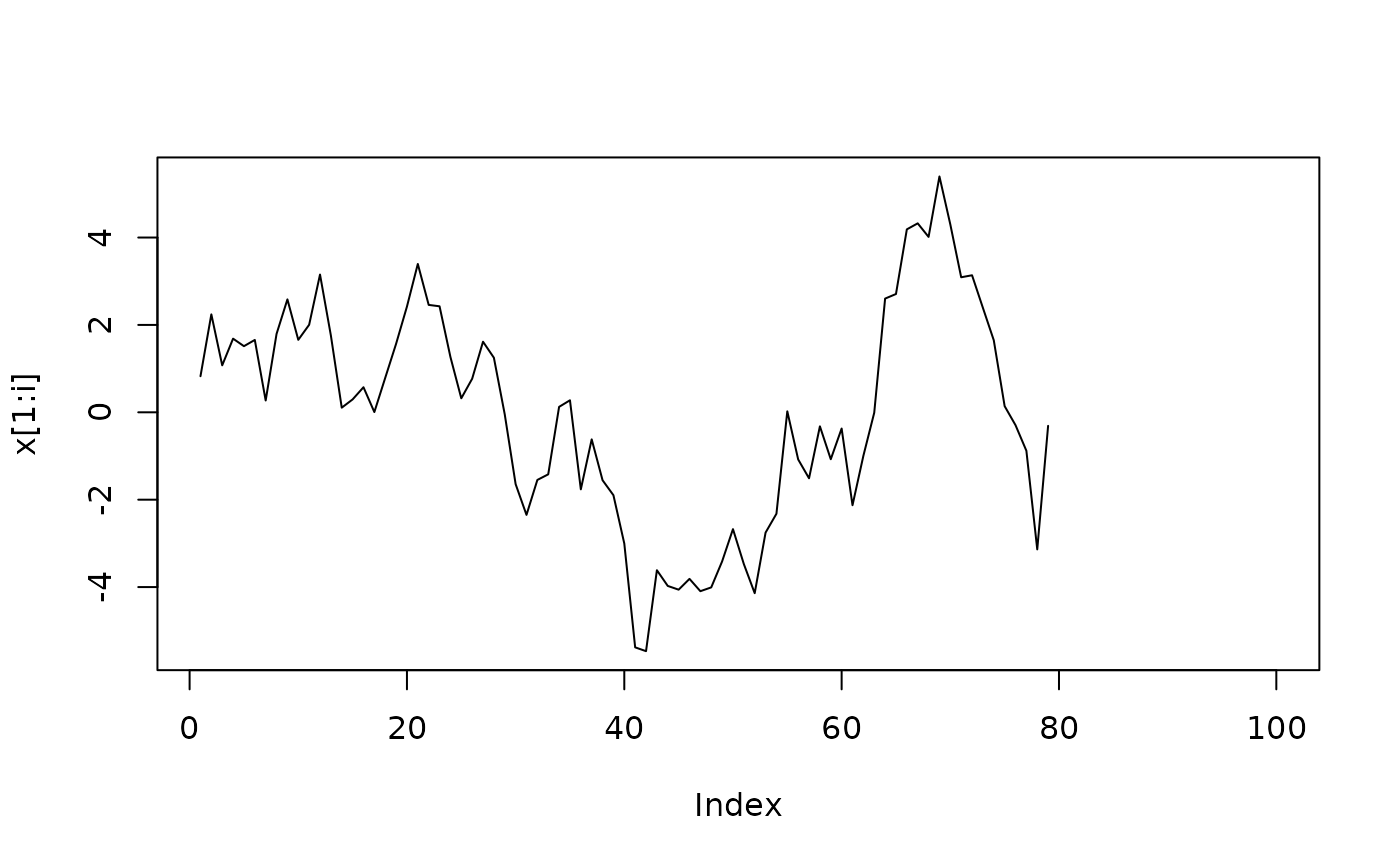
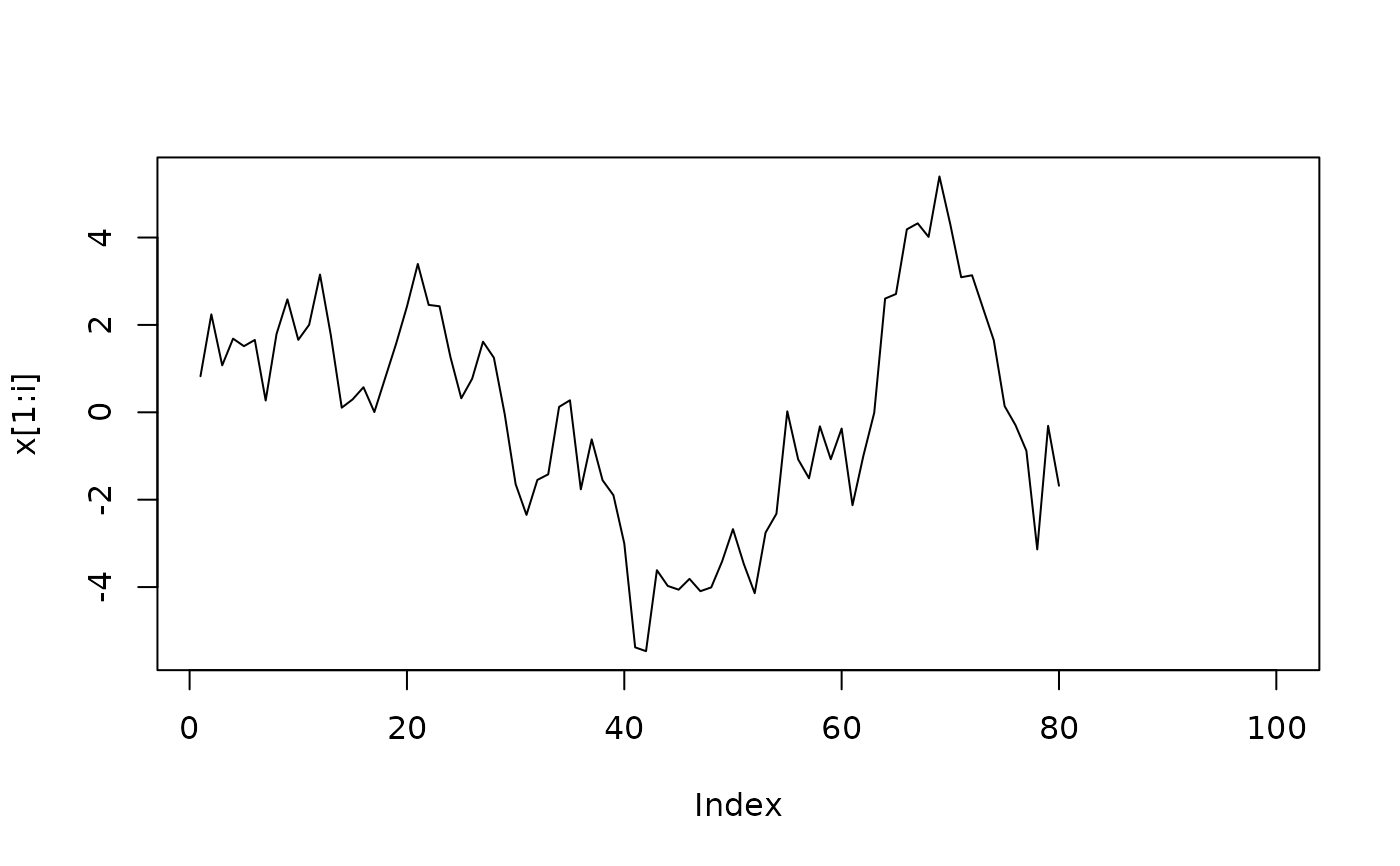
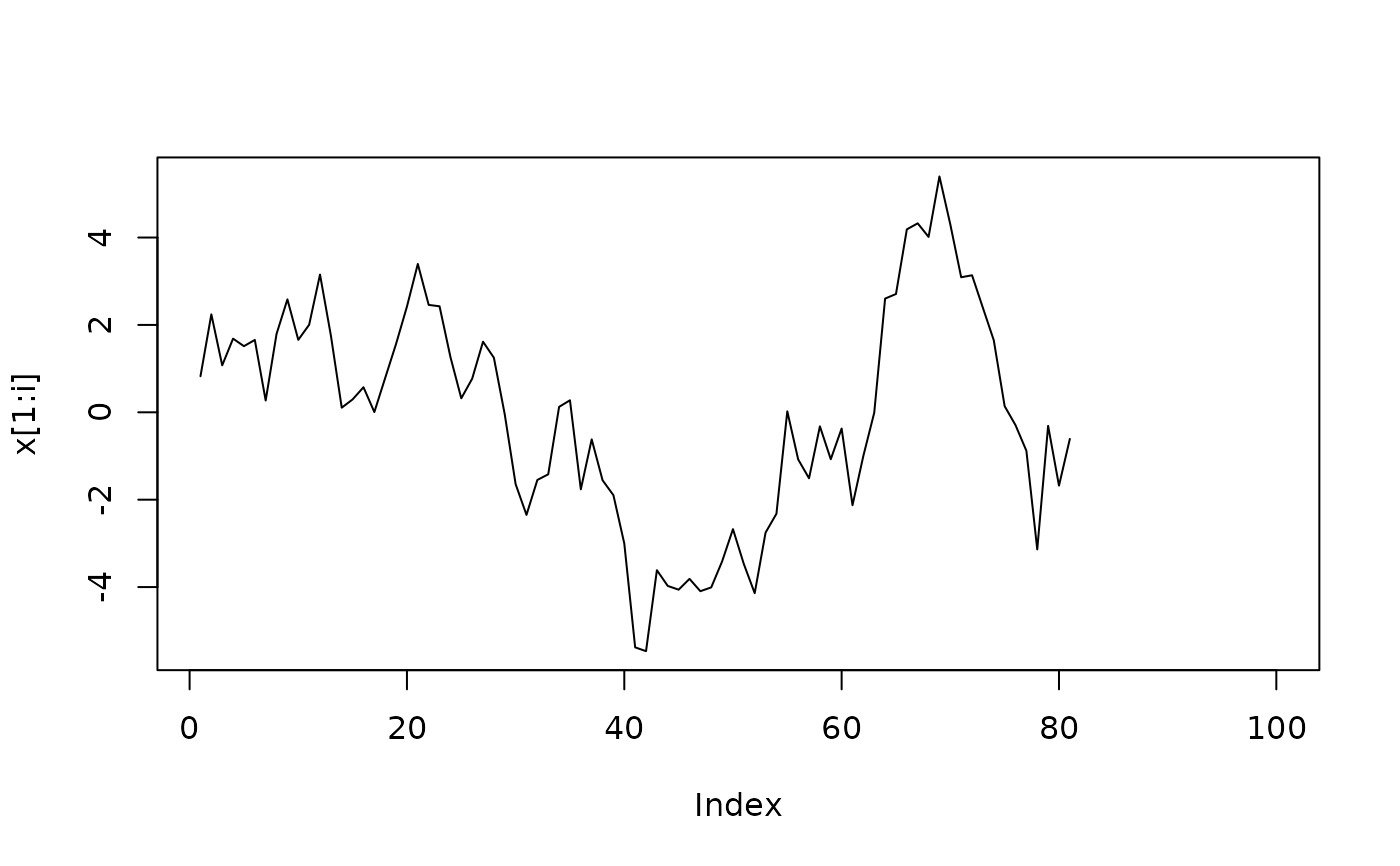
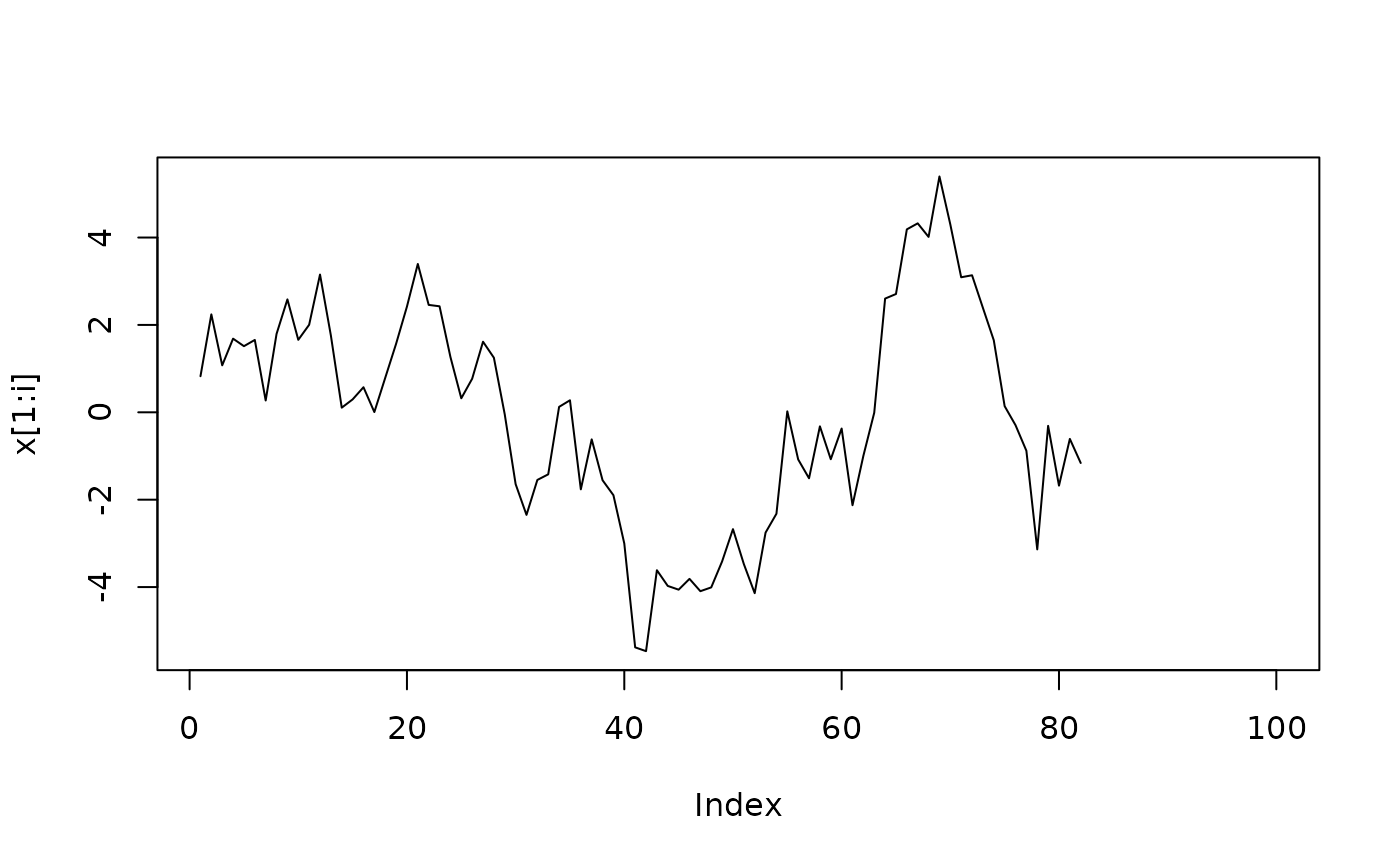
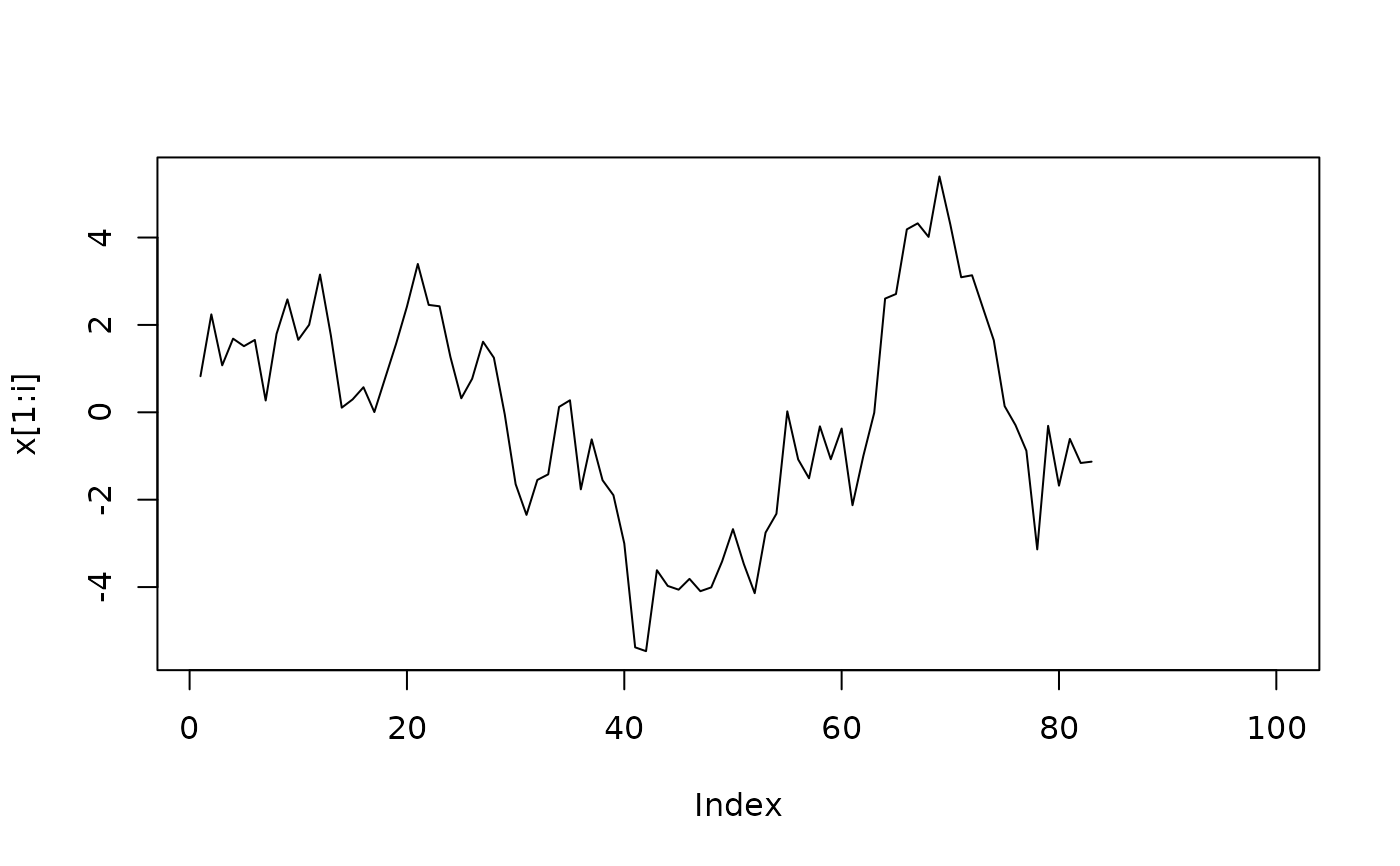
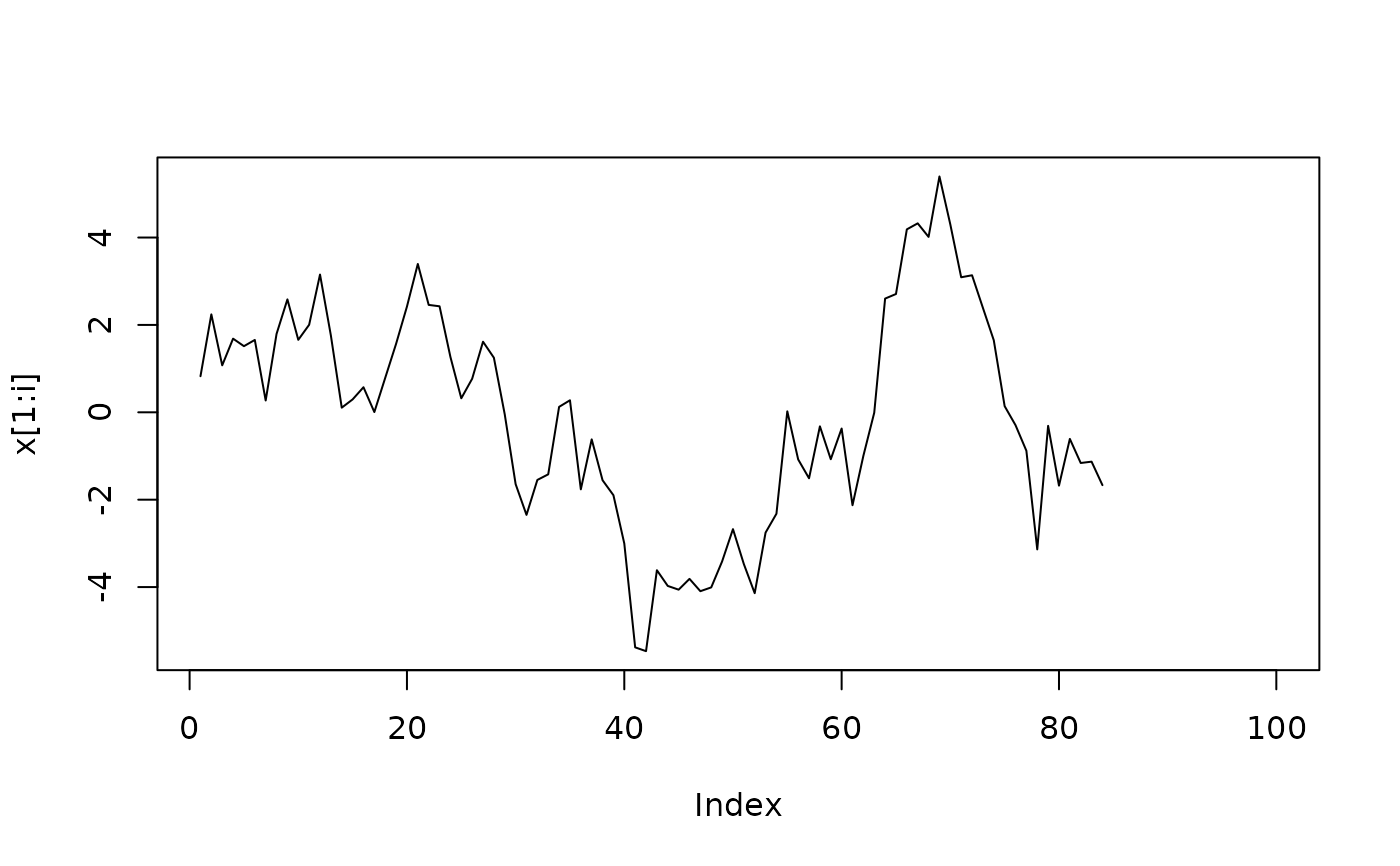
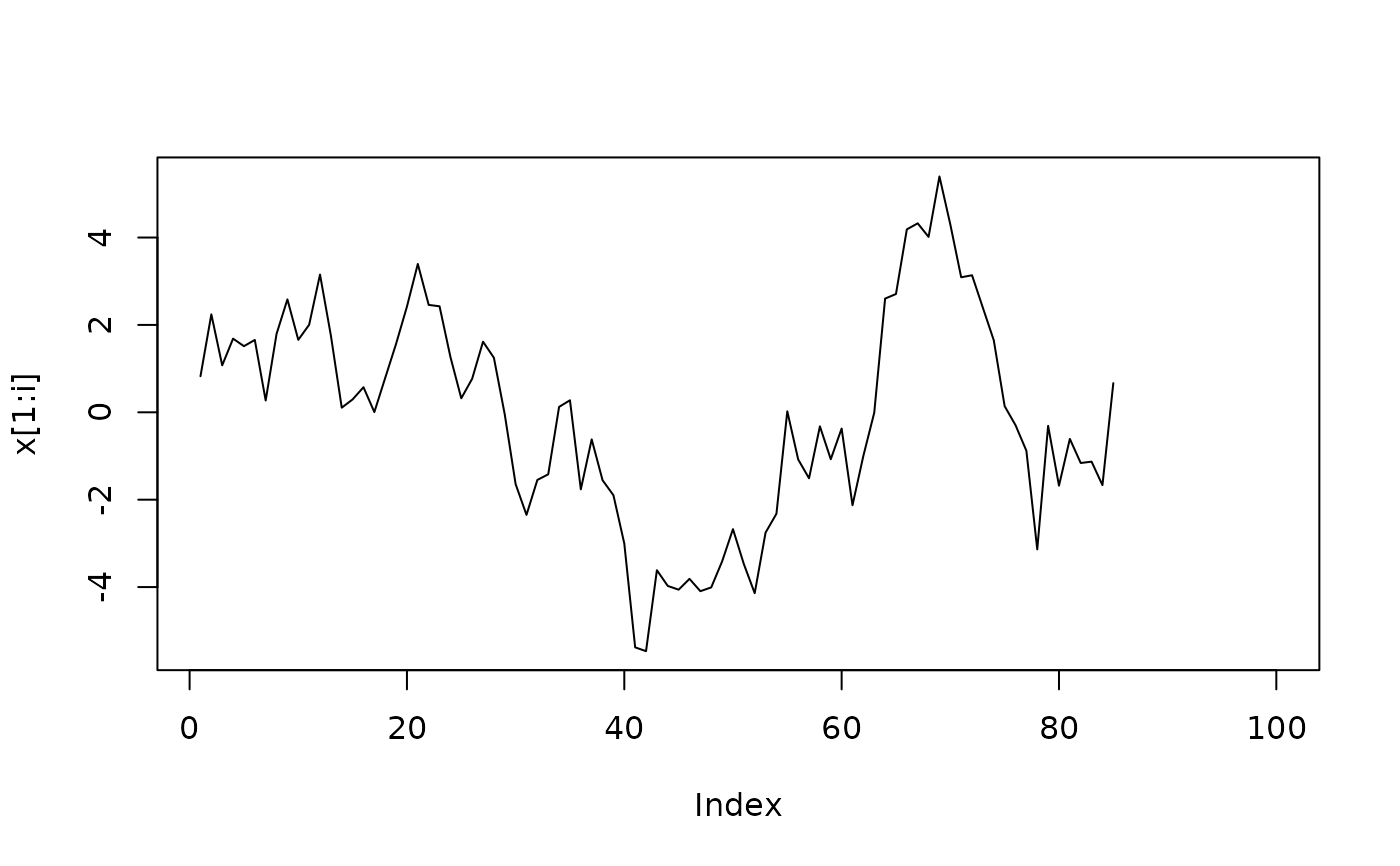
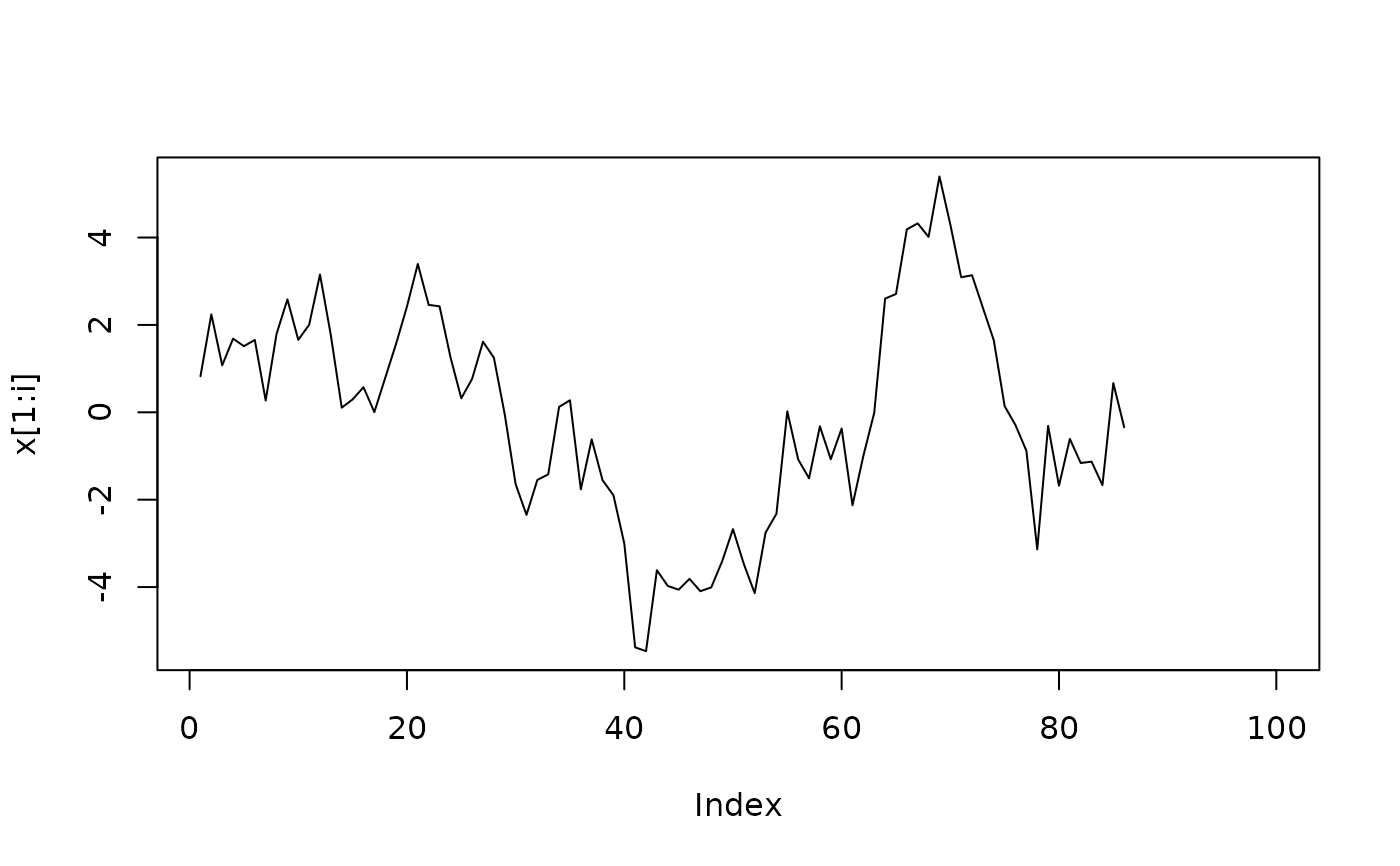
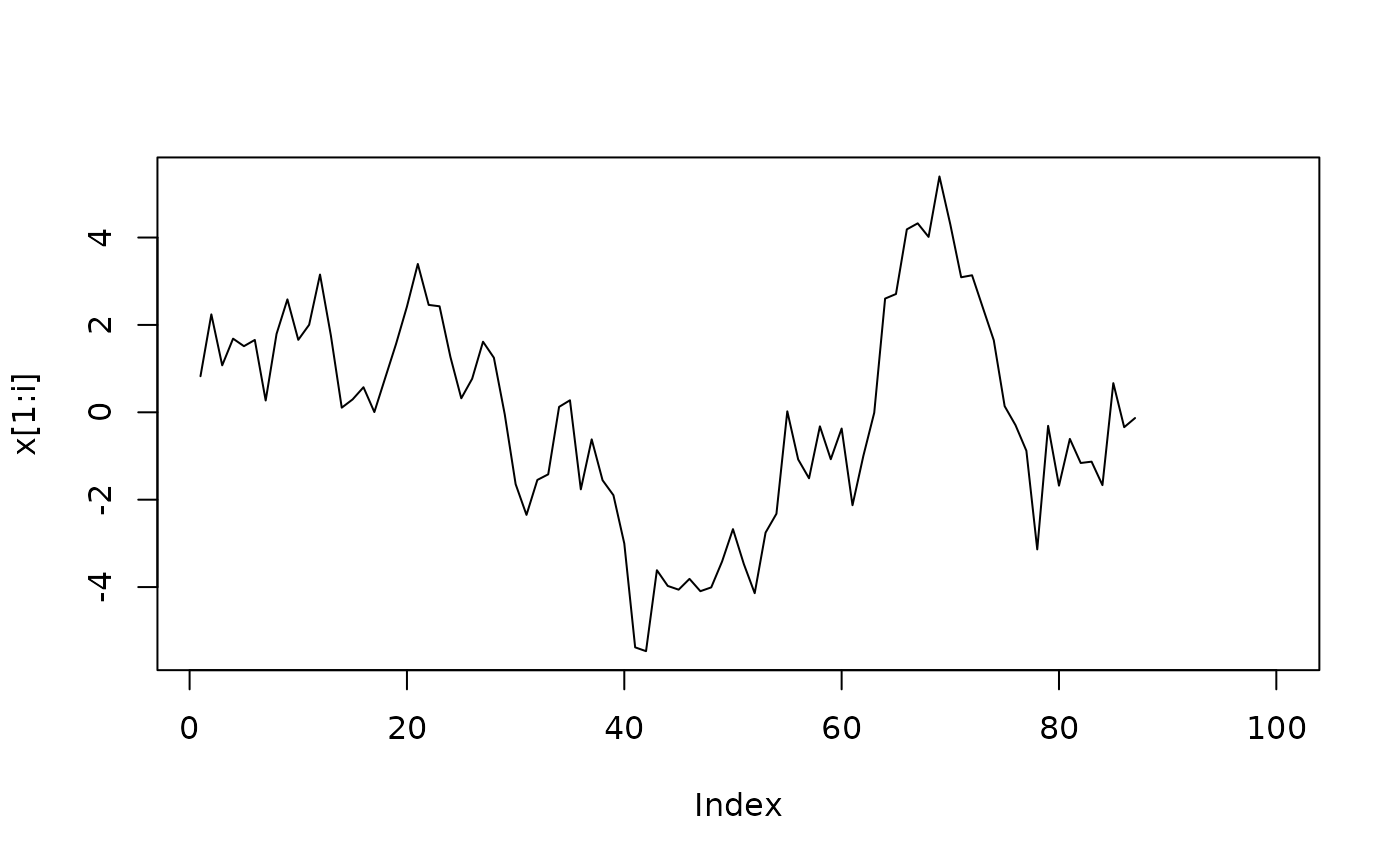
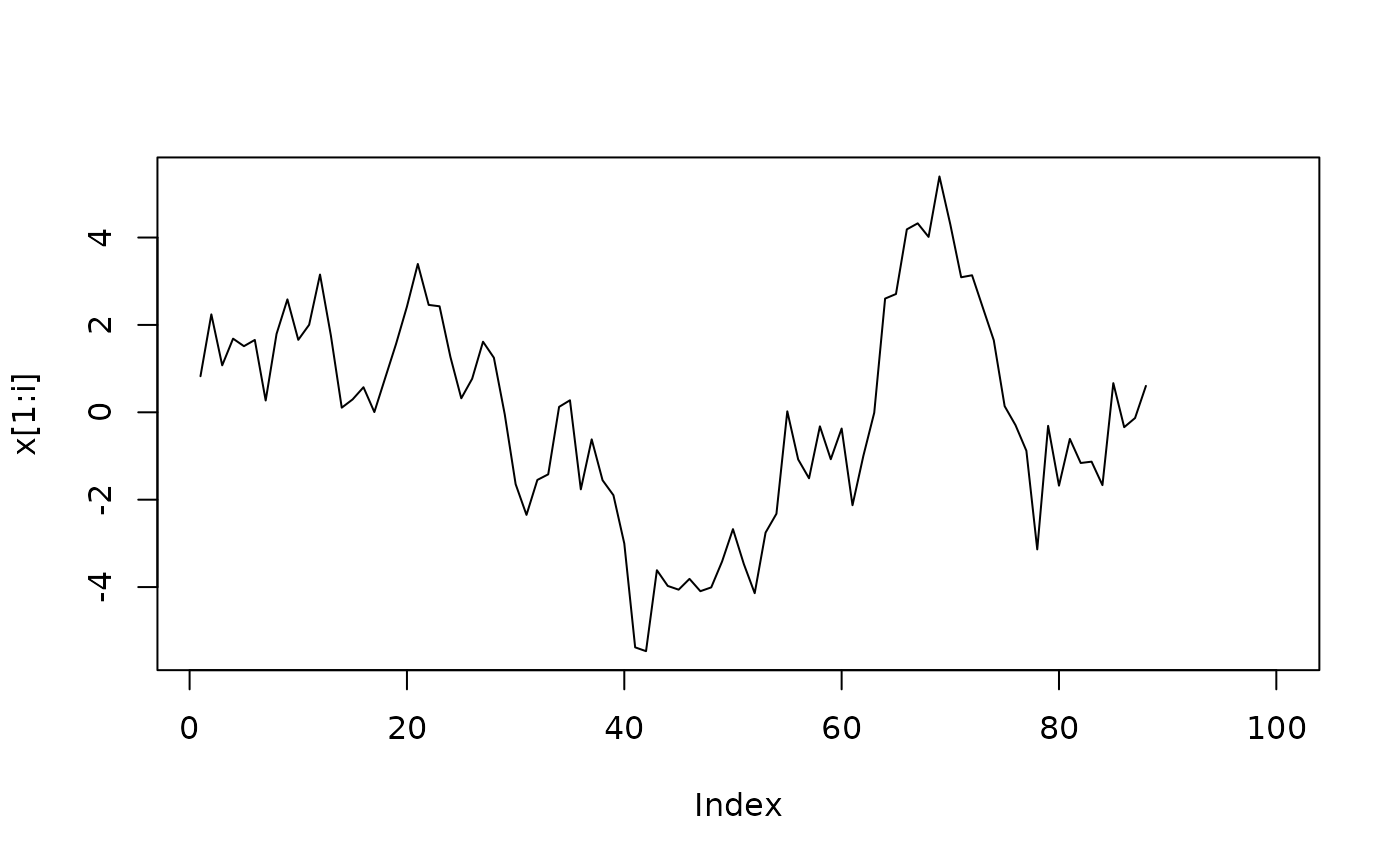
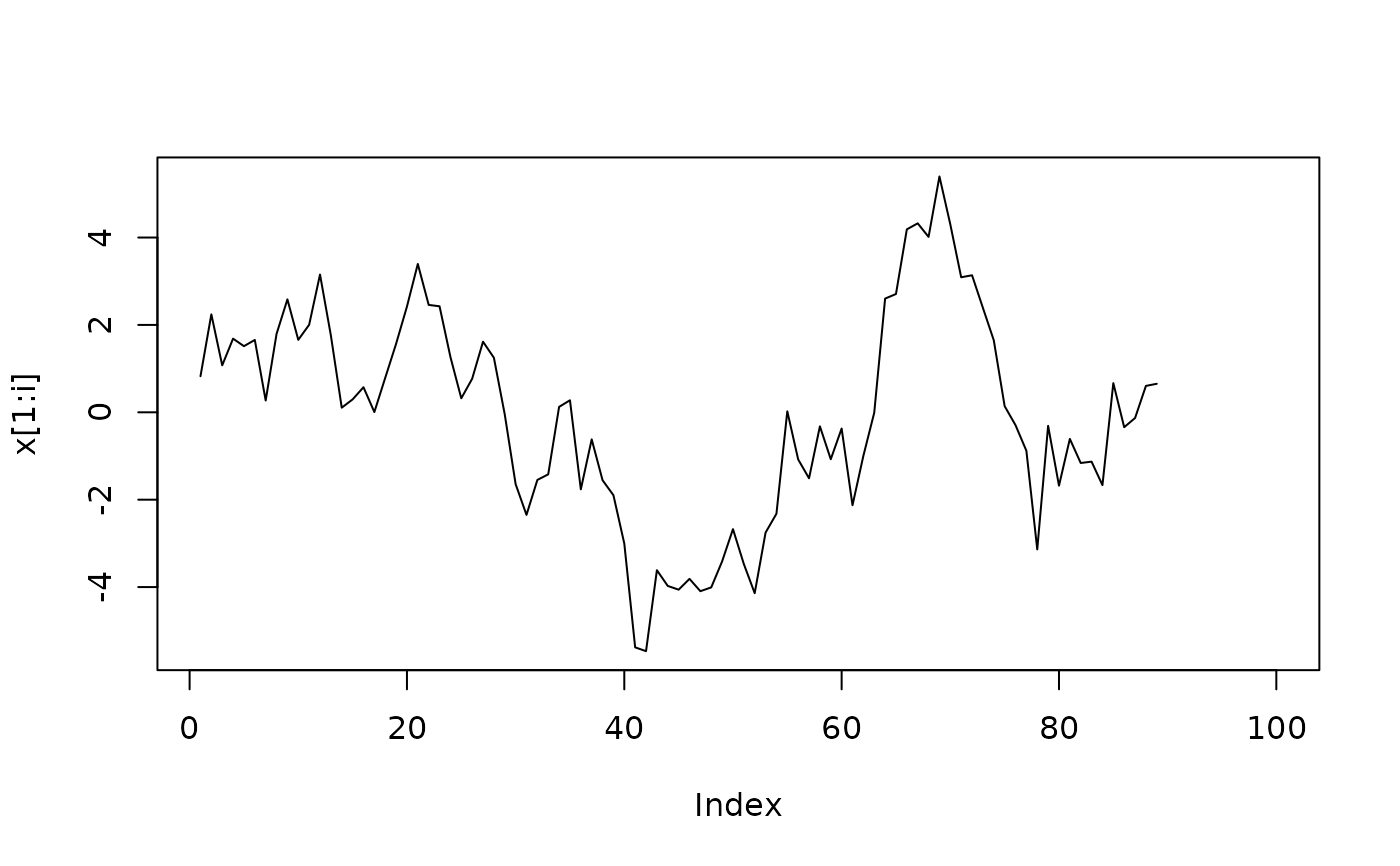
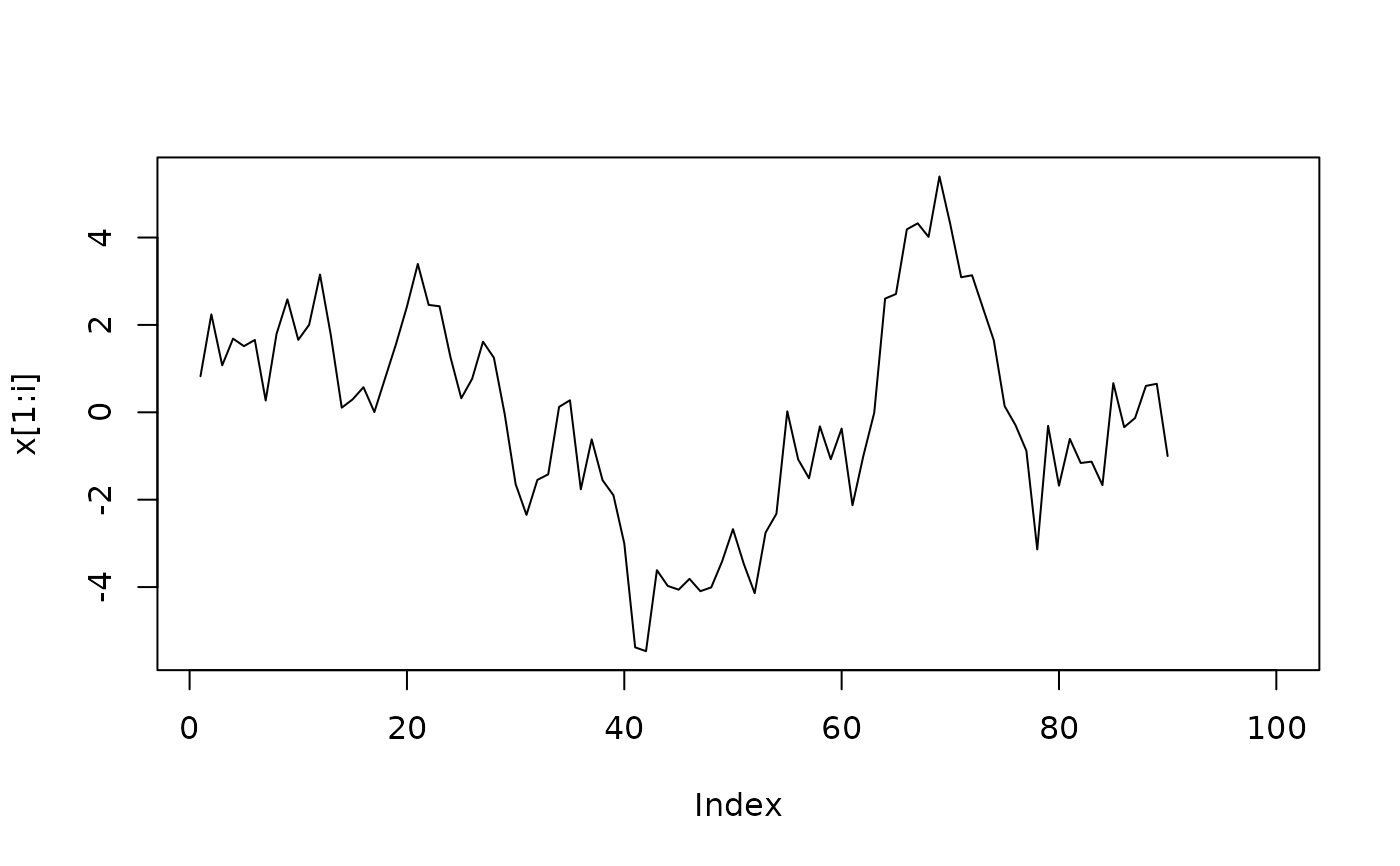
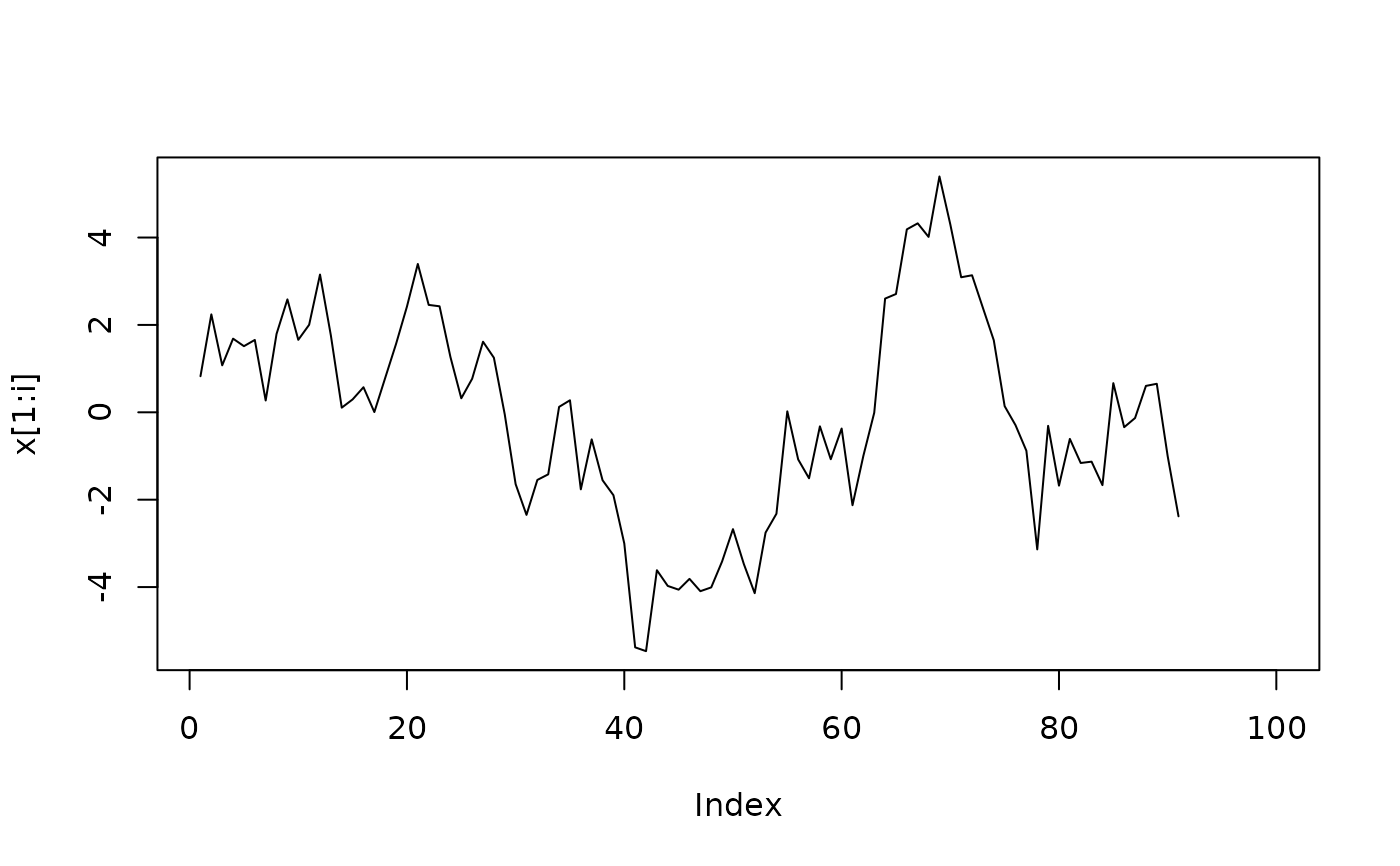
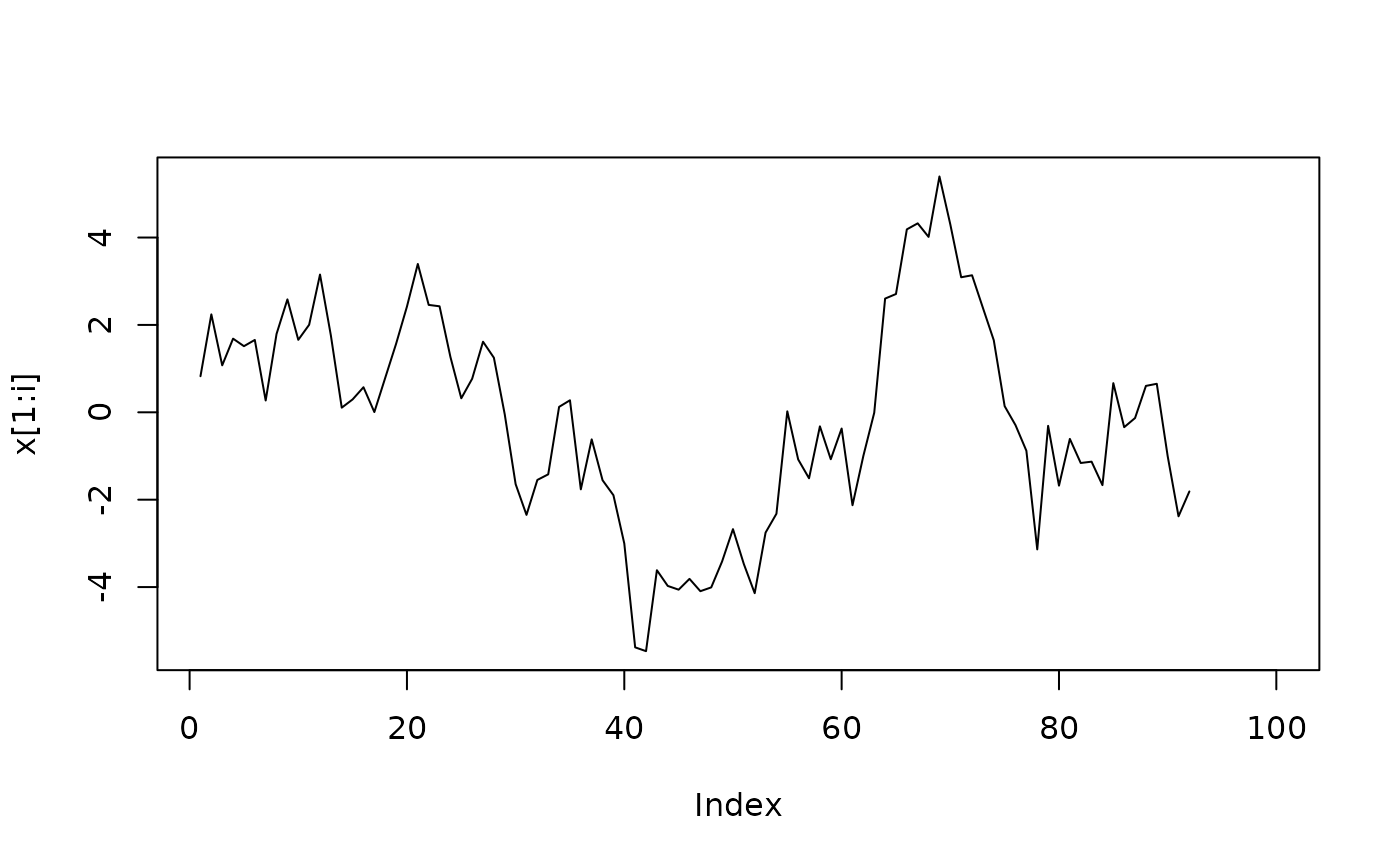
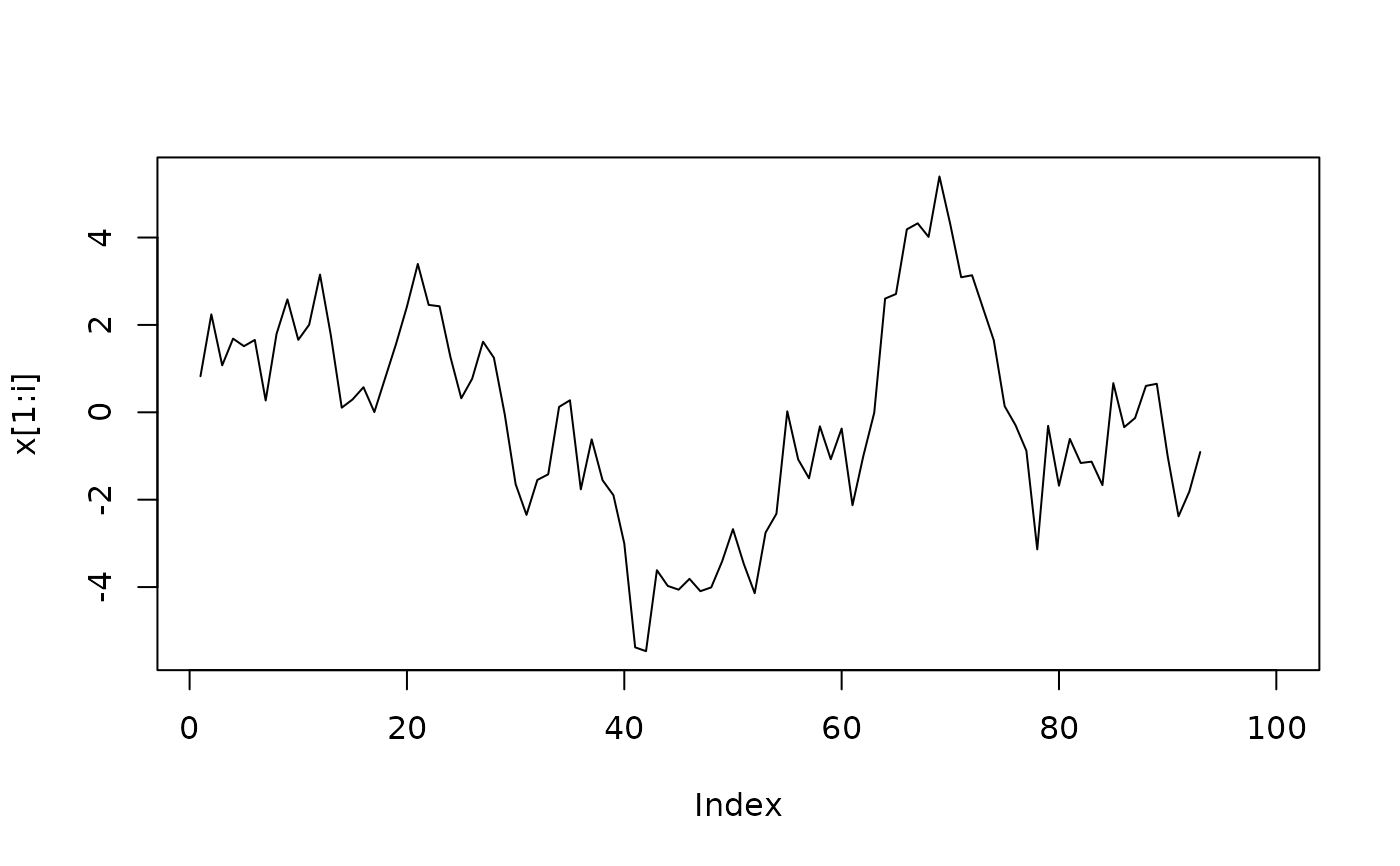
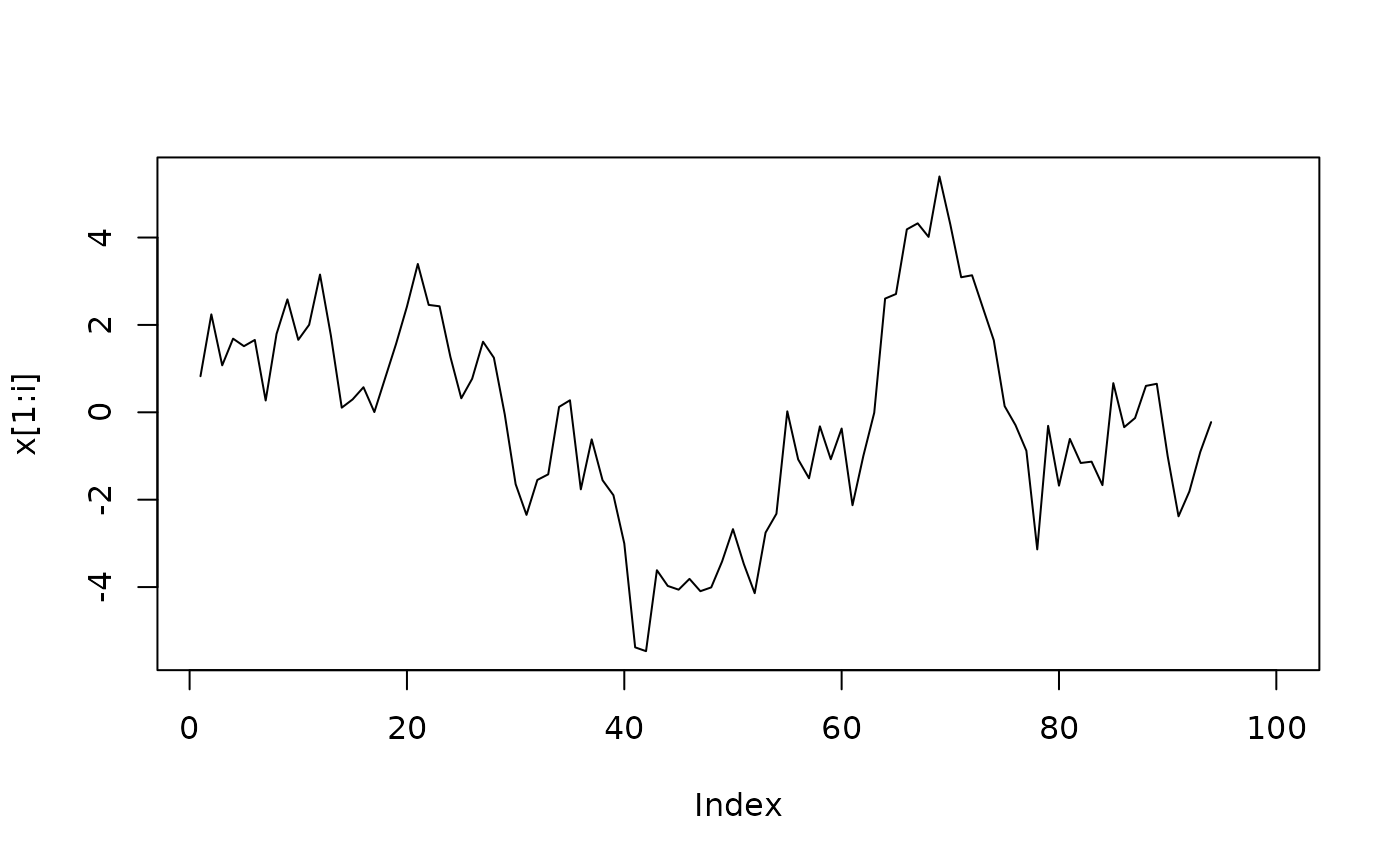
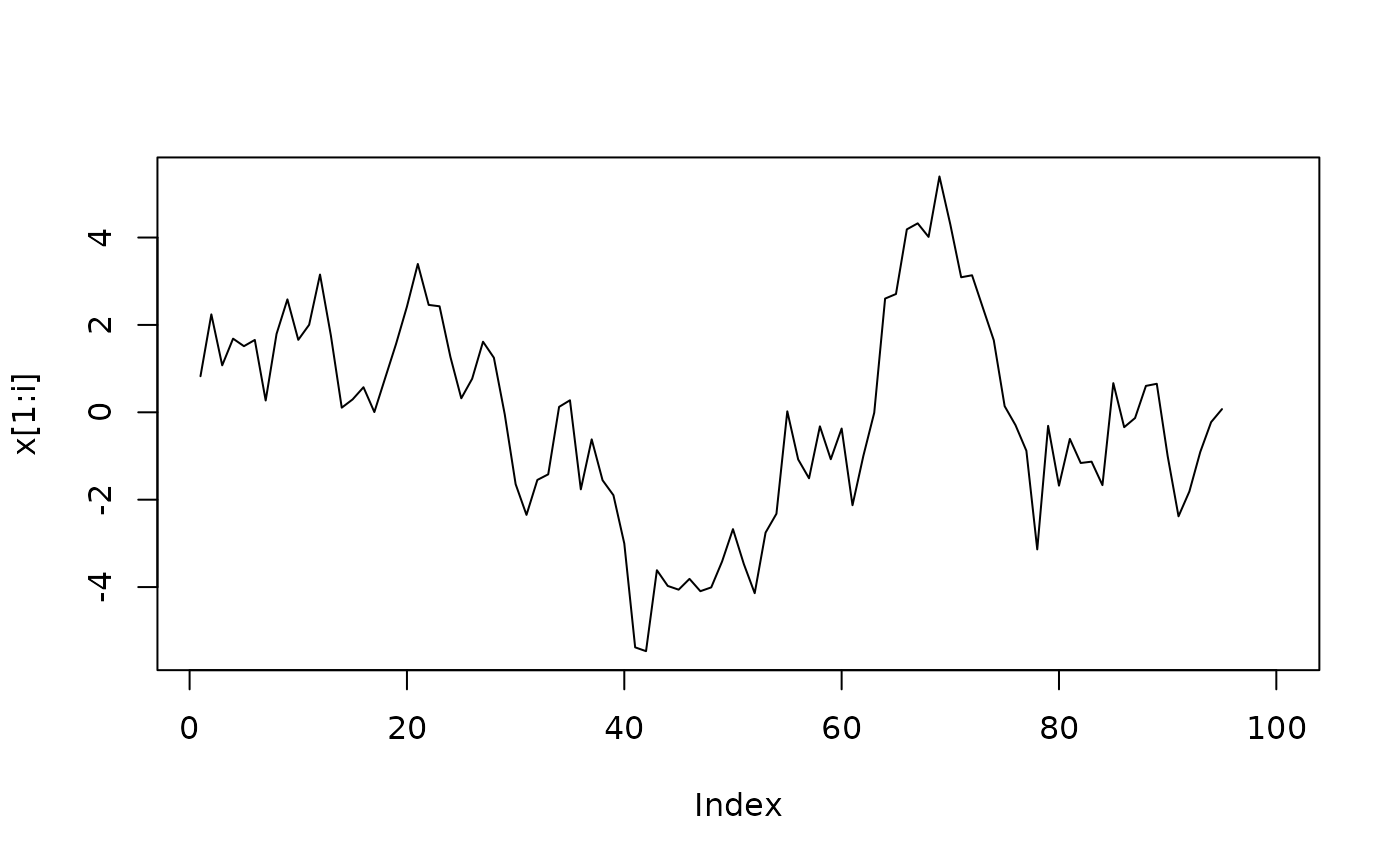
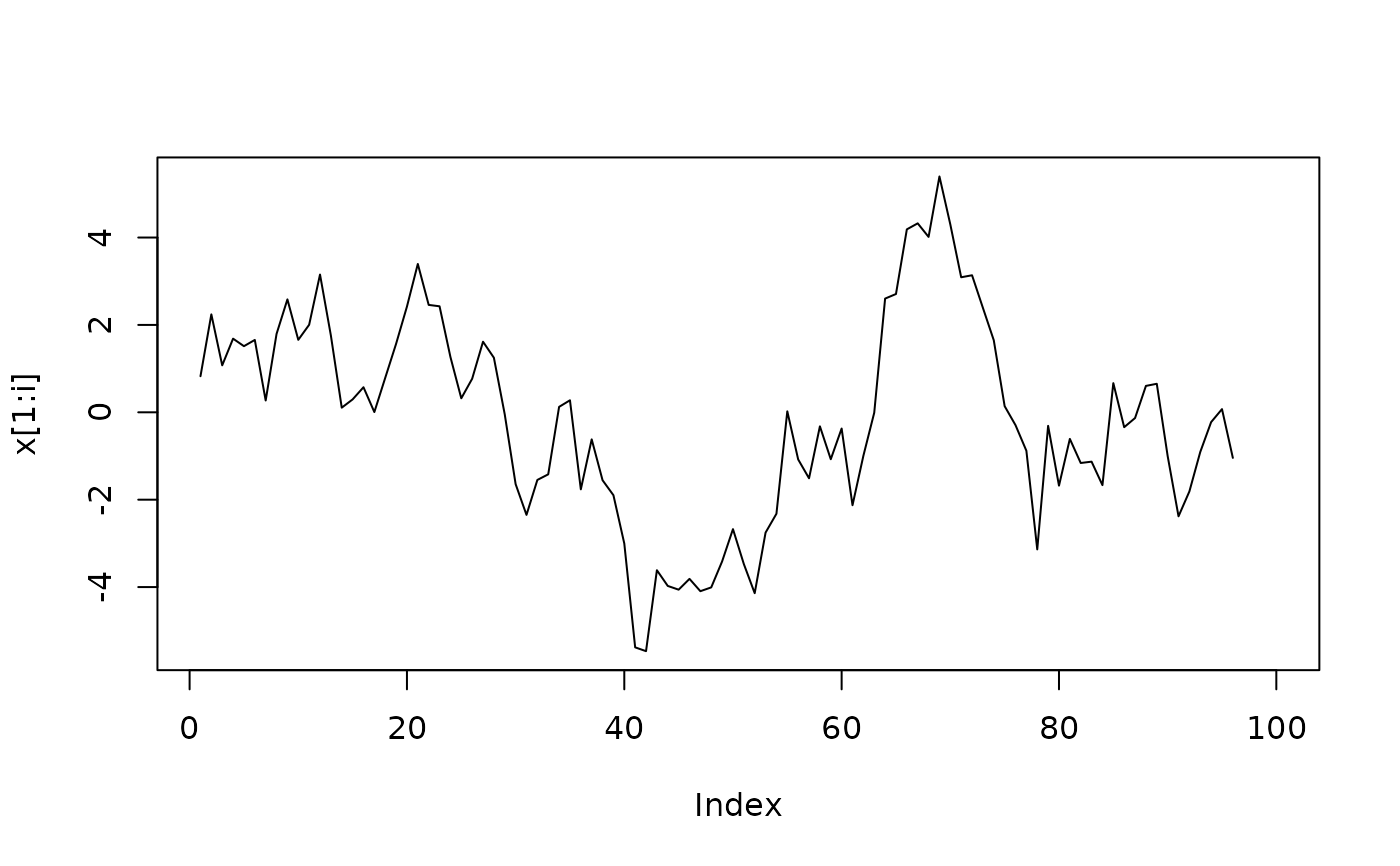
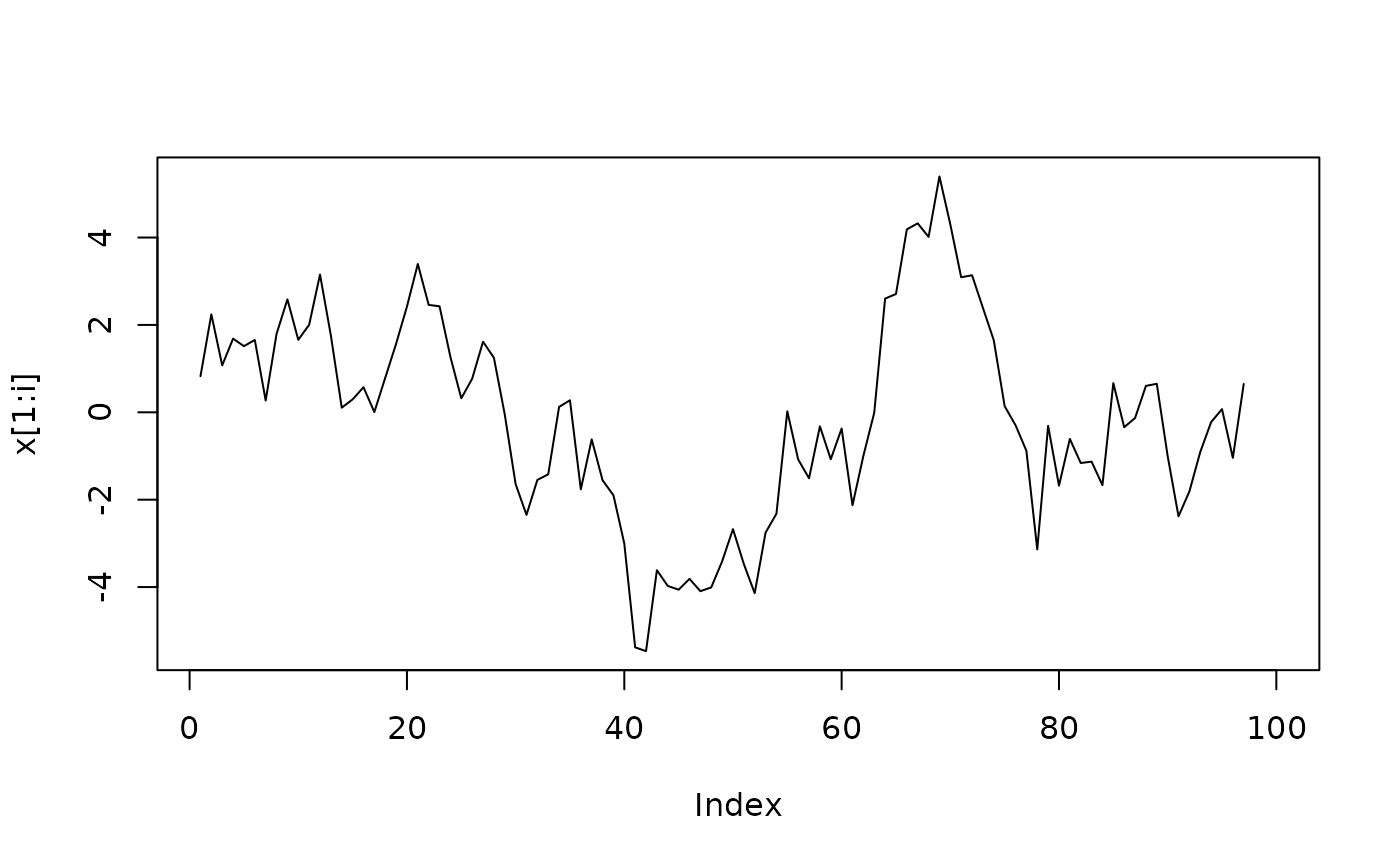
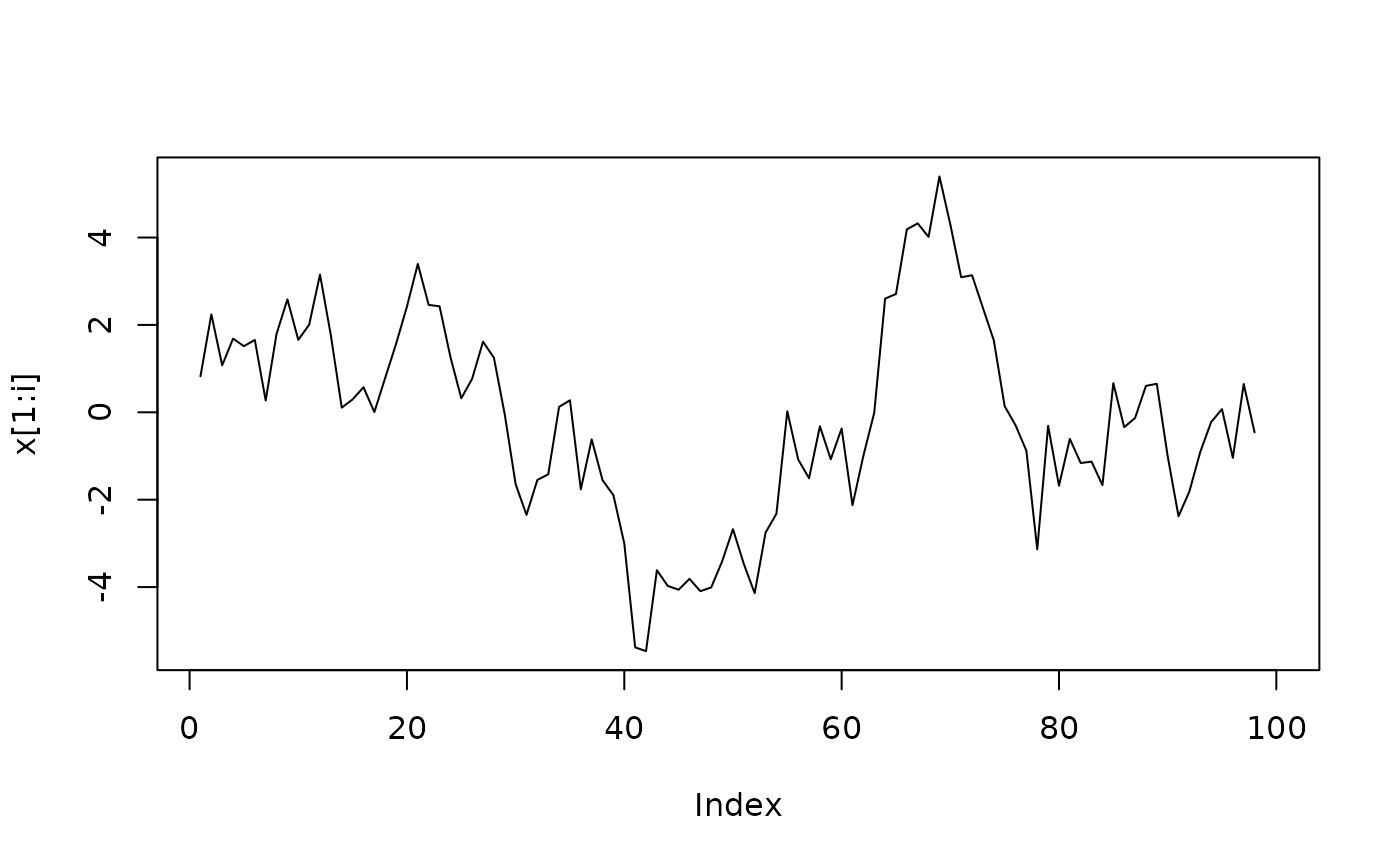
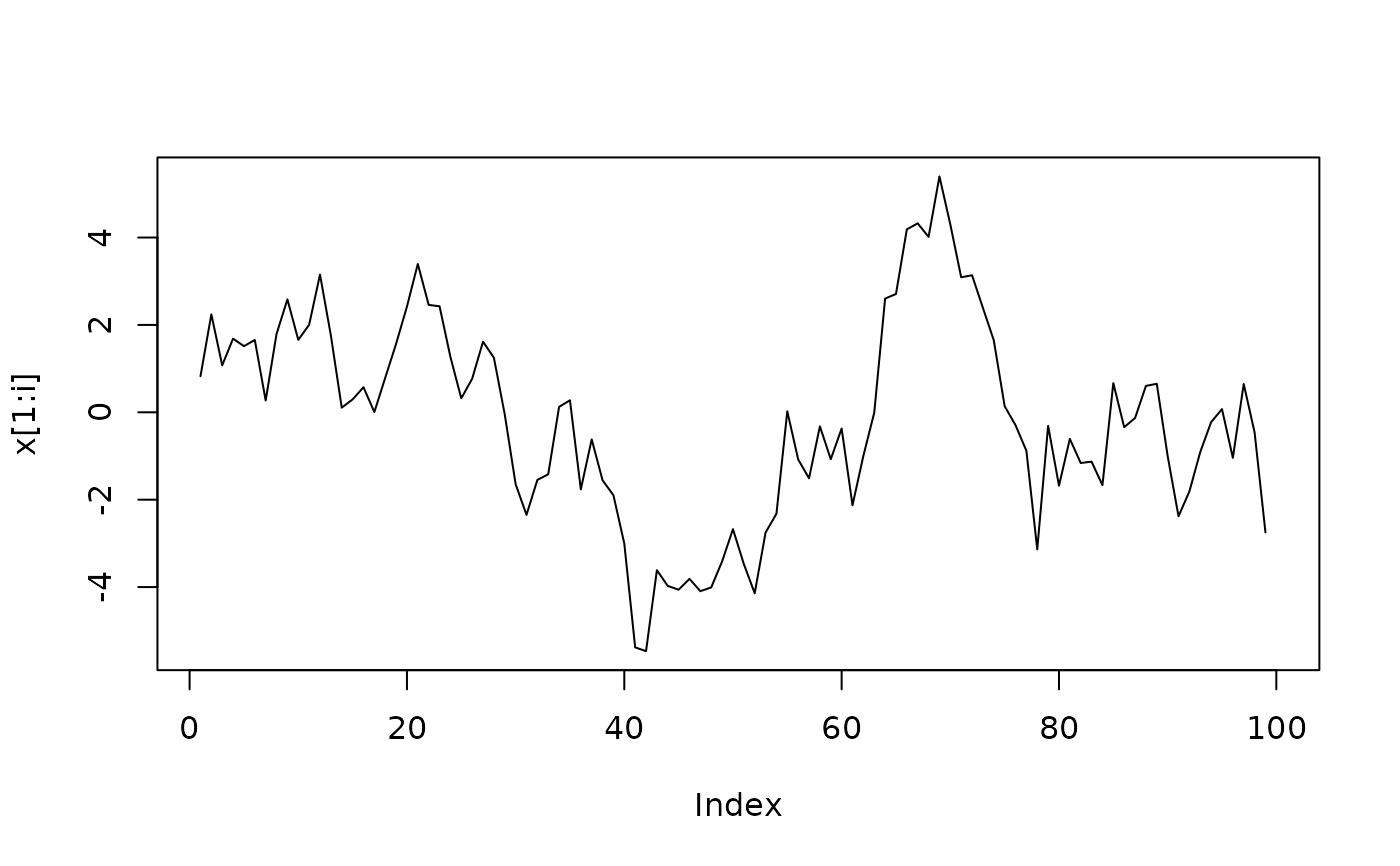
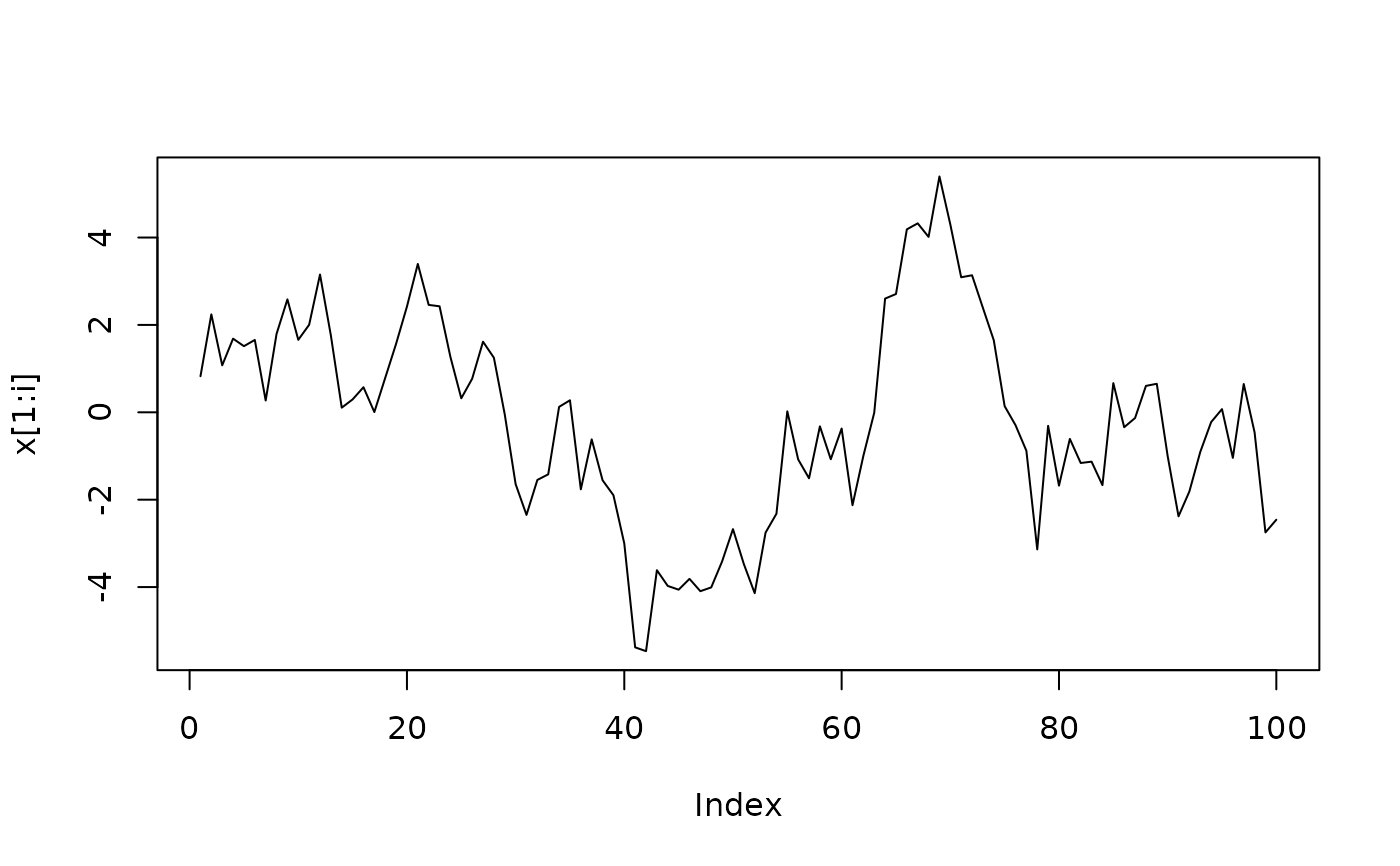
x <- cumsum(rnorm(100))
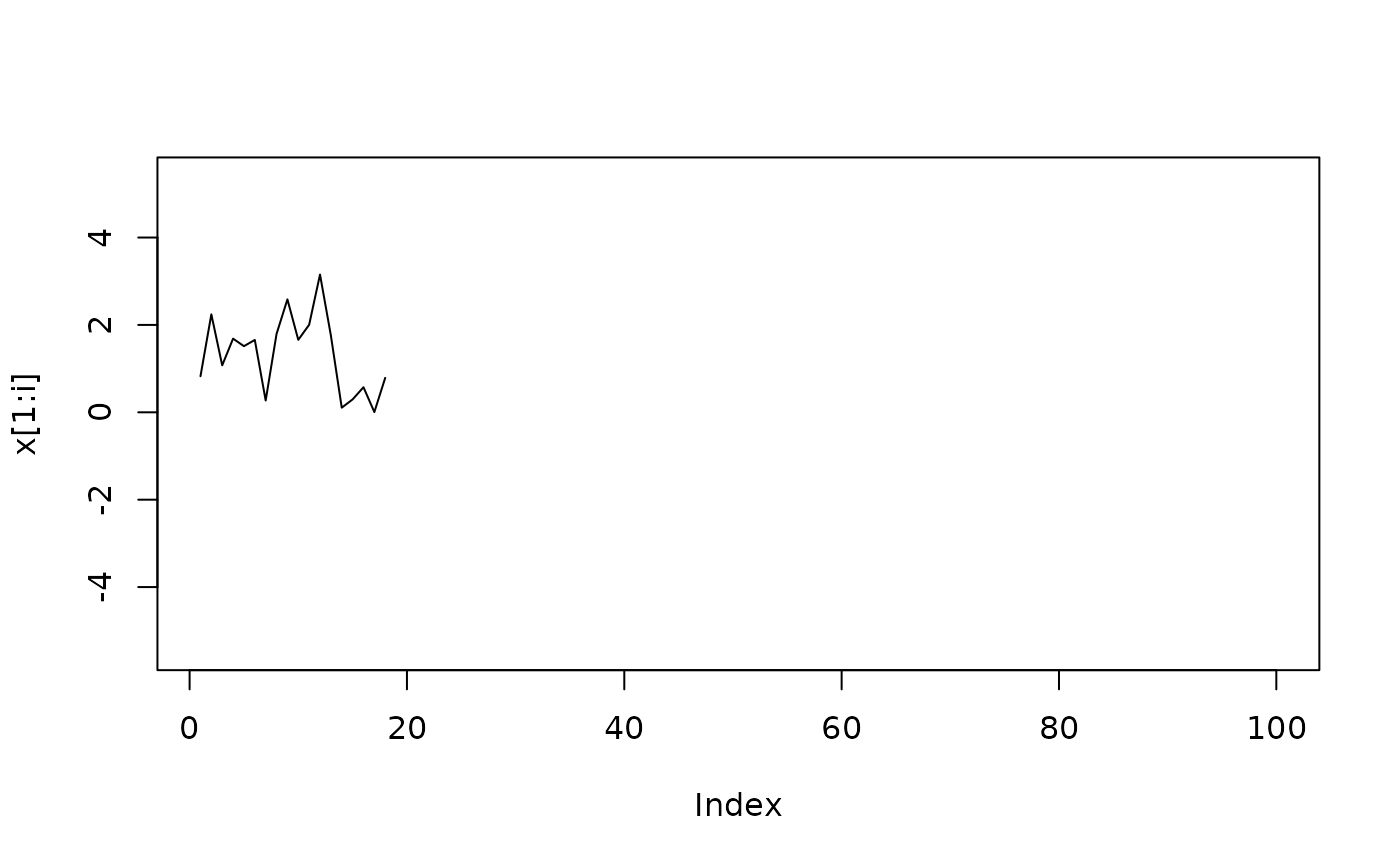
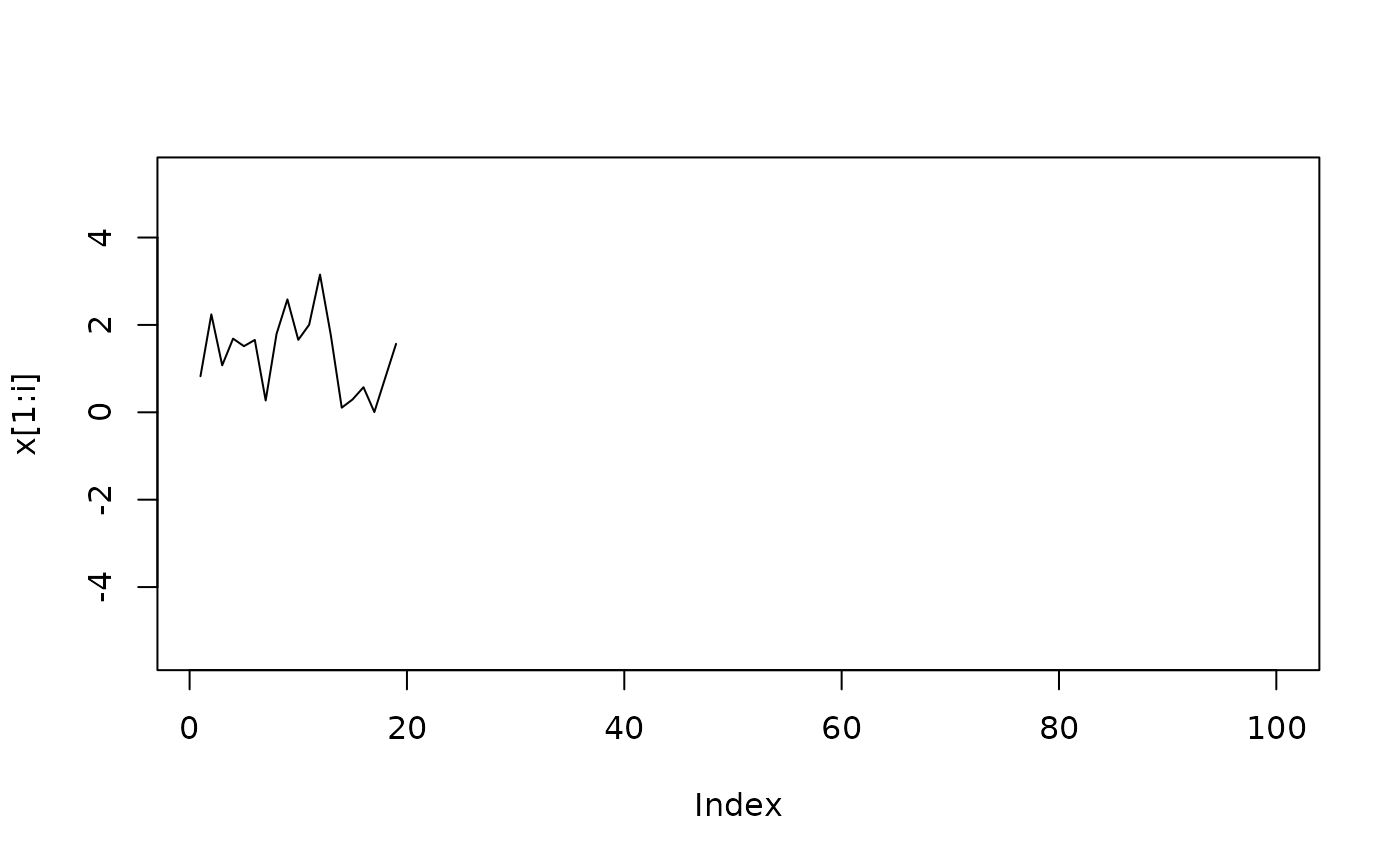
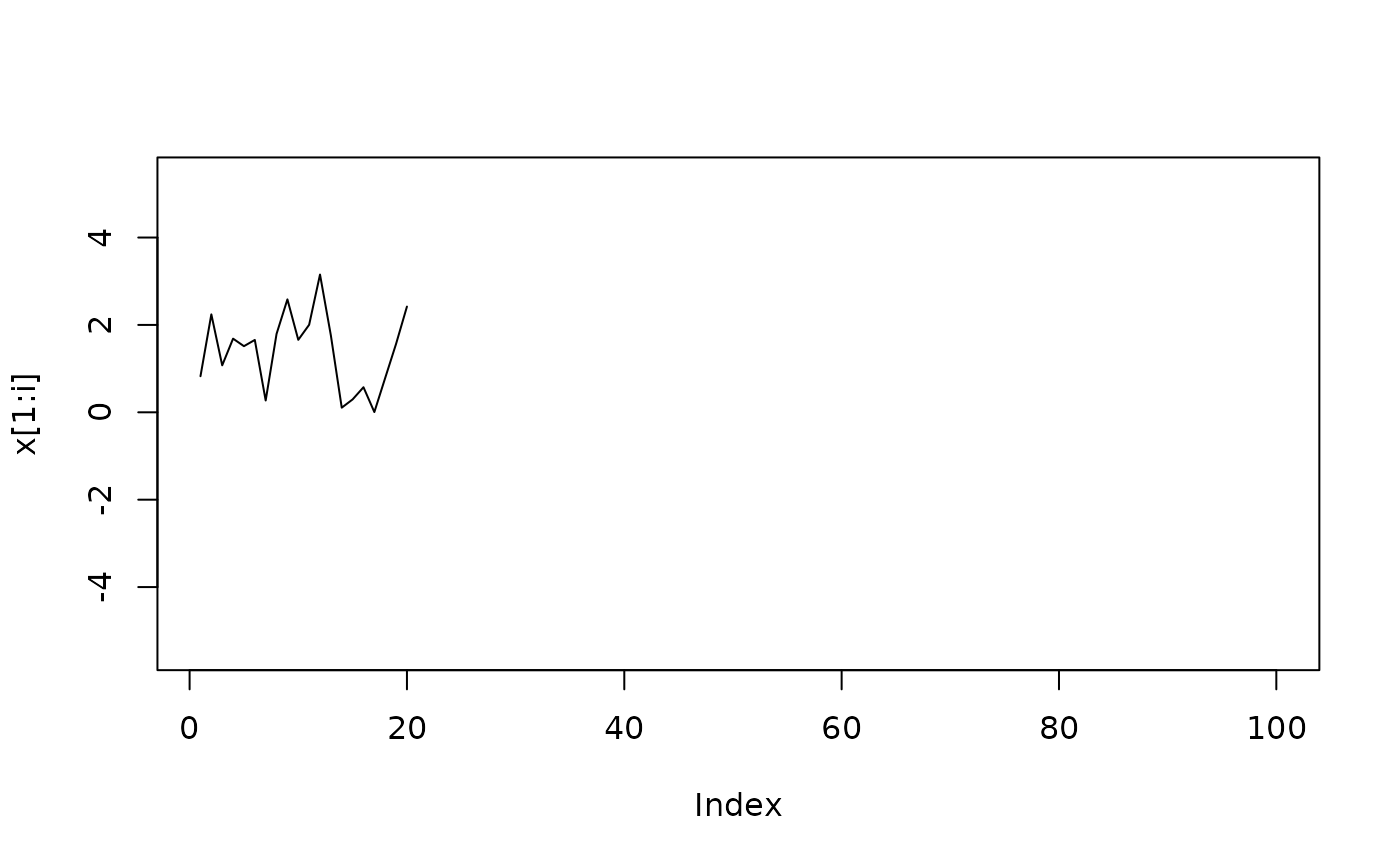
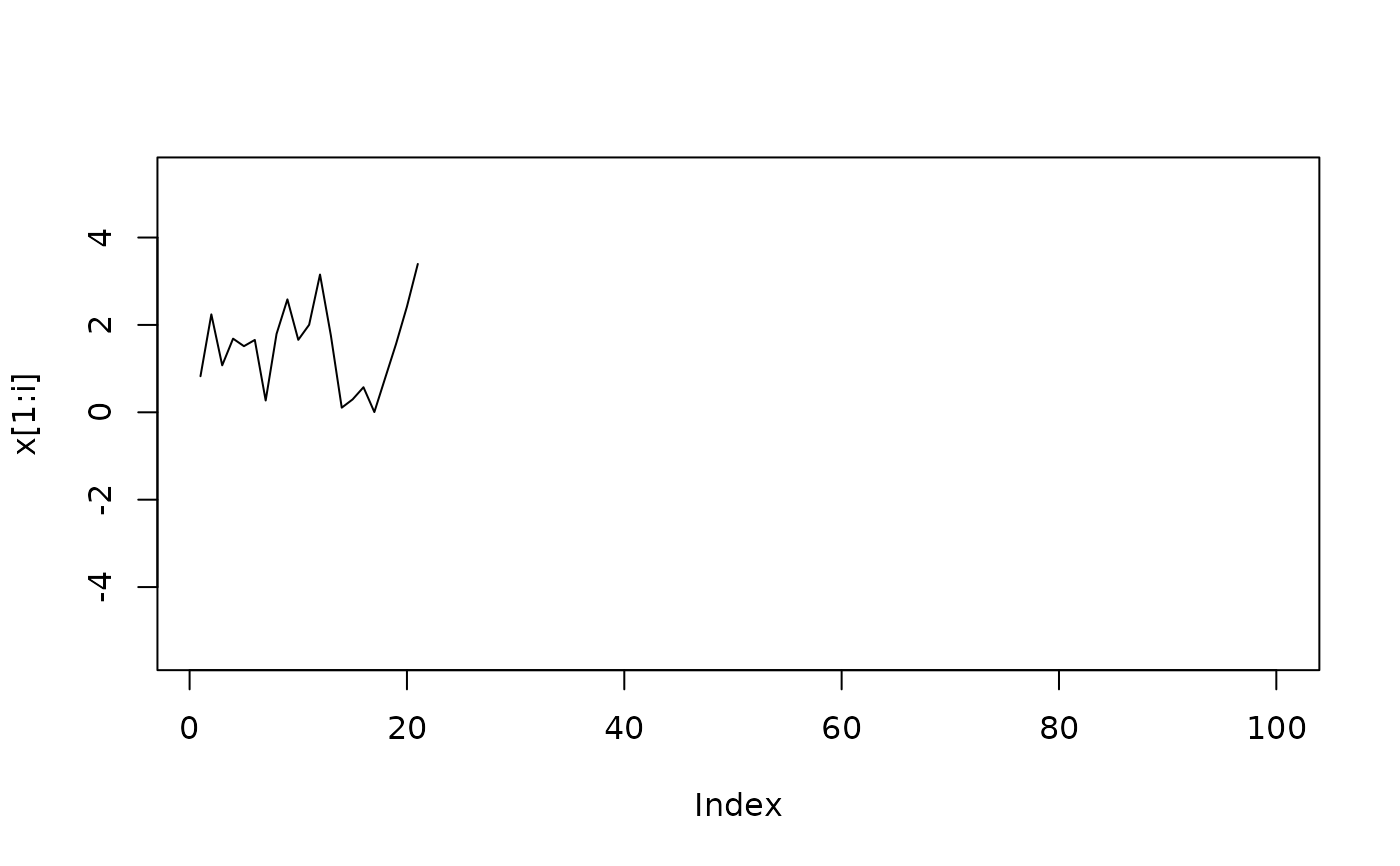
animate(plot(x[1:i], type = "l", xlim = c(1, 100), ylim = range(x)),
i = 2:100, delay = 0.05)
 # two parameters running in parallel, using the pipe
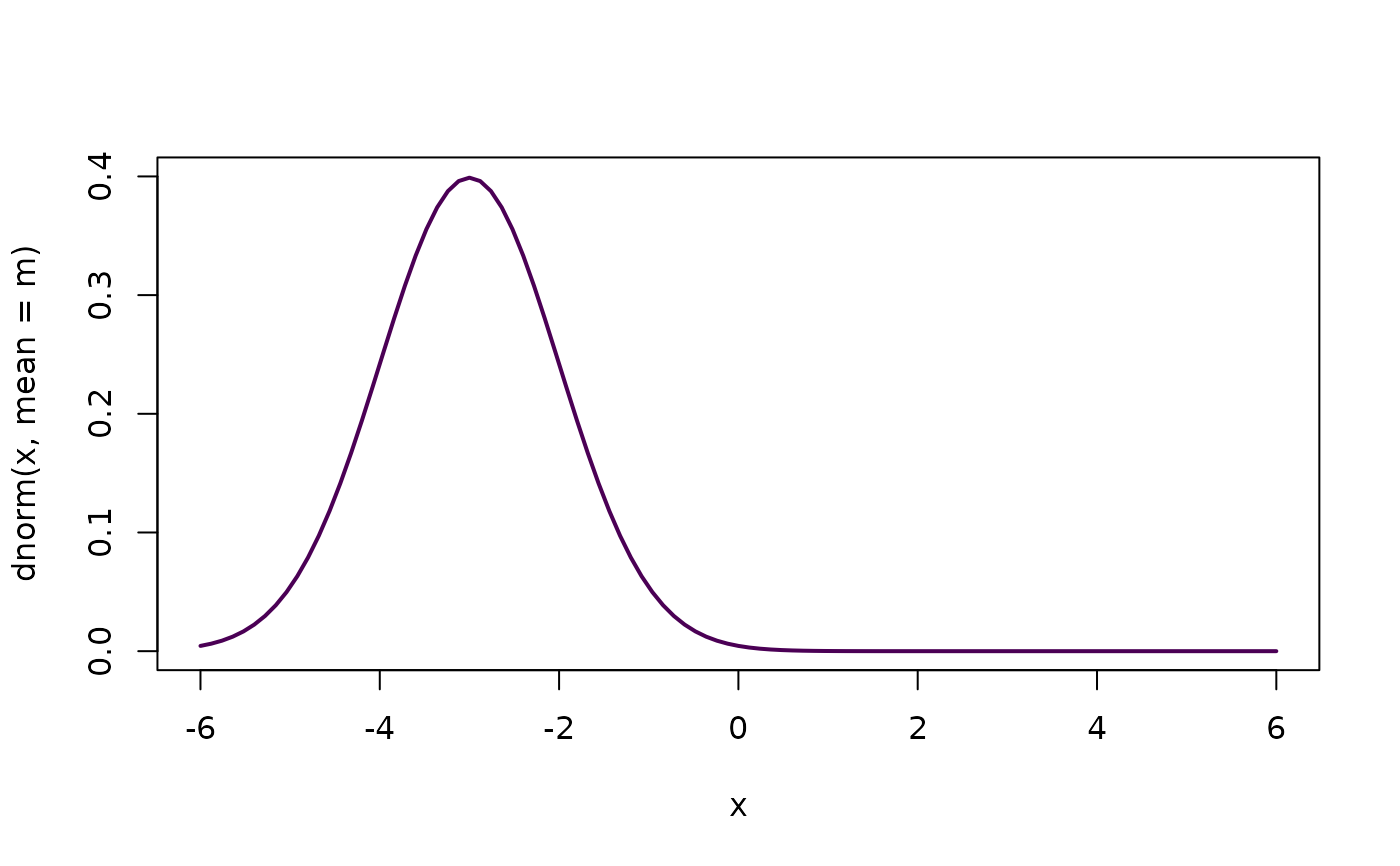
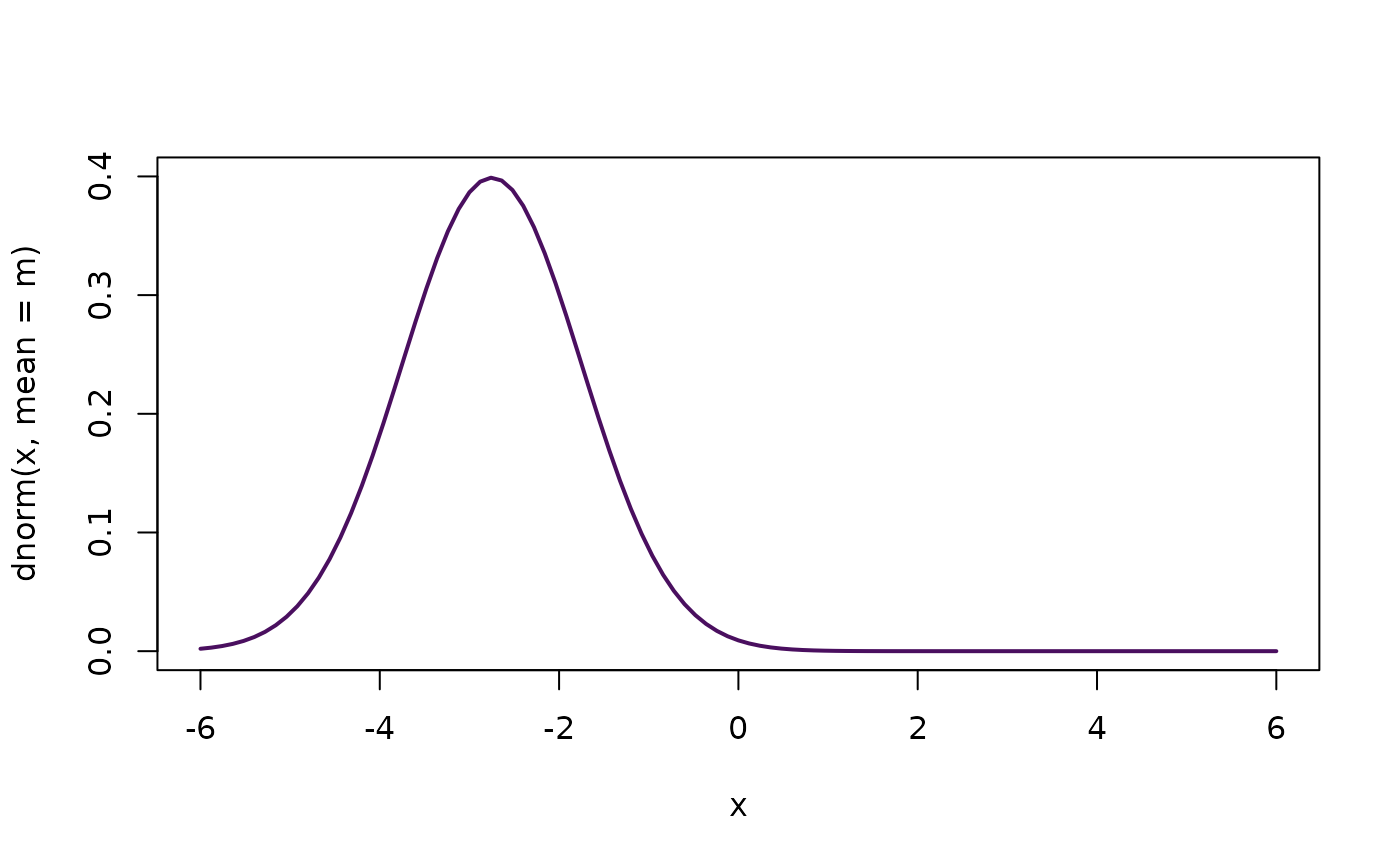
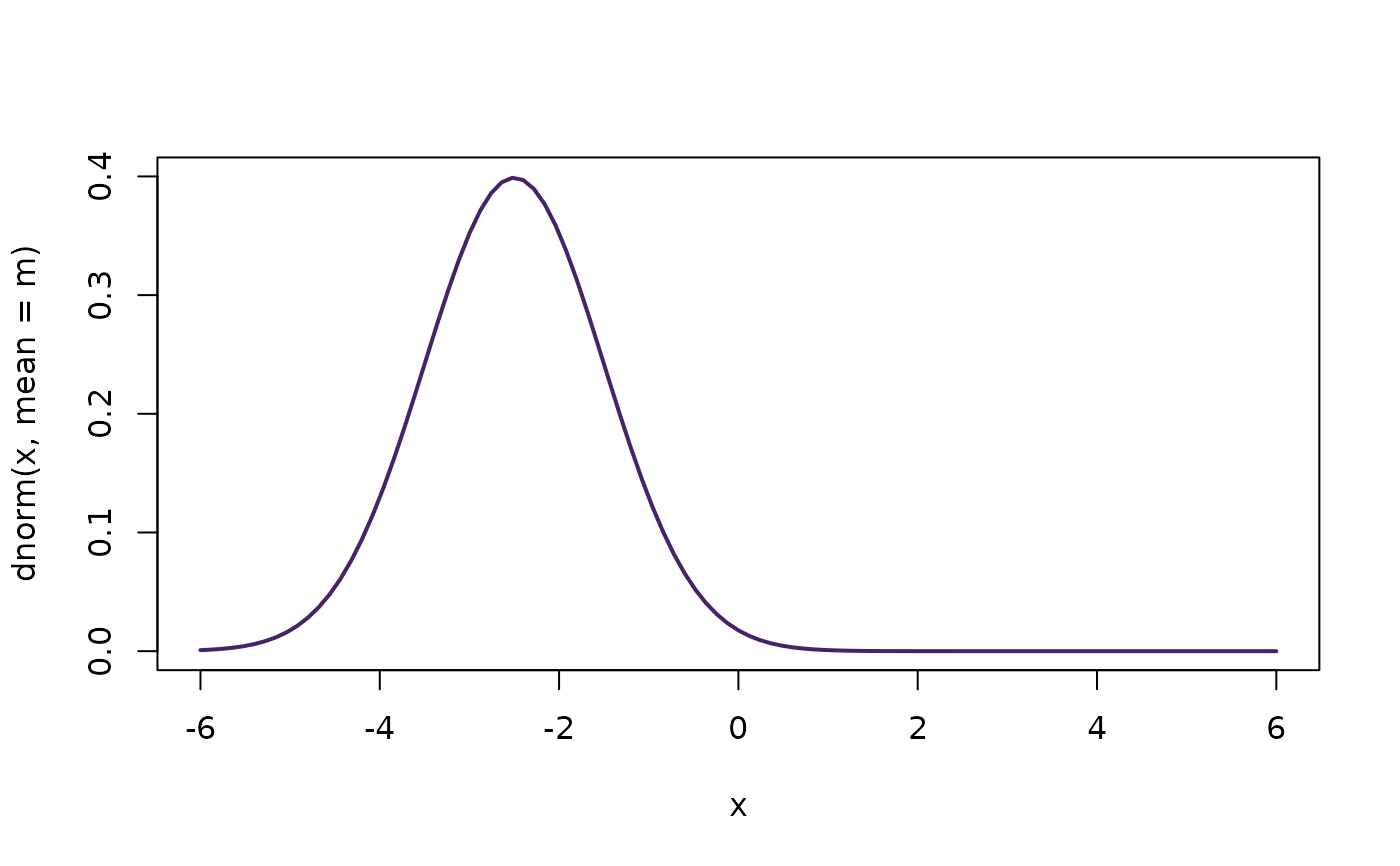
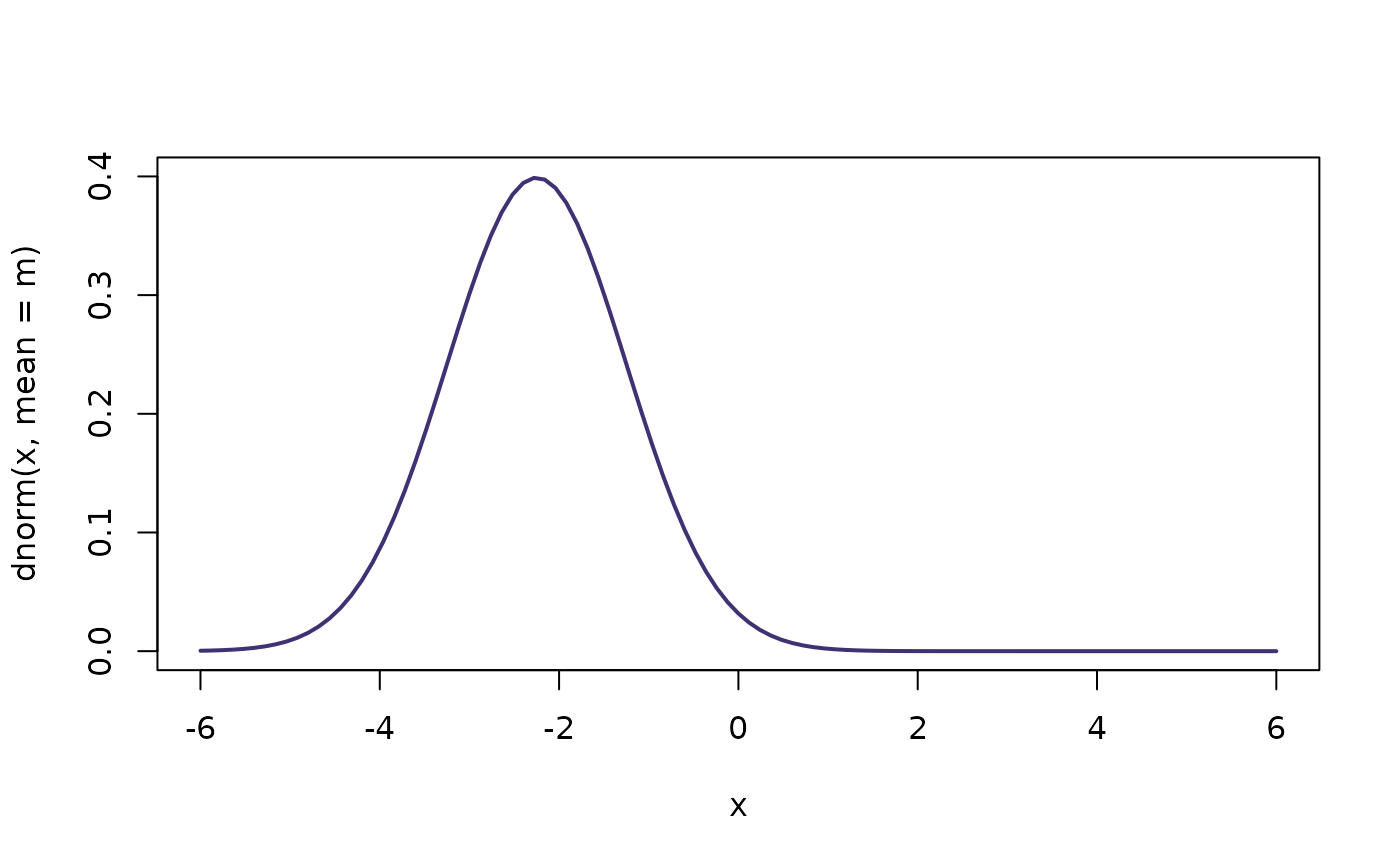
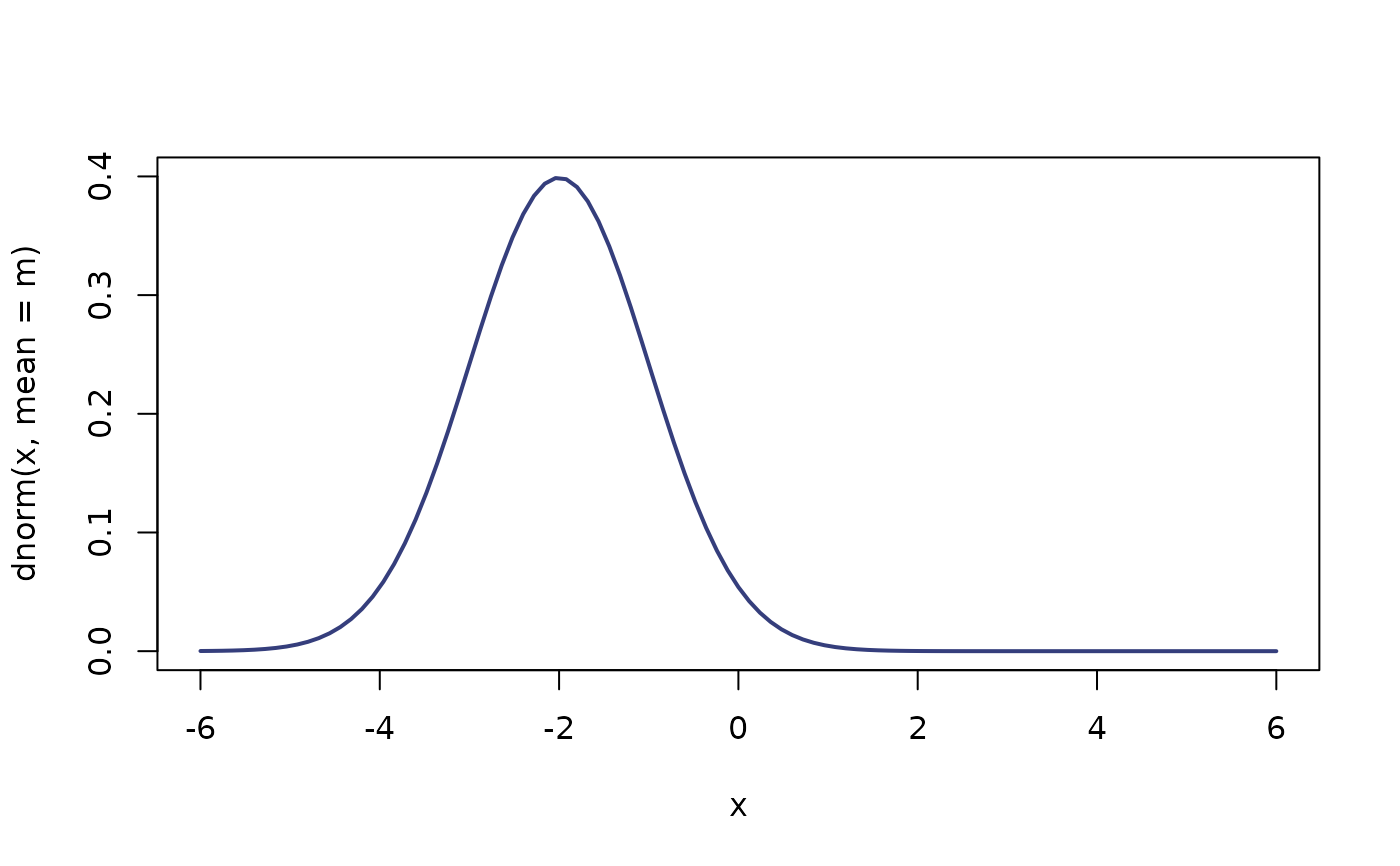
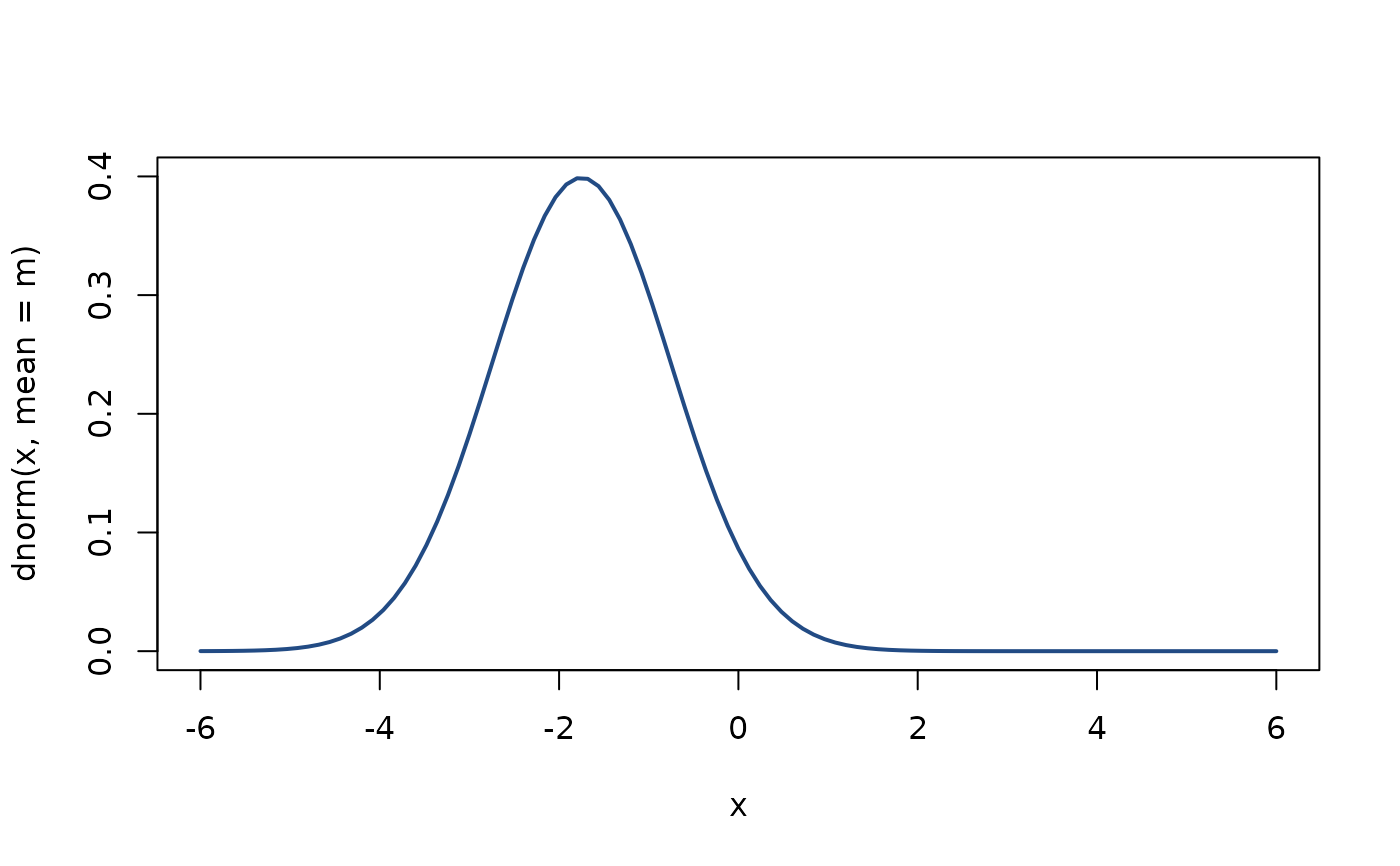
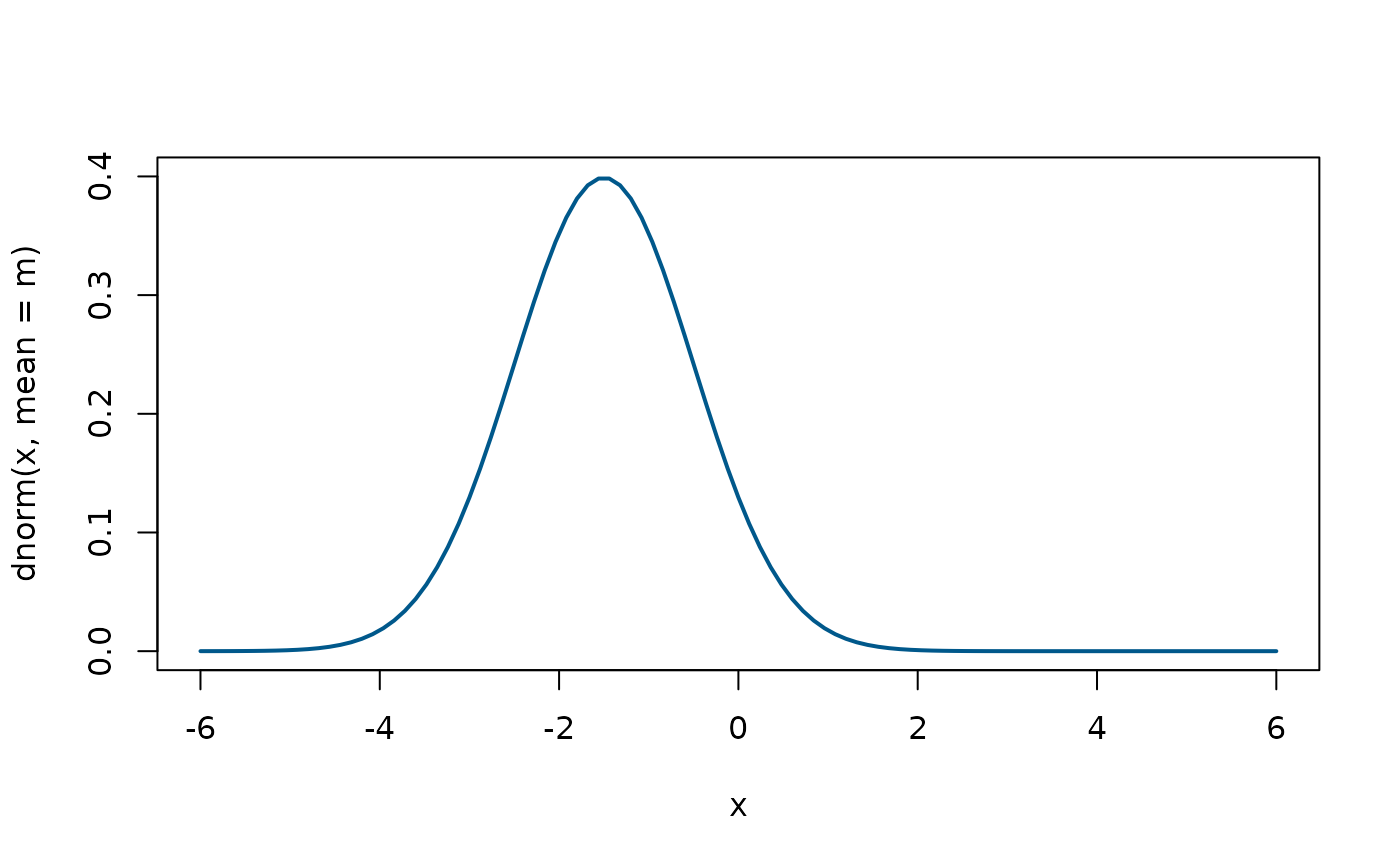
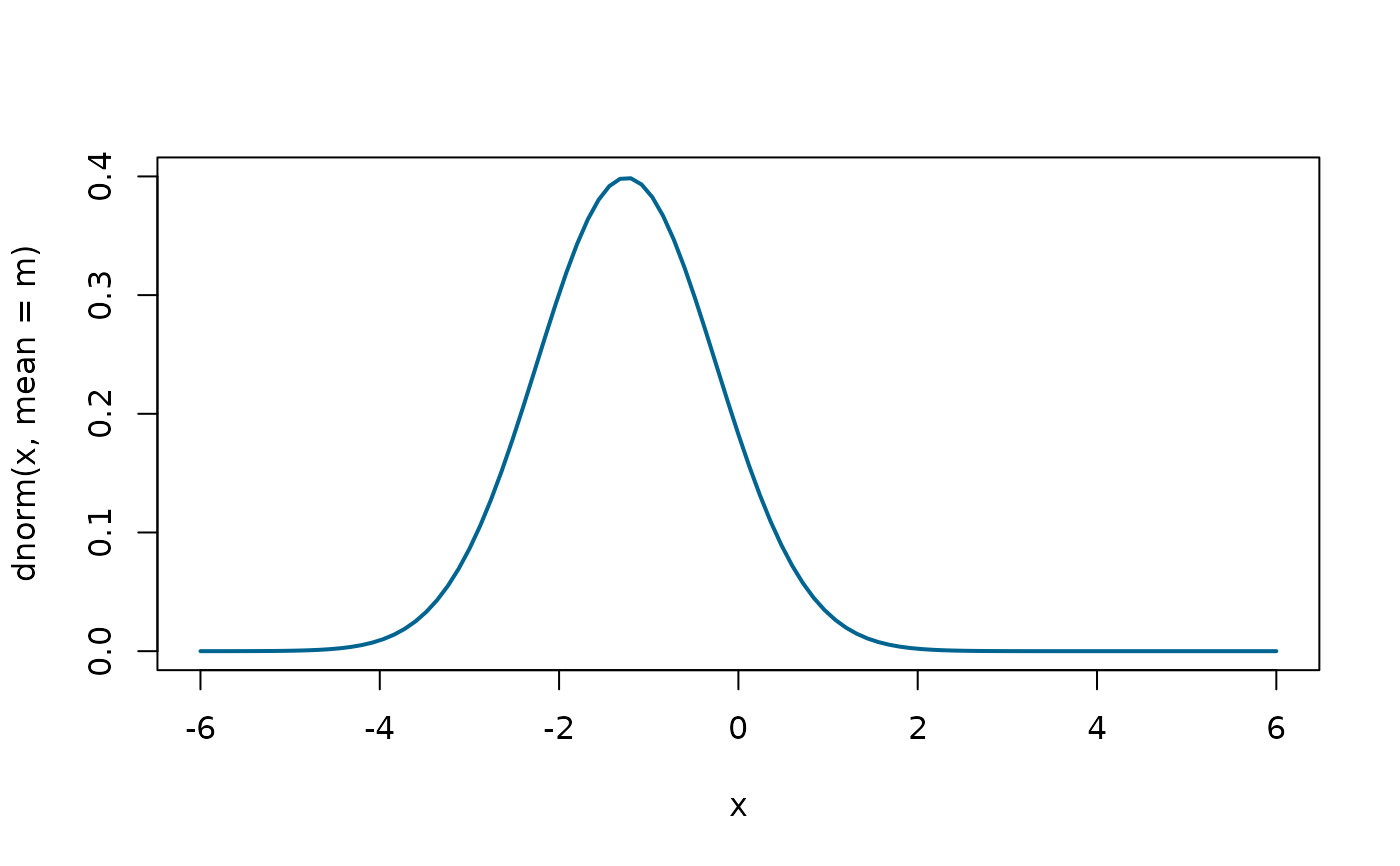
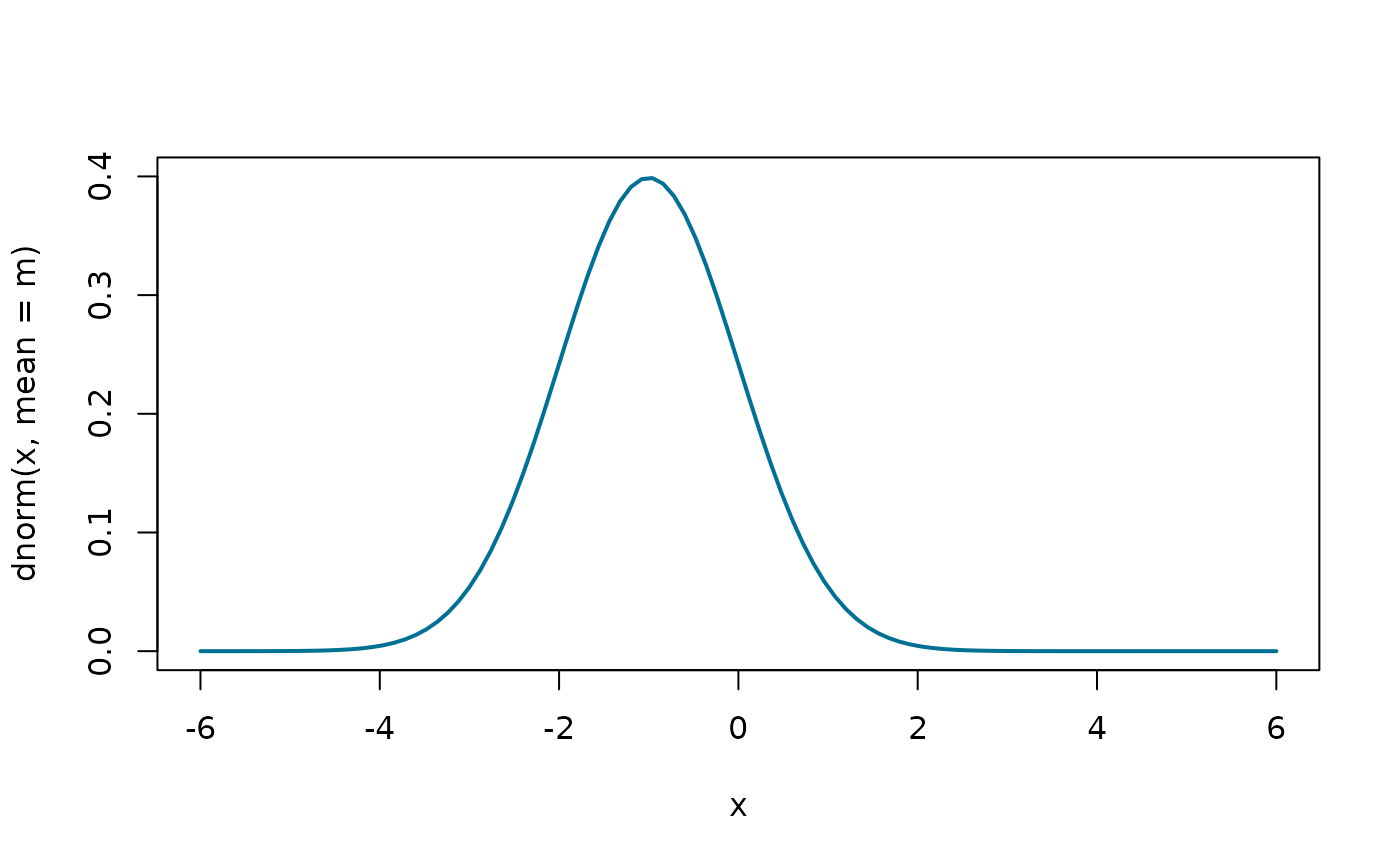
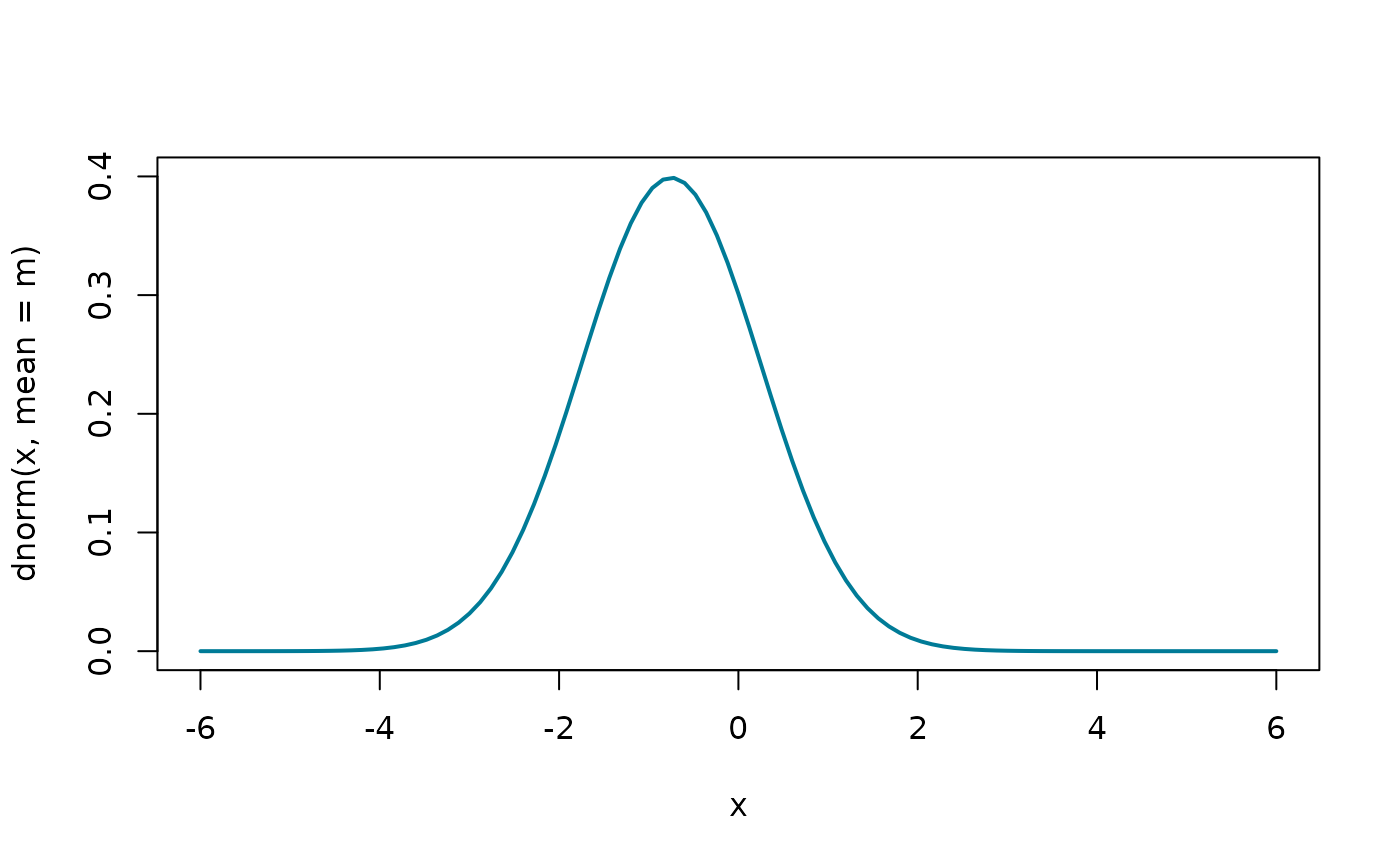
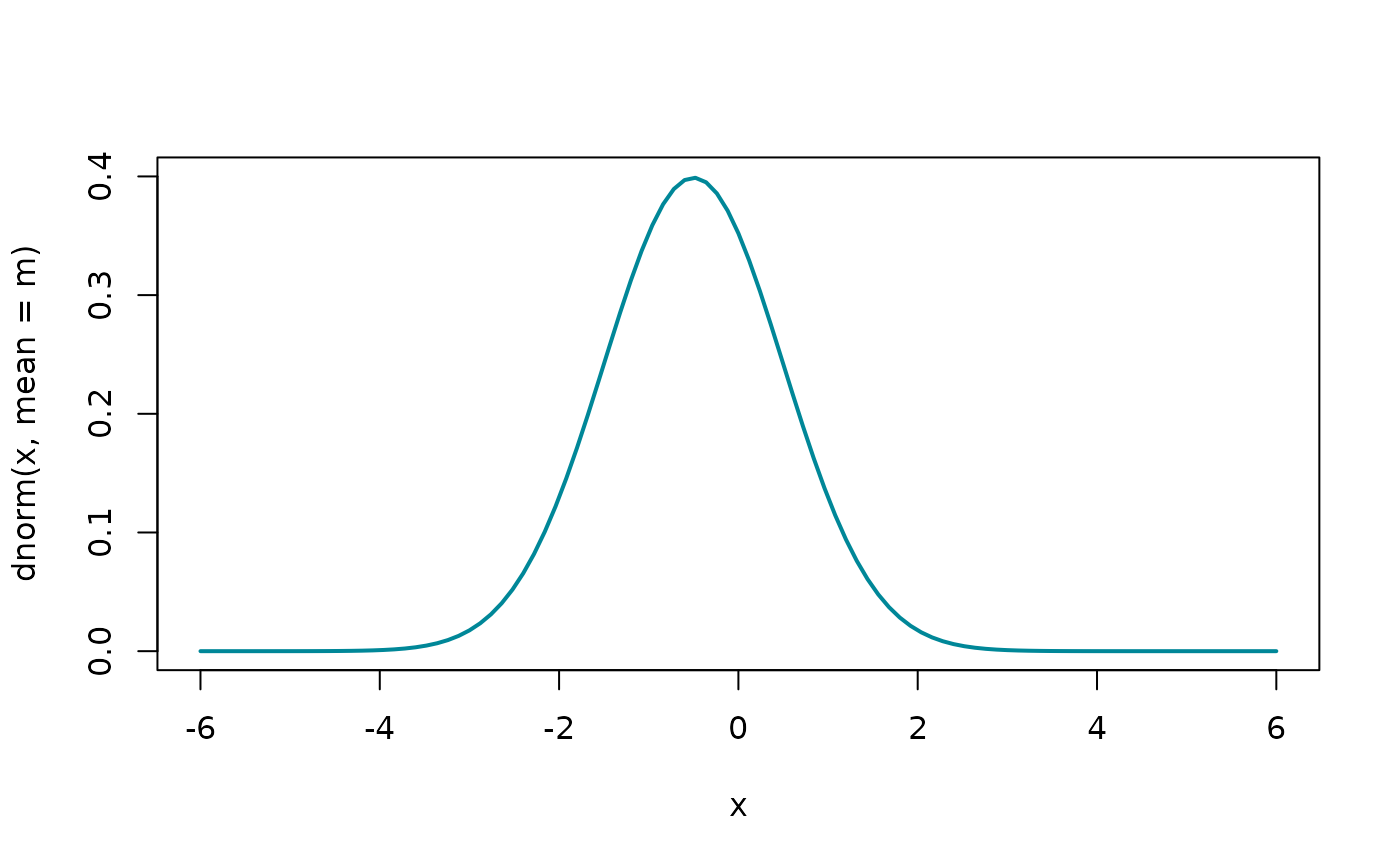
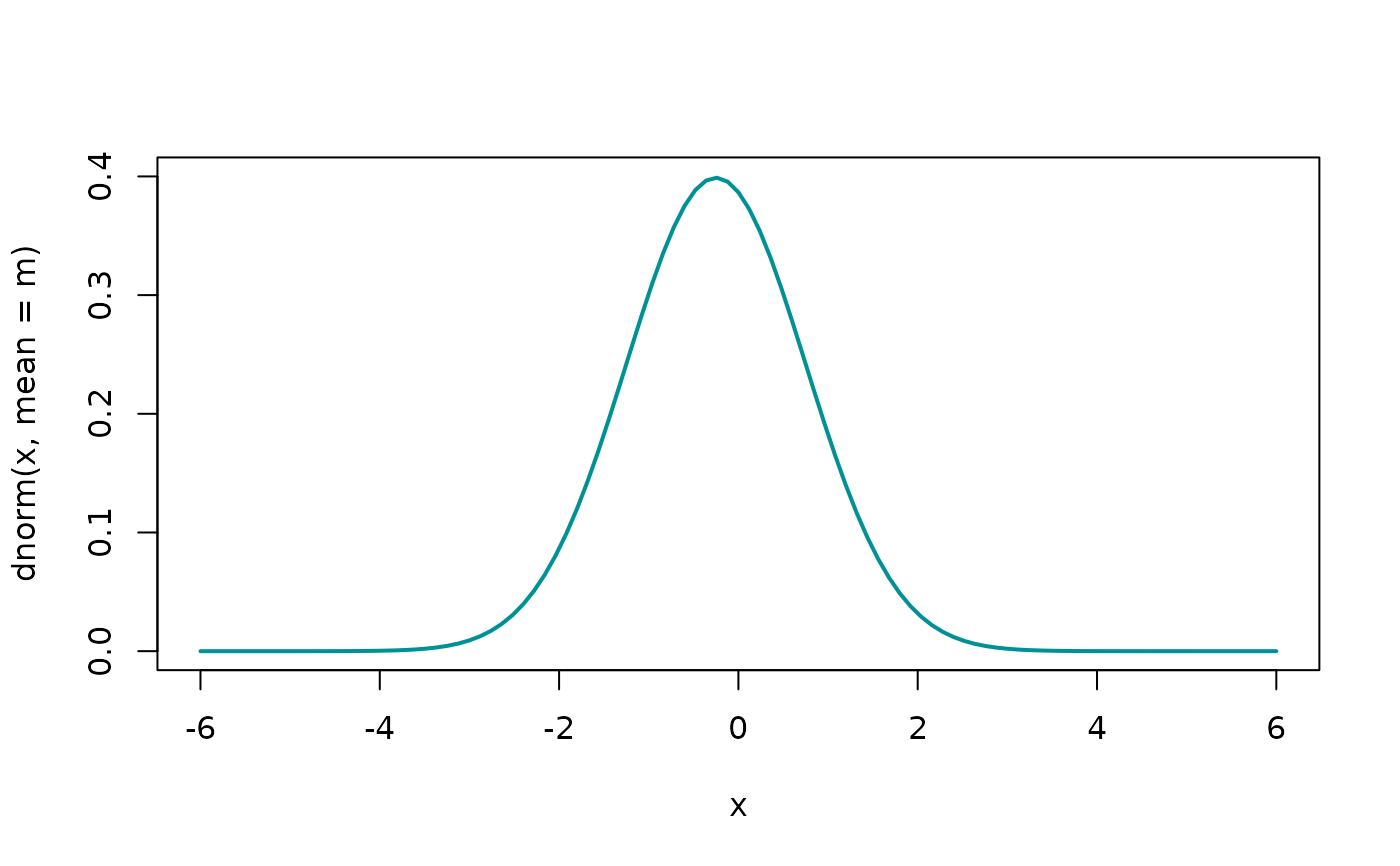
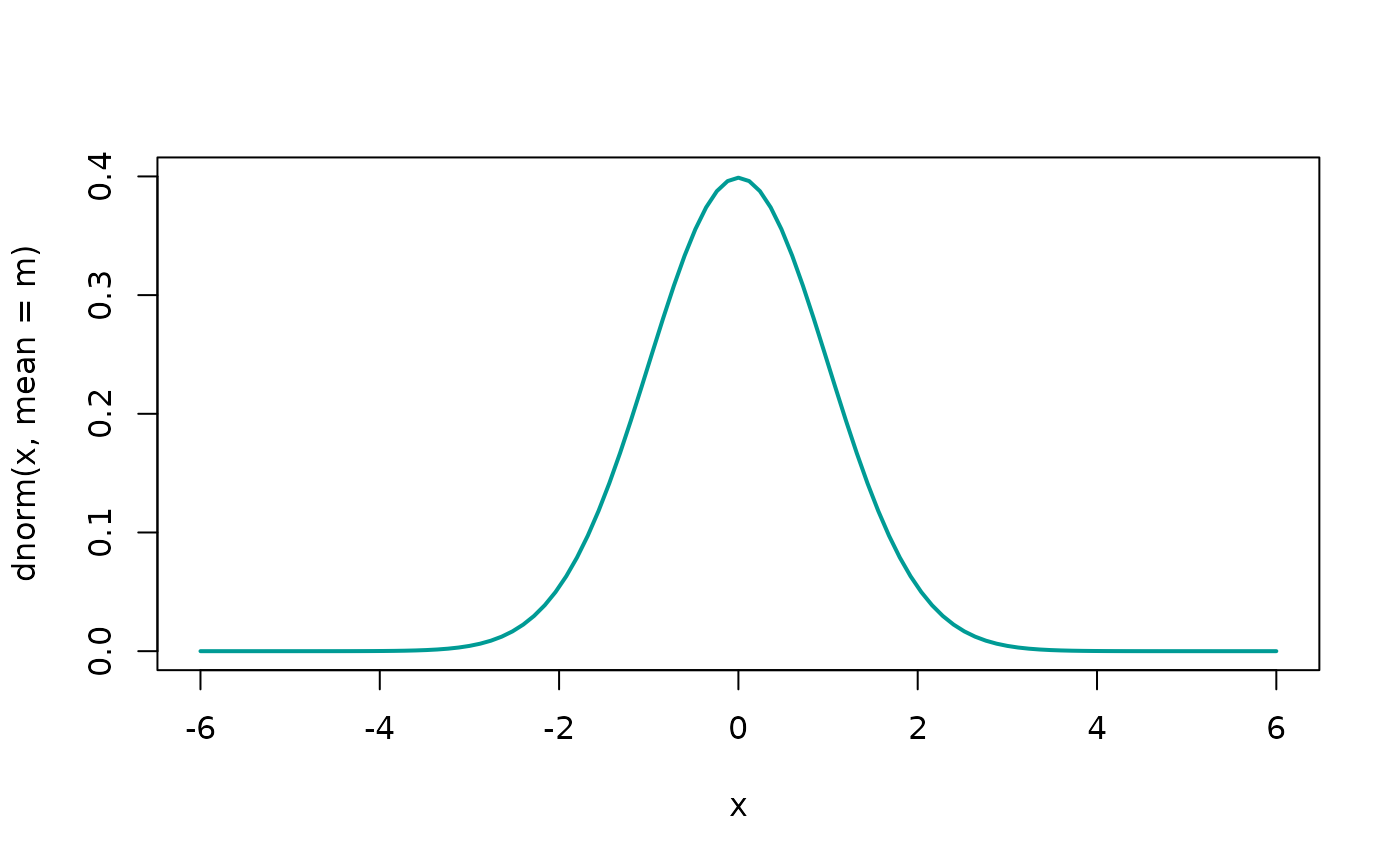
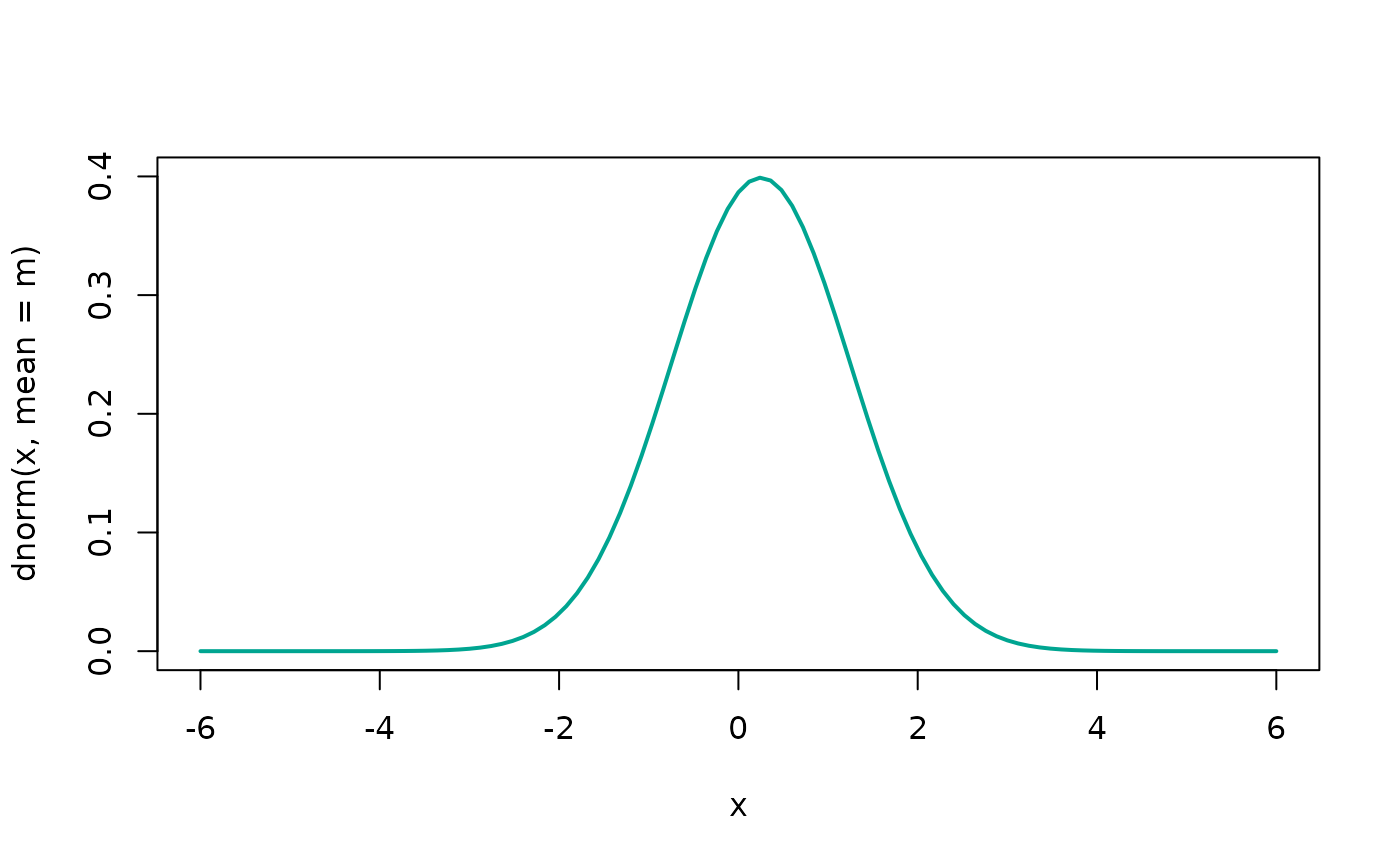
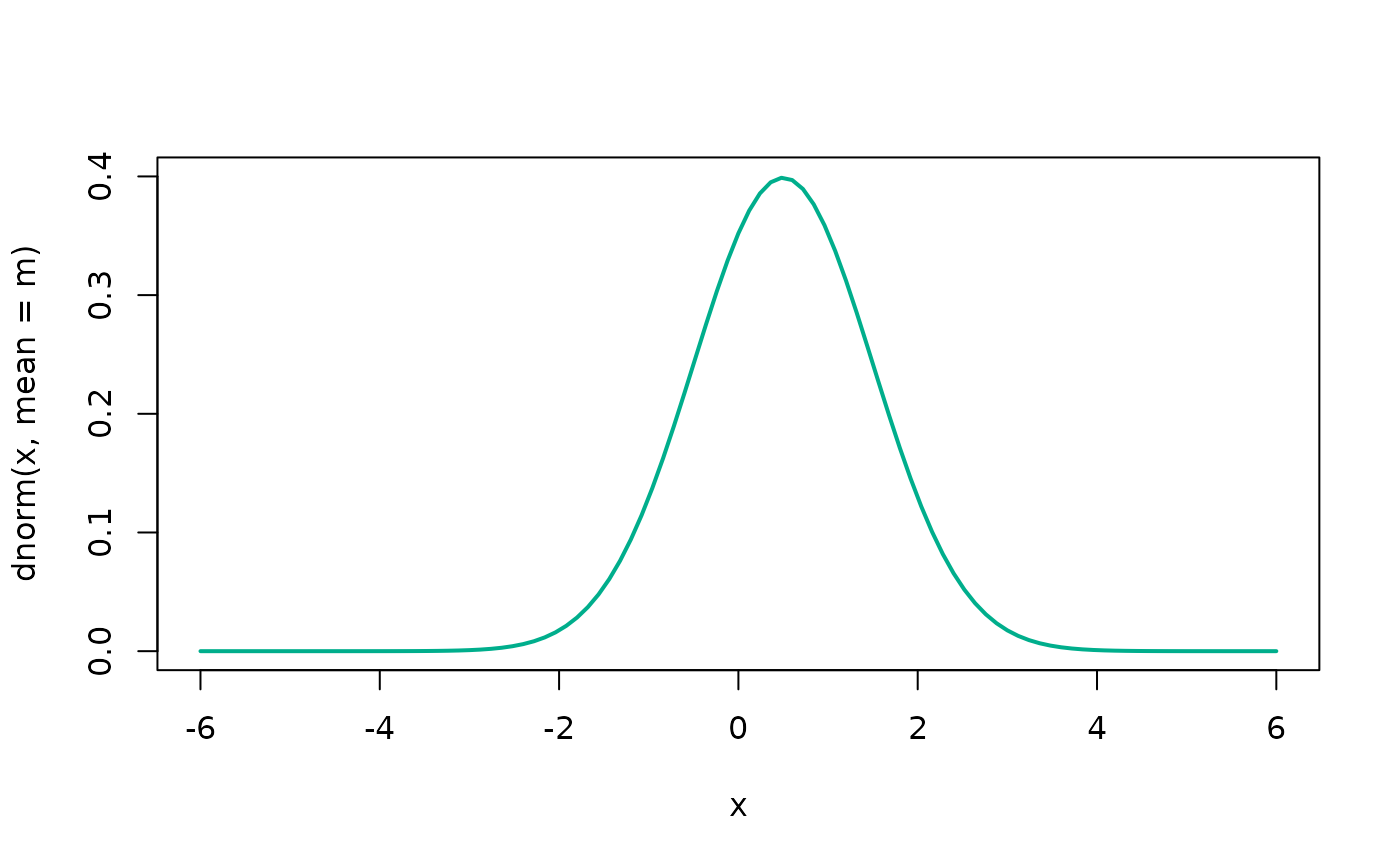
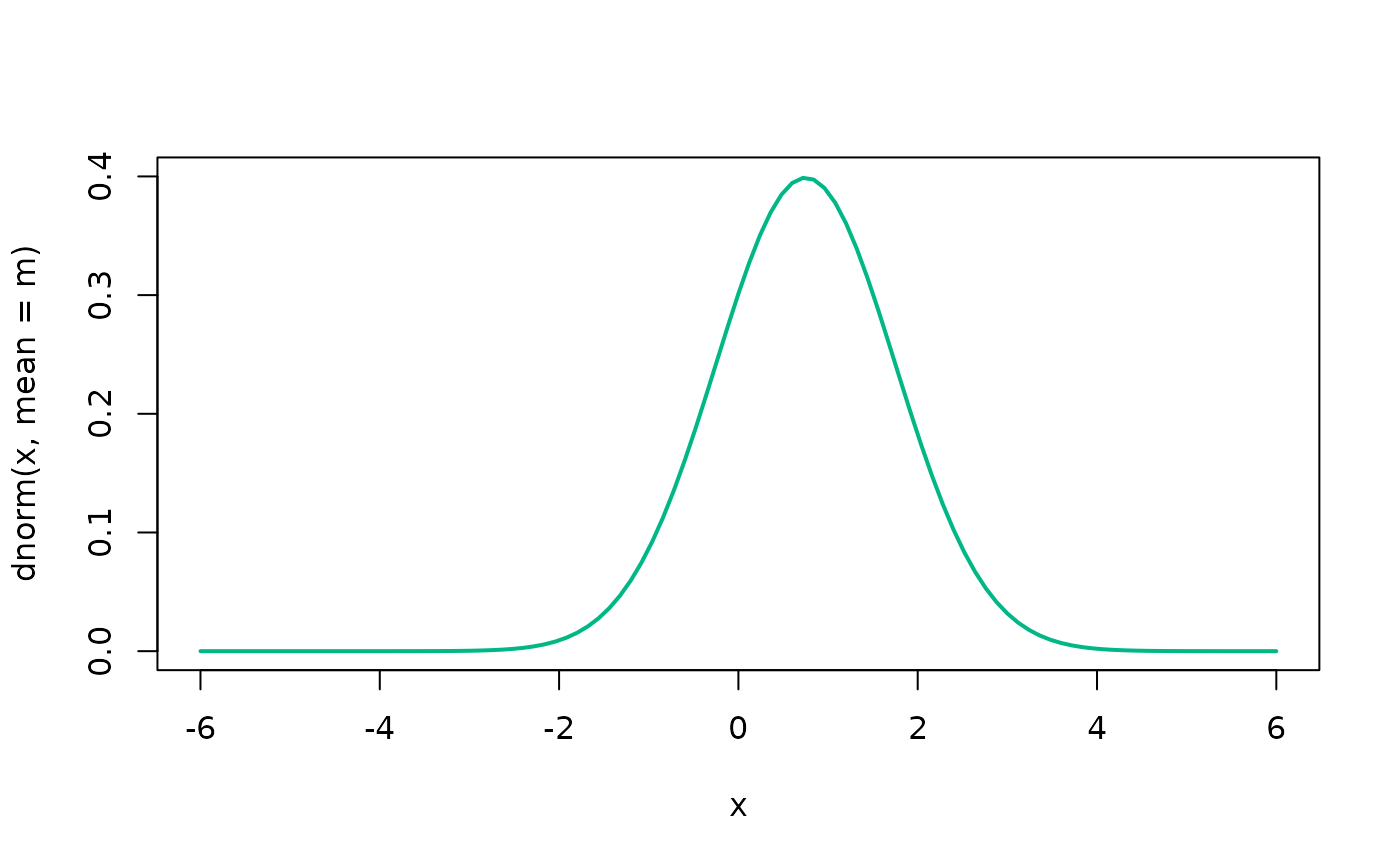
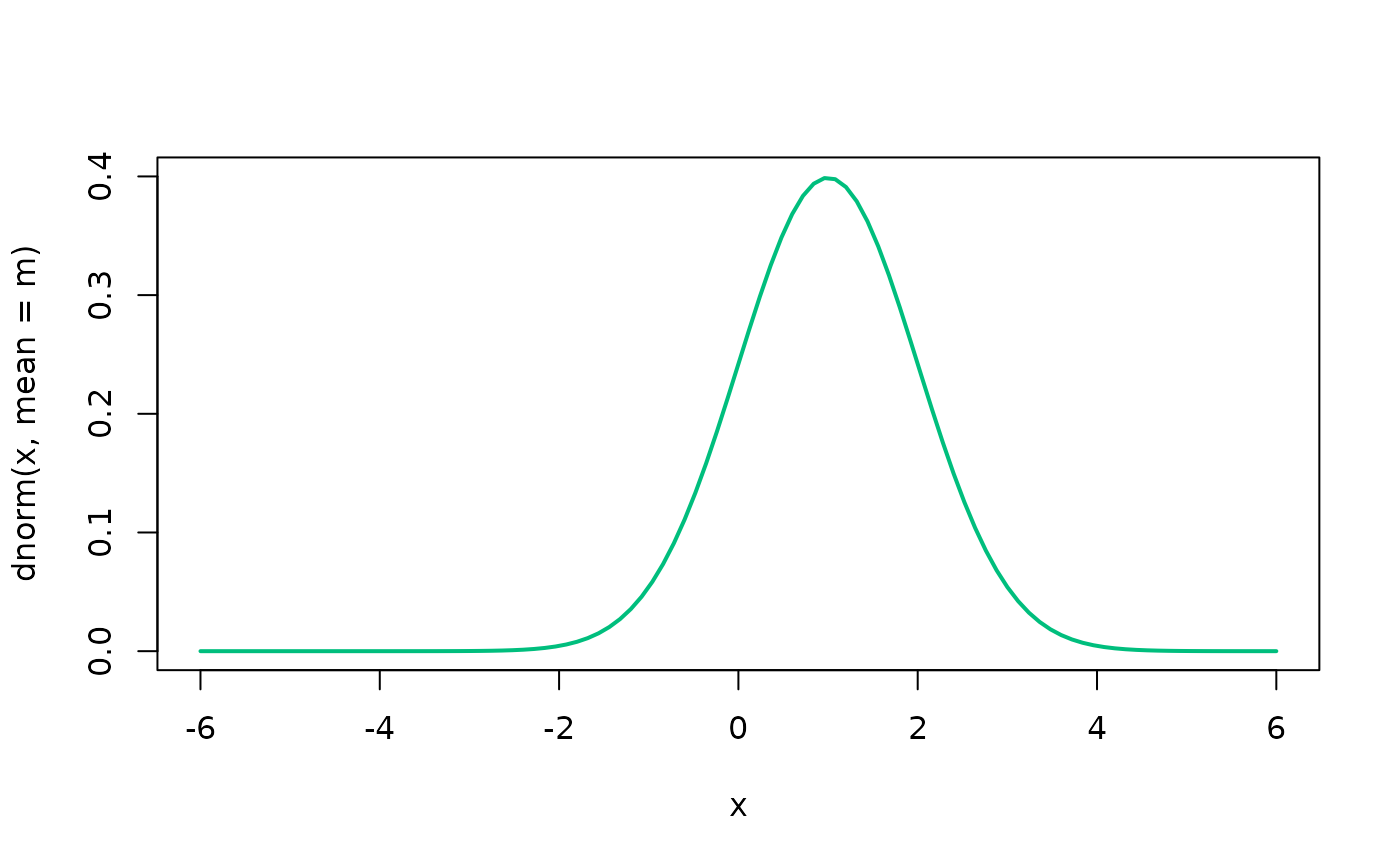
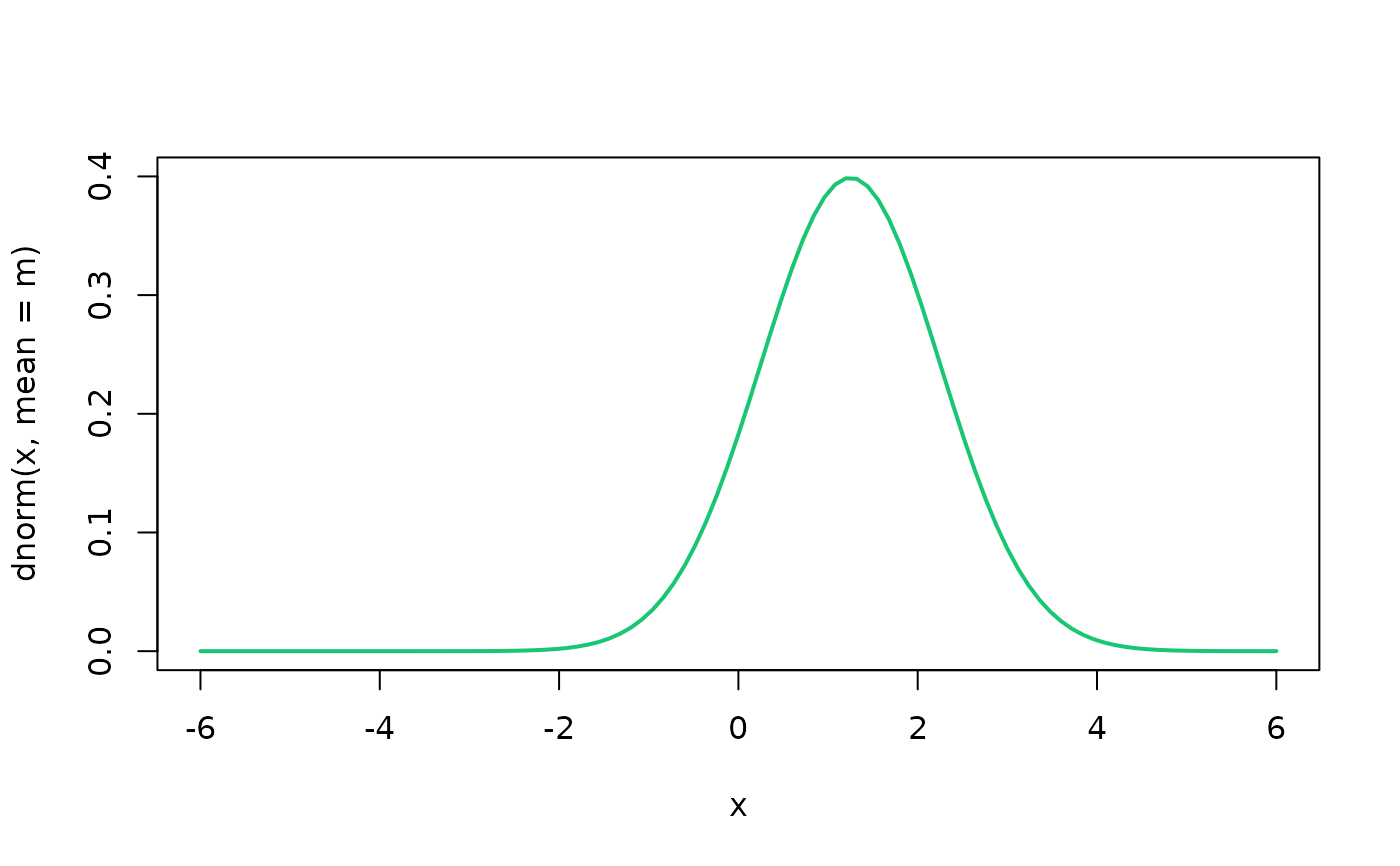
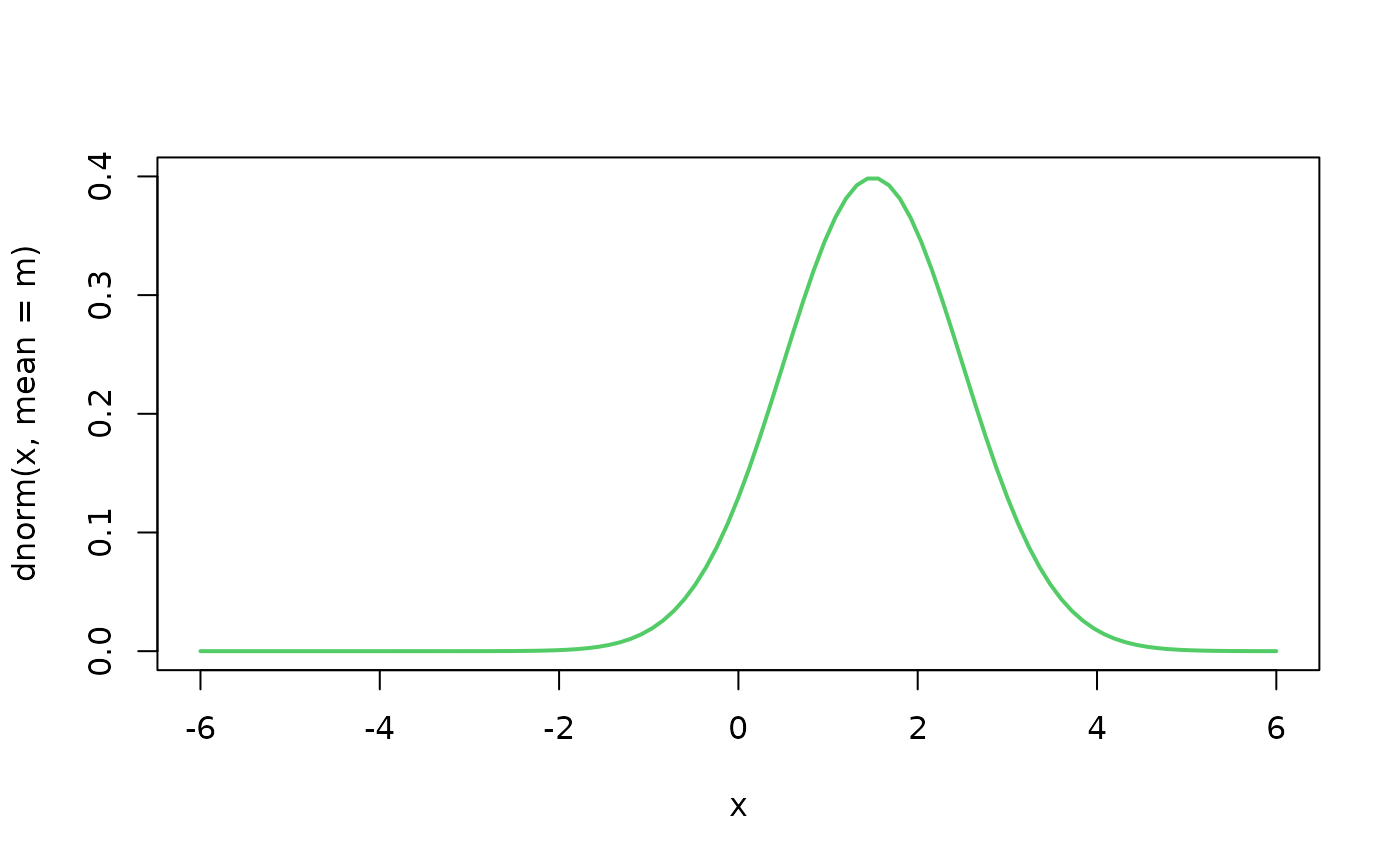
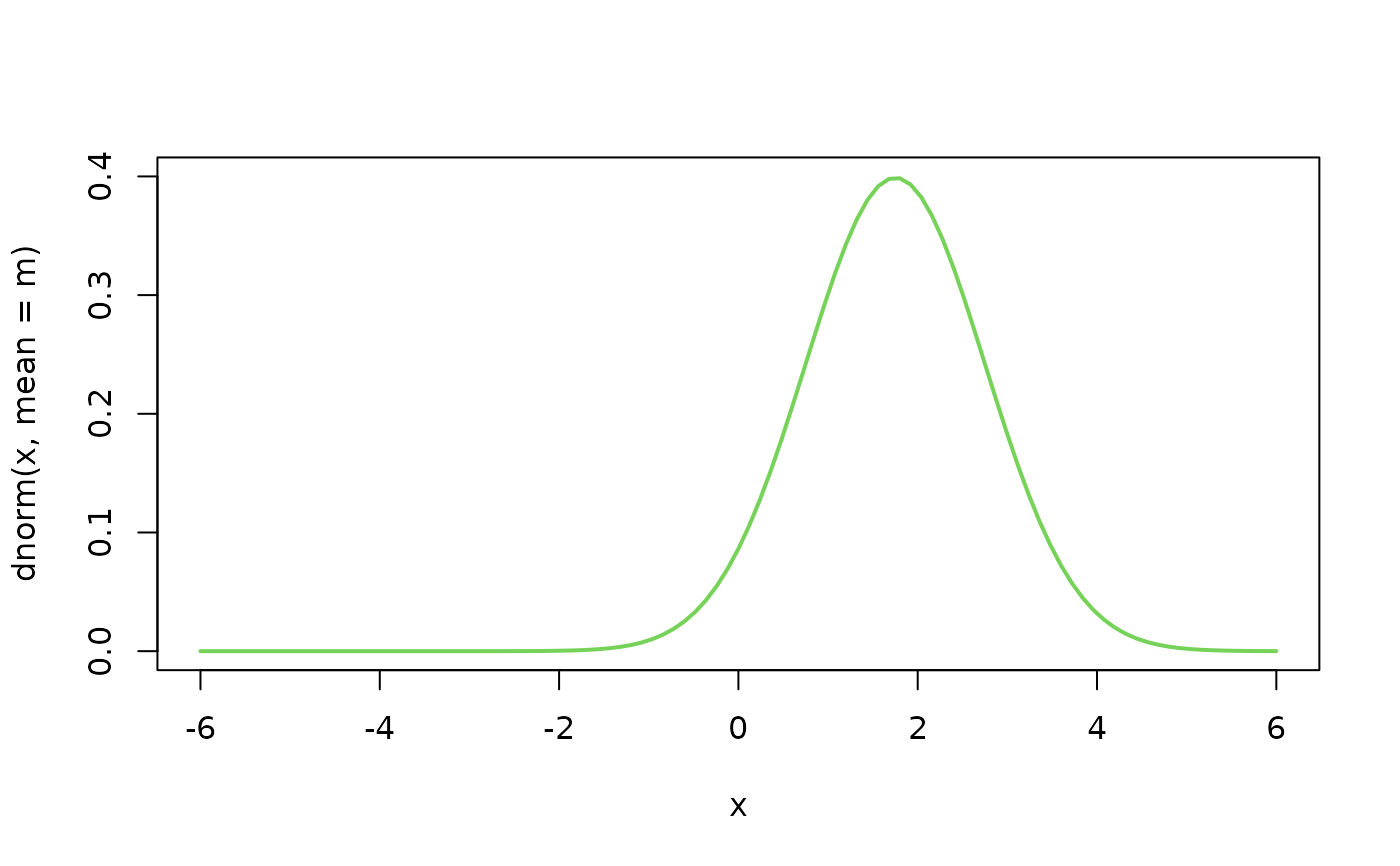
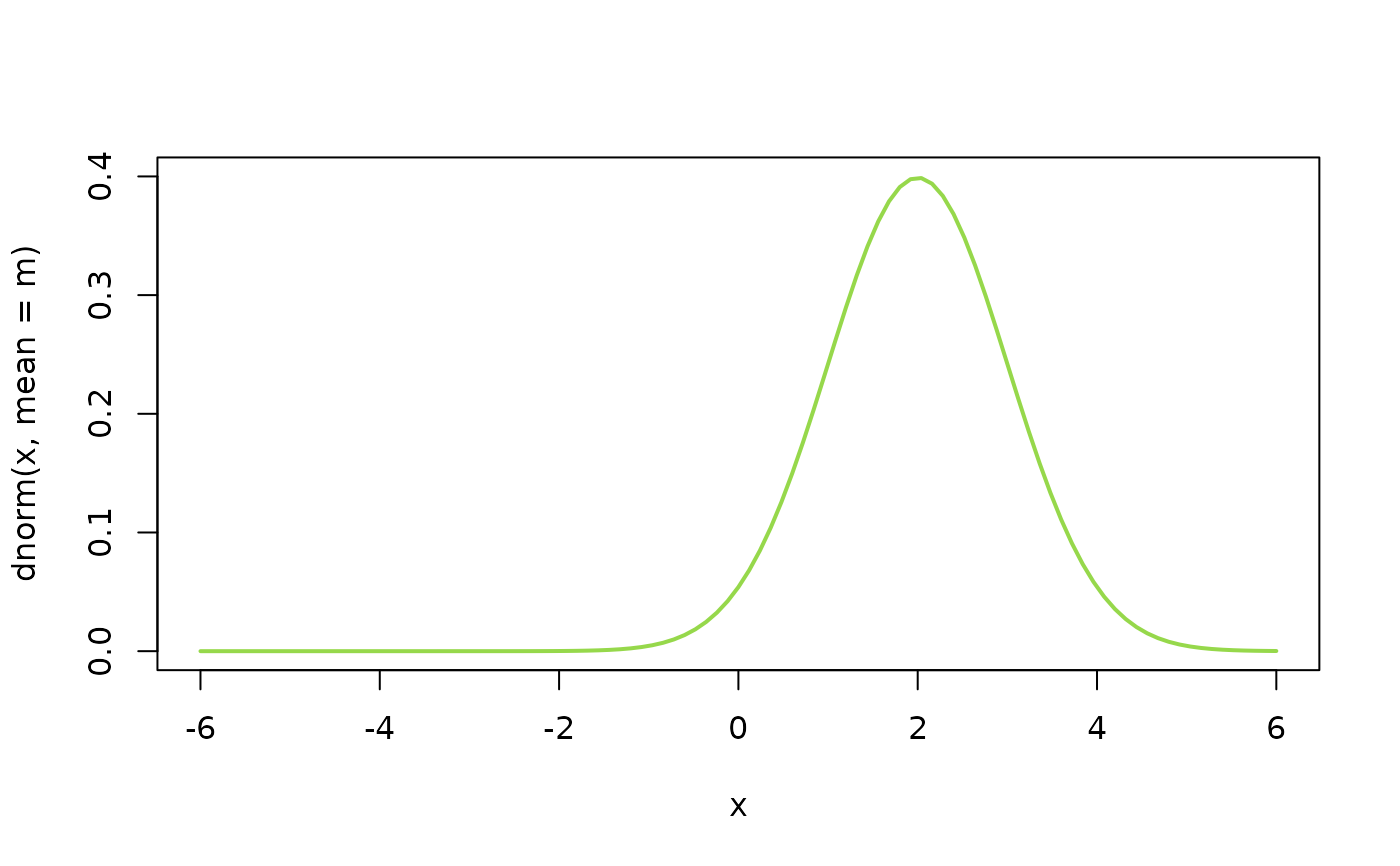
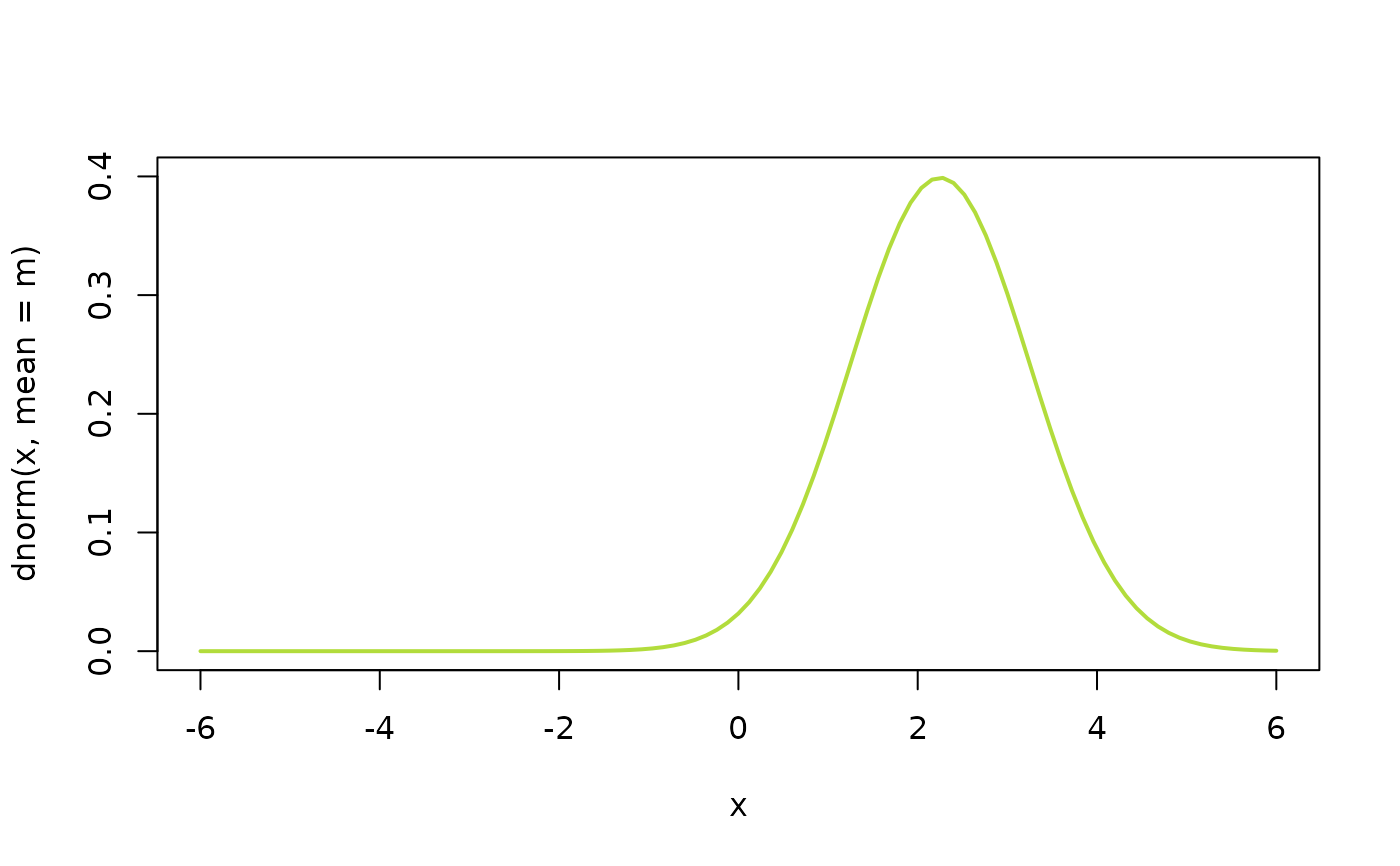
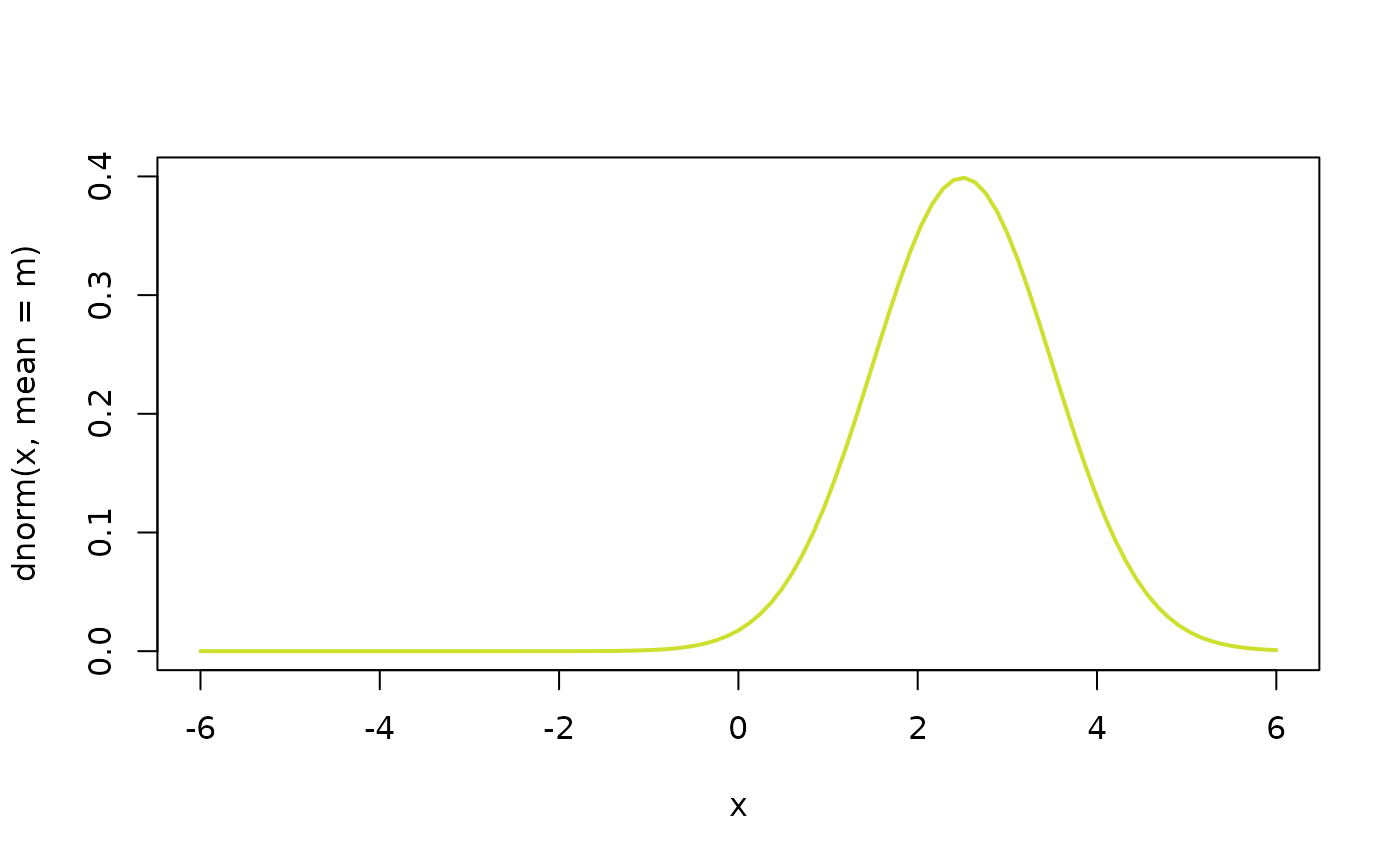
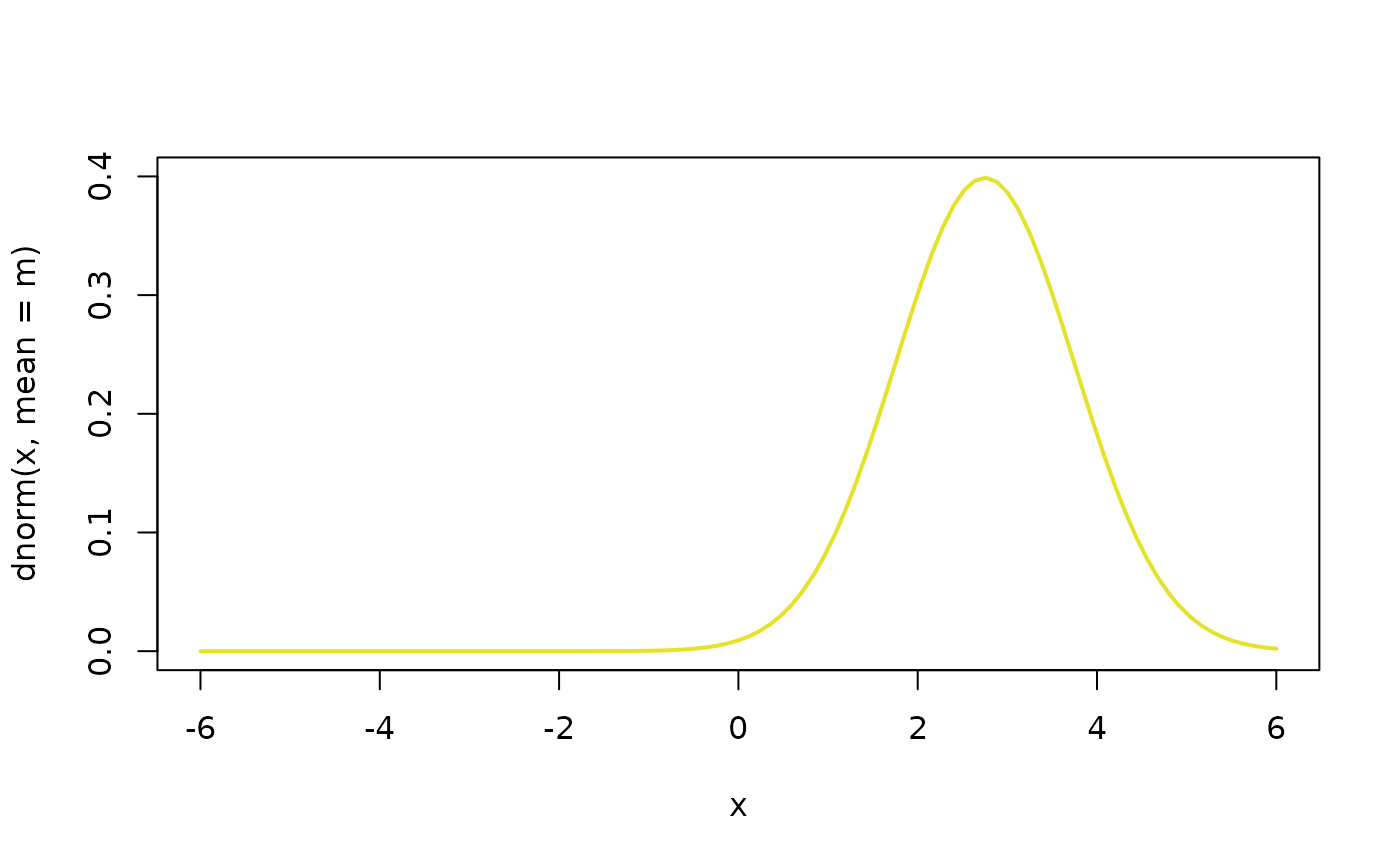
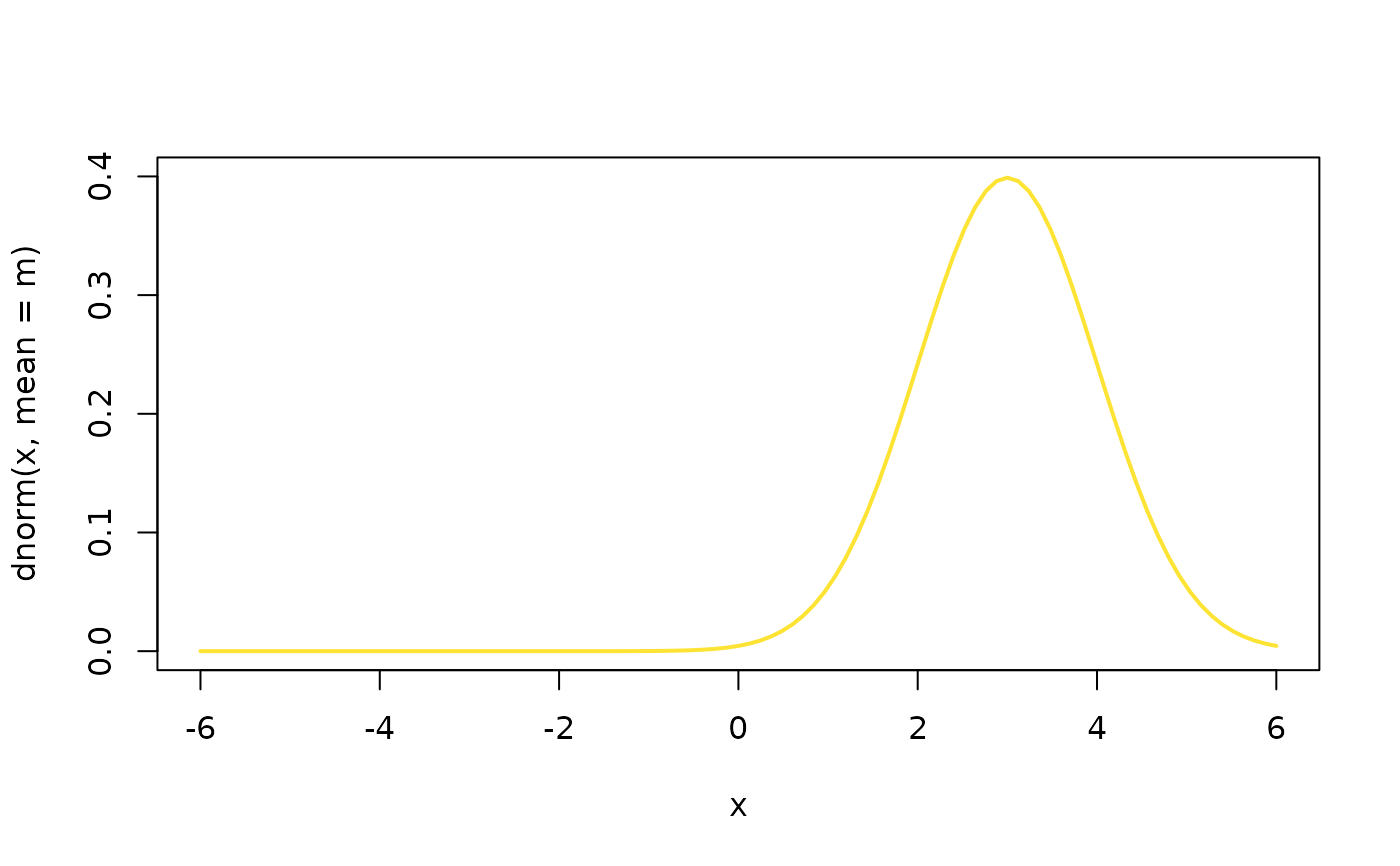
curve(dnorm(x, mean = m), -6, 6, col = col, lwd = 2, ylim = c(0, 0.4)) |>
animate(m = seq(-3, 3, 0.25), col = hcl.colors(25), delay = 0.1)
 # }